


تتداخل سيرة الريال السعودي مع تاريخ الدولة السعودية منذ بواكير التأسيس، بوصفه قصة نقدٍ تشكَّل بالتدرج، ومرّ بتحولات سياسية واجتماعية واقتصادية، قبل أن يستقر في صورته المعاصرة.
ومع قيام الدولة السعودية الأولى في منتصف القرن الثاني عشر الهجري لم يكن في الجزيرة العربية نظام نقدي موحد، وكان سائدًا تداول العملات المتعددة، التي فرضتها حركة التجارة واتساع الرقعة الجغرافية.
اهتم الإمام محمد بن سعود، مؤسس الدولة السعودية الأولى، بوضع بناء اقتصادي متين يقـوم علـى توفيـر المـوارد الماليـة عـن طريـق تشـجيع التبـادل التجـاري بيـن الدرعيـة والبلـدان الأخـرى، وتستقبل الدرعية تُجارًا من أقاليم مختلفة، يتعاملون بالذهب والفضة والمقايضة.
ومن أشهر العملات التي استخدمها النجديون، بحسب كتاب (تاريخ المملكة العربية السعودية) للمؤلف الدكتور عبدالله الصالح العثيمين (الأحمر، والمحمدية، والجديدة، والمشخص)، إلى جانب الريال الفضي المعروف بـ«ريال ماريا تريزا» أو «الريال الفرانسي»، وهو مسكوك نمساوي انتشر على نطاق واسع بسبب دقة وزنه وثبات عياره، وهي مقتنيات معروضة في مكتبة الملك فهد الوطنية، كما كان التعامل التجاري يجري في أحيان عدة عبر المقايضة؛ وهي الوسيلة الأكثر شيوعًا في التعامل التجاري.
وبحسب ما ورد في كتاب تنظيمات الدولة السعودية الأولى للدكتور محمد بن سعيد آل منشط، فإن أسواق الدرعية شهدت ازدهارًا لافتًا إبان حكم الإمام سعود بن عبدالعزيز، من حيث زيادة عدد البضائع لتلبيــة الاحتياجــات، ويعود ذلك لحالة الاستقرار السياسي والأمني؛ ما أتاح للتجار حرية الحركة، وأسهم في انتظام التعاملات المالية.
تنوع الأقاليم وتعدد المسكوكات
اختلفت أنماط التداول النقدي بين أقاليم الجزيرة العربية، حيث تداول الناس في نجد مسميات نقدية متعددة مثل: (الجديدة، والخردة، والمحمدية، والمشخص)، واستخدمت كل فئة بحسب قيمتها وحاجة السوق، وكانت «الخردة» تمثل أصغر وحدات التداول، فيما استخدمت «الجديدة» لتسهيل التعاملات اليومية الصغيرة.
أما الأحساء، بحكم موقعها الزراعي والتجاري، فقد عرفت عملة محلية باسم «الطويلة» وهي عبارة عن قضيب مثني بحيث يتلاقى الطرفان، ما يشبه البنسة، وهي قطعة نحاسية ممزوجة بنسبة بسيطة من الفضة، إلى جانب تداول عملات أخرى، وفي الحجاز، تنوعت العملات حيث كانت تستقبل مكة المكرمة، والمدينة المنورة حجاجًا من أقطار مختلفة.
عهد الملك عبدالعزيز.. بداية التنظيم
شكَّل دخول الملك عبدالعزيز بن عبدالرحمن آل سعود – رحمه الله – مدينة الرياض عام (1319هـ/ 1902م) نقطة تحول سياسية واقتصادية، وفي تلك المرحلة، أبقى الملك عبدالعزيز على العملات المتداولة، إدراكًا لواقع السوق، لكنه بدأ تدريجيًا في التنظيم النقدي.
ووفق البنك المركزي السعودي (ساما)، كانت أولى الخطوات ذات الدلالة هي دمغ العملات المتداولة كلمة «نجد»، في إشارة إلى اعتمادها رسميًا داخل مناطق نفوذ الدولة، وبعد توحيد الحجاز مع نجد عام (1343هـ/ 1925م)، أضيفت كلمة «الحجاز» على بعض العملات المتداولة؛ لتُعبِّر عن وحدة الرقعة السياسية.
وفي عام 1343هـ، انتقل الإصلاح النقدي من الدمغ إلى السك، بحسب البنك المركزي السعودي، حين أُصدرت أول نقود سعودية نحاسية من فئتي نصف القرش وربع القرش، وحملت هذه العملات اسم الملك (عبدالعزيز بن عبدالرحمن الفيصل آل سعود) وسنة سكها، أما ظهر الفئتين فقد نقشت عليهما القيمة النقدية لكل منهما، ومكان السك وهو «أم القرى»، وتعد بحسب «ساما» أول الإصدارات السعودية النقدية القانونية.
وشهد العام 1346 العديد من التطورات النقدية، فكان أولها قيام الملك عبدالعزيز – طيب الله ثراه – بإلغاء التعامل بجميع النقود المتداولة، وخلال السنة نفسها قام – رحمه الله – بخطوة تعد من أهم المراحل التي مرت بها عملية الإصلاح النقدي إبان تلك الفترة، إذ طرح أول ريال عربي سعودي خالص، جرى سكه من الفضة.
ولتحقيق الانتشار لهذا النقد، أصدر الملك عبدالعزيز بن عبدالرحمن أمره السامي المتضمن أول تنظيم للوضع النقدي في البلاد، الذي جرى نشره في جريدة أم القرى في (1346هـ/ 1928م)، حيث تضمن العديد من المواد التي رسمت السياسة النقدية للدولة آنذاك.
وبعد إعلان توحيد المملكة العربية السعودية عام 1351، حمل الريال اسمها، فقد طرح في عام 1354 أول ريال فضي يحمل اسم المملكة، تميّز بخفة وزنه وشدة نقاوته، وأصبح رمزًا لوحدة البلاد واستقرارها النقدي.
إنشاء مؤسسة النقد السعودي
مع توسع النشاط الاقتصادي، أصدر الملك عبدالعزيز – رحمه الله – عام (1371هـ 1952م) مرسومين ملكيين بإنشاء مؤسسة النقد العربي السعودي (البنك المركزي السعودي حاليًا) واعتماد نظامها الأساسي؛ لتتولى تنظيم الإصدار النقدي، والحفاظ على قيمة العملة، والإشراف على النظام المصرفي، وباشرت المؤسسة عملها فعليًا في 1372، وكان من أوائل مهامها طرح الجنيه الذهبي السعودي، واستكمال سك الريالات الفضية.
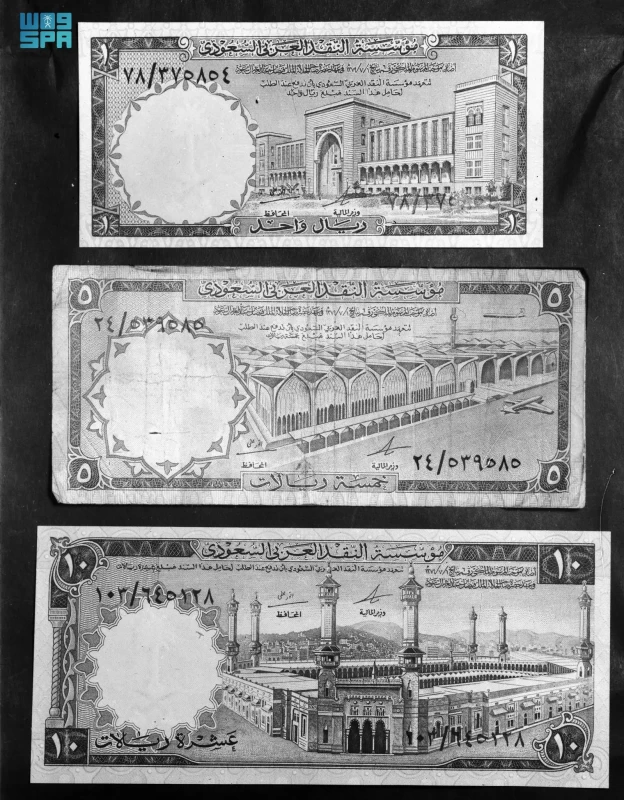
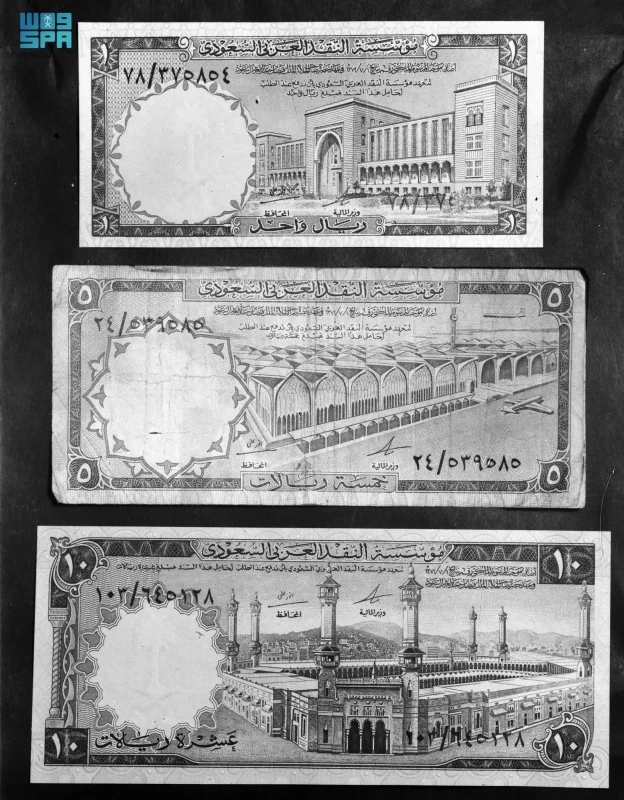
ومع إدراك الملك عبدالعزيز صعوبة الاستمرار في استخدام النقود المعدنية، لثقل وزنها، في ظل التطورات الاقتصادية المتلاحقة، وتنامي واردات الدولة بشكل كبير؛ رغب في تسهيل أمور حجاج بيت الله الذين يلاقون مشقة من حملهم للريالات الفضية، وفق البنك المركزي السعودي، فكانت الخطوة الأكثر جراءة في نظام النقد السعودي، التي تمثلت بقيام مؤسسة النقد بإصدار ما عُرف آنذاك بإيصالات الحجاج التي طرحت للتداول اعتبارًا من (1372هـ/ 1953م) من فئة الـ10 ريالات، التي طُبع منها 5 ملايين إيصال، كطبعة أولى، كُتب على هذا الإيصال عبارات متعددة باللغة العربية والفارسية، والإنجليزية، والأردية، والتركية، والمالاوية؛ ما يحفظ لحاملها قيمة هذا الإيصال من الريالات الفضية السعودية، وكان يستطيع الحاج شراءها من الصيارفة عند وصوله إلى المملكة.
ولاقت هذه التجربة الاستحسان والقبول من حجاج بيت الله الحرام، ونالت ثقة الناس في السوق المحلية من تجار ومواطنين، الأمر الذي دفع بالمؤسسة إلى إعادة إصدار تلك الفئة وفئتين جديدتين أخريين من فئة الـ5 ريالات سنة (1373هـ 1954م)، وفئة الريال الواحد سنة (1375هـ 1956م).
اعتماد رمز العملة السعودية
كان لنجاح هذه التجربة أن المواطنين والحجاج لم يستبدلوا تلك الإيصالات بالعملة المعدنية، بل استمروا في تداولها واستنتجت الدولة ممثلة في مؤسسة النقد العربي السعودي، أن المواطنين والحجاج راغبون في استبدال العملات المعدنية بعملة ورقية، وهو تطور مهم يعبر عن الثقة بحكومة الدولة الفتية وقدرتها على حماية عملتها الورقية.
وفي عام (1381هـ/ 1961م)، صدر أول إصدار ورقي رسمي للريال السعودي في عهد الملك سعود بن عبدالعزيز آل سعود، وتوالت الإصدارات في العهود اللاحقة، مع تطور في التصاميم والعناصر الأمنية، وحضور للمعالم الدينية والتاريخية، وصولًا للإصدار السادس من العملة الورقية والمعدنية في عهد خادم الحرمين الشريفين الملك سلمان بن عبدالعزيز آل سعود، في العام (1438هـ/ 2016م)، تحت شعار «ثقة وأمان» بفئاته الورقية والمعدنية المتعددة، التي صُممت وفق أحدث التقنيات والمقاييس والمعايير العالمية.
وأسهم اعتماد خادم الحرمين الشريفين الملك سلمان بن عبدالعزيز آل سعود في 20 فبراير 2025 رمز عملة الريال السعودي في تعزيز هوية المملكة المالية على المستوى المحلي والإقليمي والدولي، والهوية الوطنية والانتماء الثقافي، ويحمل الرمز اسم العملة الوطنية «ريال» بتصميم مستوحى من الخط العربي، اعتزازًا بهويتنا الثقافية المستمدة من اللغة العربية.
من أسواق الدرعية التي ازدحمت بالذهب والفضة والمقايضة، إلى ريال سعودي يحمل اسمه ورمزه المعتمد، تمتد رحلة العملة بوصفها سجلًا حيًا لمسيرة الدولة السعودية عبر 3 قرون، ومع إقرار رمز الريال السعودي في العصر الحديث تكتمل دائرة تاريخية بدأت منذ الدولة السعودية الأولى؛ لتؤكد أن الريال ليس قيمة نقدية فحسب، بل وثيقة تحمل ذاكرة وطن، وتختصر مسيرة تأسيسه ونهضته.
The history of the Saudi riyal intertwines with the history of the Saudi state since its early establishment, as it represents a story of currency that gradually formed and underwent political, social, and economic transformations before stabilizing in its contemporary form.
With the establishment of the first Saudi state in the mid-12th Hijri century, there was no unified monetary system in the Arabian Peninsula, and the circulation of multiple currencies prevailed, imposed by trade movements and the expansion of geographical areas.
Imam Muhammad bin Saud, the founder of the first Saudi state, was keen on establishing a solid economic foundation based on providing financial resources by encouraging trade exchanges between Diriyah and other countries. Diriyah welcomed traders from various regions who dealt in gold, silver, and barter.
Among the most famous currencies used by the Najdis, according to the book “History of the Kingdom of Saudi Arabia” by Dr. Abdullah Al-Salih Al-Othaymeen, were (the red, the Muhammadiyah, the Jadidah, and the Mushakhas), in addition to the silver riyal known as “Maria Theresa riyal” or “French riyal,” which was an Austrian coin widely circulated due to its precise weight and stable standard. These are items displayed in the King Fahd National Library. Additionally, trade transactions often occurred through barter, which was the most common means of commercial dealings.
According to the book “Regulations of the First Saudi State” by Dr. Muhammad bin Saeed Al-Manshadt, the markets of Diriyah witnessed remarkable prosperity during the reign of Imam Saud bin Abdulaziz, in terms of the increase in the number of goods to meet needs, attributed to the state of political and security stability, which allowed traders freedom of movement and contributed to the regularity of financial transactions.
Diversity of Regions and Multiple Coins
The patterns of currency trading varied among the regions of the Arabian Peninsula, where people in Najd used multiple currency names such as (the Jadidah, the Khurda, the Muhammadiyah, and the Mushakhas), with each category used according to its value and market needs. The “Khurda” represented the smallest units of trade, while the “Jadidah” was used to facilitate small daily transactions.
As for Al-Ahsa, due to its agricultural and commercial location, it was known for a local currency called “the Tawilah,” which is a bent rod meeting at both ends, resembling a penny. It was a copper piece mixed with a small percentage of silver, alongside the circulation of other currencies. In Hijaz, currencies varied as Mecca and Medina received pilgrims from different regions.
The Era of King Abdulaziz: The Beginning of Organization
The entry of King Abdulaziz bin Abdulrahman Al Saud – may God have mercy on him – into the city of Riyadh in (1319 AH/1902 AD) marked a political and economic turning point. At that stage, King Abdulaziz retained the circulating currencies, acknowledging the market reality, but gradually began monetary organization.
According to the Saudi Central Bank (SAMA), the first significant step was stamping the circulating coins with the word “Najd,” indicating their official adoption within the state’s areas of influence. After the unification of Hijaz with Najd in (1343 AH/1925 AD), the word “Hijaz” was added to some circulating coins to express the unity of the political territory.
In the year 1343 AH, the monetary reform transitioned from stamping to minting, according to the Saudi Central Bank, when the first Saudi copper coins were issued in the denominations of half a qirsh and a quarter qirsh. These coins bore the name of the king (Abdulaziz bin Abdulrahman Al Faisal Al Saud) and the year of minting, while the reverse sides of both denominations were engraved with their monetary value and the minting location, which was “Umm Al-Qura.” According to “SAMA,” these are considered the first legal Saudi monetary issues.
The year 1346 witnessed many monetary developments, the first of which was King Abdulaziz – may God have mercy on him – abolishing the use of all circulating coins. During the same year, he took a step considered one of the most important phases of the monetary reform process during that period, as he issued the first pure Saudi Arabian riyal, which was minted from silver.
To achieve the spread of this currency, King Abdulaziz bin Abdulrahman issued his royal order containing the first organization of the monetary situation in the country, which was published in the Umm Al-Qura newspaper in (1346 AH/1928 AD), containing many articles that outlined the monetary policy of the state at that time.
After the announcement of the unification of the Kingdom of Saudi Arabia in 1351, the riyal carried its name, as the first silver riyal bearing the name of the kingdom was issued in 1354, distinguished by its light weight and high purity, becoming a symbol of the country’s unity and monetary stability.
Establishment of the Saudi Monetary Agency
With the expansion of economic activity, King Abdulaziz – may God have mercy on him – issued two royal decrees in (1371 AH 1952 AD) to establish the Saudi Arabian Monetary Agency (now the Saudi Central Bank) and to adopt its basic system; to oversee the organization of monetary issuance, maintain the value of the currency, and supervise the banking system. The agency officially began its work in 1372, with one of its first tasks being the issuance of the Saudi gold pound and the completion of minting silver riyals.
Recognizing the difficulty of continuing to use metal coins due to their weight, amid rapid economic developments and significant increases in state revenues, King Abdulaziz sought to facilitate matters for the pilgrims to the House of God, who faced difficulties carrying silver riyals. According to the Saudi Central Bank, the most daring step in the Saudi monetary system was represented by the Monetary Agency issuing what was then known as pilgrims’ receipts, which were put into circulation starting from (1372 AH/1953 AD) in the denomination of 10 riyals, of which 5 million receipts were printed as a first edition. This receipt bore multiple phrases in Arabic, Persian, English, Urdu, Turkish, and Malay, preserving the value of this receipt in Saudi silver riyals for its holder, and the pilgrim could purchase it from currency exchangers upon arriving in the kingdom.
This experience received approval and acceptance from the pilgrims to the Sacred House of God, gaining the trust of people in the local market from traders and citizens, prompting the agency to reissue that denomination along with two new denominations of 5 riyals in the year (1373 AH 1954 AD) and 1 riyal in the year (1375 AH 1956 AD).
Adoption of the Saudi Currency Symbol
The success of this experience led citizens and pilgrims not to exchange those receipts for metal currency but to continue circulating them. The state, represented by the Saudi Arabian Monetary Agency, concluded that citizens and pilgrims were willing to exchange metal coins for paper currency, a significant development reflecting trust in the young state’s government and its ability to protect its paper currency.
In the year (1381 AH/1961 AD), the first official paper issuance of the Saudi riyal was released during the reign of King Saud bin Abdulaziz Al Saud, and subsequent issuances followed in later reigns, with developments in designs and security features, showcasing religious and historical landmarks, culminating in the sixth issuance of paper and metal currency during the reign of the Custodian of the Two Holy Mosques, King Salman bin Abdulaziz Al Saud, in the year (1438 AH/2016 AD), under the slogan “Trust and Security” with its various paper and metal denominations designed according to the latest technologies and global standards.
The adoption of the currency symbol for the Saudi riyal by the Custodian of the Two Holy Mosques, King Salman bin Abdulaziz Al Saud, on February 20, 2025, enhanced the financial identity of the kingdom at the local, regional, and international levels, as well as the national identity and cultural belonging. The symbol carries the name of the national currency “Riyal,” with a design inspired by Arabic calligraphy, reflecting pride in our cultural identity derived from the Arabic language.
From the markets of Diriyah, bustling with gold, silver, and barter, to the Saudi riyal bearing its name and approved symbol, the journey of currency extends as a living record of the Saudi state’s history over three centuries. With the recognition of the Saudi riyal symbol in modern times, a historical circle that began with the first Saudi state is completed, affirming that the riyal is not just a monetary value but a document carrying the memory of a nation, encapsulating its establishment and renaissance.