
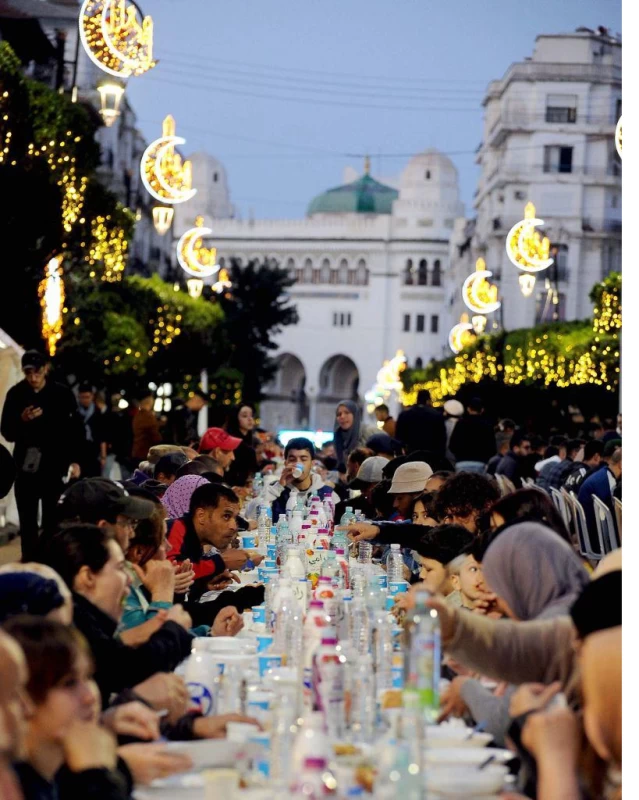
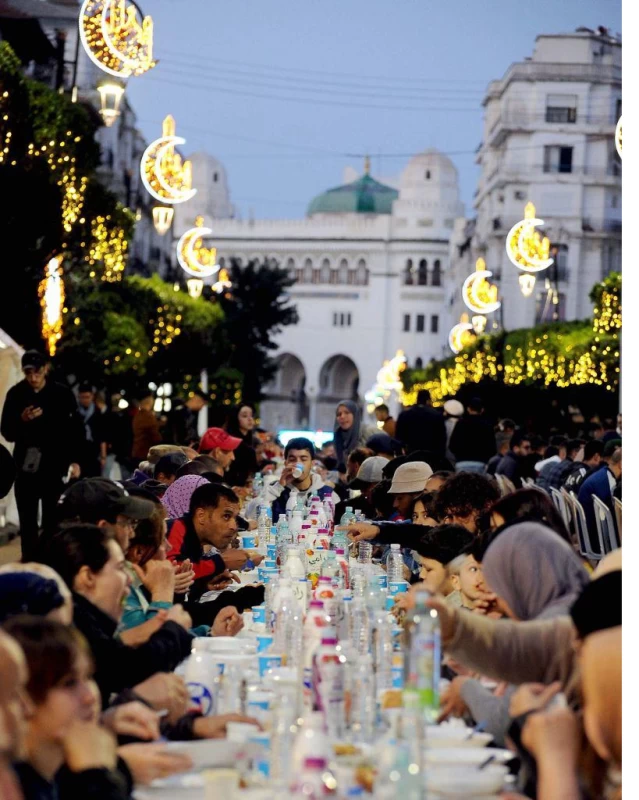
تتوارث العائلات الجزائرية عادات وتقاليد تستقبل بها شهر رمضان، منها إعادة طلاء المنزل بالأصبغة البيضاء، وتنظيفه بالكامل، إضافة إلى تجهيزه بأوانٍ وأدوات مطبخ جديدة بما في ذلك أواني الشوربة المصنوعة من الفخار، وتجهيز التمور المحلية والفواكه المجففة والحبوب خصوصاً البهارات المخصصة للطهي. وتتولى الفتيات تحضير التّوابل المصنوعة في البيوت وتجفيفها، إضافة إلى تحضير الزيتون بالطريقة التقليدية.
وهناك عُرف اجتماعي يطلق عليه «الوزيعة» لإعانة الفقراء ومحدودي الدخل على تحمل نفقات الشهر، ويتمثل في جمع مبلغ من المال من سكان الحي أو القرية؛ لشراء بقرة أو ثور، ونحرها وتوزيع لحومها على كل الأسر بالتساوي، مع تخصيص حصص إضافية للعائلات الفقيرة، التي لم تتمكن من المساهمة بالمال.
Algerian families inherit customs and traditions to welcome the month of Ramadan, including repainting the house with white paint, thoroughly cleaning it, and equipping it with new kitchenware and utensils, including soup pots made of clay, as well as preparing local dates, dried fruits, and grains, especially the spices designated for cooking. The girls take on the task of preparing and drying the spices made at home, in addition to preparing olives in the traditional way.
There is a social custom known as “Al-Wazi’a” to assist the poor and low-income individuals in bearing the expenses of the month. It involves collecting a sum of money from the residents of the neighborhood or village to buy a cow or bull, slaughtering it, and distributing its meat equally among all families, with additional portions allocated to poor families that were unable to contribute financially.