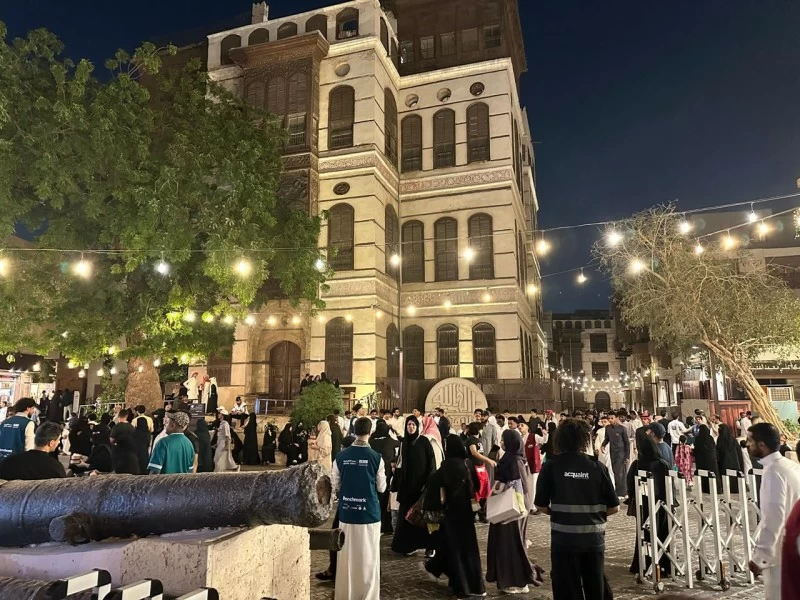
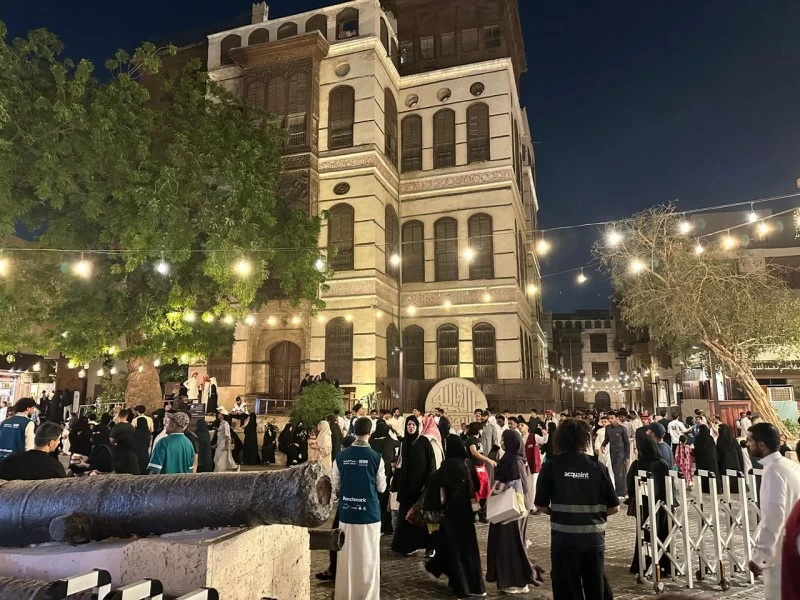
تشهد منطقة البلد التاريخية في مدينة جدة خلال ليالي شهر رمضان المبارك تحولًا ساحرًا، يجعلها واحدة من أبرز الوجهات التي يقصدها الزوّار، فعند اقتراب موعد الإفطار تبدأ الحركة في الأزقة القديمة بالتصاعد تدريجيًا، وكأن المكان يستيقظ على نداءٍ روحي يعيد إليه نبض الماضي. ومع حلول الليل تتزين الشوارع بالفوانيس المضيئة والزخارف الرمضانية التي تضفي على المكان جمالًا خاصًا يلامس القلوب قبل الأبصار.
وتُعد الأسواق الشعبية في البلد من أهم ملامح هذا المشهد الرمضاني، حيث يعرض الباعة بضائعهم التقليدية، بينما تنتشر الروائح الشهية للأكلات الرمضانية التي اعتاد الناس على تناولها بعد الإفطار، ويتنقل الزائر بين أكشاك الأطعمة مستمتعًا بتجربة تجمع بين الطعم الأصيل والذكريات الجميلة.
ولا تقتصر الأجواء على الطعام فحسب، بل تمتد لتشمل الفنون الشعبية التي تُقام في الساحات المفتوحة، فالعروض التراثية تضفي على المكان طابعًا احتفاليًا يعكس عمق الثقافة الحجازية، وتتعالى أصوات الطبول والأهازيج فتجذب الأطفال والكبار على حد سواء، ليعيشوا لحظات من الفرح البسيط الذي يميز ليالي رمضان.
أما المباني التاريخية مثل بيت نصيف، والبيوت ذات النوافذ الخشبية المزخرفة، فتبدو في هذا الشهر أكثر بهاءً تحت أضواء الفوانيس، وتمنح الزائر إحساسًا بأنه يسير في لوحة فنية تجمع بين التاريخ والروحانية. وتتحول المنطقة إلى متحف مفتوح يروي قصصًا من الماضي، ويُشعر كل من يزورها بأن الزمن قد عاد به إلى أيامٍ كانت الحياة فيها أكثر بساطة ودفئًا.
وهكذا تبقى منطقة البلد التاريخية رمزًا للأصالة والتراث، ومكانًا يجمع بين الماضي العريق والحاضر المشرق، لتظل وجهة محببة للزوار خلال شهر رمضان المبارك.
The historic Al-Balad area in Jeddah transforms into a magical place during the nights of the blessed month of Ramadan, making it one of the most prominent destinations for visitors. As the time for Iftar approaches, the activity in the old alleys gradually increases, as if the place awakens to a spiritual call that revives the pulse of the past. With the arrival of night, the streets are adorned with glowing lanterns and Ramadan decorations that add a special beauty to the place, touching hearts before eyes.
The popular markets in Al-Balad are among the most important features of this Ramadan scene, where vendors display their traditional goods, while the delicious aromas of Ramadan dishes, which people are accustomed to eating after Iftar, fill the air. Visitors move between food stalls, enjoying an experience that combines authentic flavors with beautiful memories.
The atmosphere extends beyond food; it also includes folk arts held in open squares. Heritage performances give the place a festive character that reflects the depth of Hijazi culture, and the sounds of drums and chants rise, attracting both children and adults alike, allowing them to experience moments of simple joy that characterize the nights of Ramadan.
Historical buildings such as the Nasif House and the houses with ornate wooden windows appear more splendid during this month under the lantern lights, giving visitors a sense that they are walking through an artistic painting that combines history and spirituality. The area transforms into an open museum that tells stories from the past, making everyone who visits feel as though time has taken them back to days when life was simpler and warmer.
Thus, the historic Al-Balad area remains a symbol of authenticity and heritage, a place that bridges the rich past with a bright present, continuing to be a beloved destination for visitors during the blessed month of Ramadan.