تحظى جدة التاريخية بكوكبة من الأثار والمعالم التاريخية القديمة، التي تحتضنها محافظة جدة وتتميز بها، ومن أبرزها مسجد الحفني، الذي يعد من المساجد التاريخية في جدة، ويتجاوز عمره أكثر من 100 عام.
وشهد مسجد الحفني حضوراً تاريخاً عريقاً، فيما كان المسجد المفضل للملك عبدالعزيز -يرحمه الله-، يؤدي فيه صلاة الجمعة، فبعد أن دخل الملك عبدالعزيز جدة وأقام ببيت نصيف كان يؤدي صلاة الجمعة في المسجد الحنفي ببيت باناجة الذي كان به مصلى وشبابيك مفتوحة متصلة بالمسجد الملتصق بالدار.
ويعتبر من أكبر المساجد المميزة في المنطقة التاريخية، ويفضّل سكان المنطقة أداء صلاة التراويح فيه، ويفضل زوار جدة التاريخية خلال أيام الشهر الفضيل زيارته.
وتتسع ساحة المسجد لـ2,000 مصلٍّ، وتتزايد الأعداد خلال الشهر الفضيل لأداء صلاة التراويح، ويحيط بالمسجد ثلاثة أبواب مما يجعل وصول المصلين له سهلاً من الجهة الشرقية ومن شارع قابل وسوق الندى.
وذكر الكاتب محمد يوسف طرابلسي، صاحب كتاب «جدة حكاية مدينة»، أن مسجد الحنفي يقع في سوق الندى بحارة الشام، ويطل من الجهة الشرقية على شارع الذهب حالياً، وتم بناؤه عام 1320، وجاء ذلك منقوشاً على الحجر الموجود على باب المسجد، جددت عمارته مرات عدة على يد أشهر المهندسين.
ويضيف طرابلسي: للمسجد الحنفي مئذنة واحدة مبنية من الحجر، وفي مدينة جدة كان الحجر هو المادة السائدة في بناء المنابر، وكانت المنابر تأخذ الشكل المثمن، وأغلب المساجد بجدة تحتوي على مئذنة واحده فقط، وهي في الغالب مقسمة إلى ثلاثة أقسام يتحلى الجزء الأسفل لكل منها بنقوش، والملاحظ على منابر المساجد في مدينة جدة قديماً جميعها يقع في الركن الجنوبي الغربي من المساجد كذلك مسجد الحنفي.
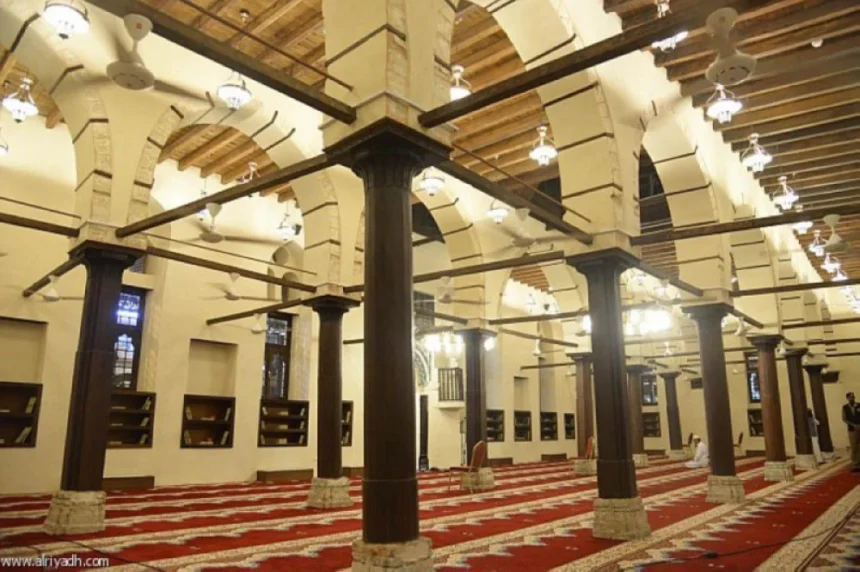
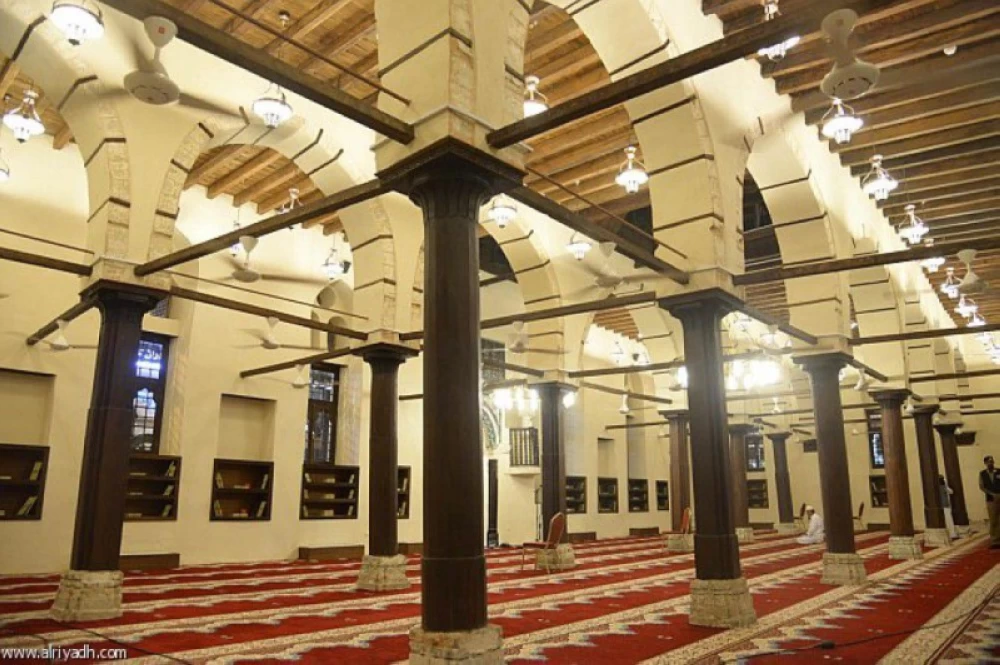
ويتميز مسجد الحنفي بالنقش العثماني في كل زاوية من زواياه، يشبه بسقوفه الخشبية وقناديله المعدنية تصميم الجامع النبوي الشريف بالمدينة المنورة، وتم تزيين الجامع من الداخل بأنواع عدة من الخشب المختلفة.
The historic Jeddah is home to a constellation of ancient artifacts and historical landmarks, which are embraced by the Jeddah Governorate and distinguished by them. Among the most notable is the Al-Hafni Mosque, which is considered one of the historical mosques in Jeddah, with an age exceeding 100 years.
The Al-Hafni Mosque has witnessed a rich historical presence, as it was the preferred mosque of King Abdulaziz – may God have mercy on him – where he performed Friday prayers. After King Abdulaziz entered Jeddah and stayed at the Naseef House, he would perform Friday prayers at the Hanifi Mosque in the Bayt Banajah, which had a prayer area and open windows connected to the mosque adjacent to the house.
It is considered one of the largest distinguished mosques in the historical area, and the residents of the area prefer to perform Taraweeh prayers there. Visitors to historic Jeddah also favor visiting it during the days of the holy month.
The mosque’s courtyard can accommodate 2,000 worshippers, and the numbers increase during the holy month for Taraweeh prayers. The mosque is surrounded by three doors, making it easy for worshippers to access from the eastern side, from Qabil Street and the Al-Nada market.
The writer Muhammad Yusuf Tarablosi, author of the book “Jeddah: A Tale of a City,” mentioned that the Hanifi Mosque is located in the Al-Nada market in the Al-Sham neighborhood, overlooking the Gold Street from the eastern side. It was built in the year 1320, as inscribed on the stone at the mosque’s entrance, and its construction has been renewed several times by renowned engineers.
Tarablosi adds: The Hanifi Mosque has one minaret made of stone, and in the city of Jeddah, stone was the predominant material used in building the pulpits. The pulpits were typically octagonal in shape, and most mosques in Jeddah contain only one minaret, which is usually divided into three sections, with the lower part of each adorned with carvings. It is noticeable that all the pulpits of the mosques in the city of Jeddah in the past were located in the southwestern corner of the mosques, including the Hanifi Mosque.
The Hanifi Mosque is distinguished by Ottoman carvings in every corner, and its wooden ceilings and metal lamps resemble the design of the Prophet’s Mosque in Medina. The interior of the mosque is adorned with various types of wood.