


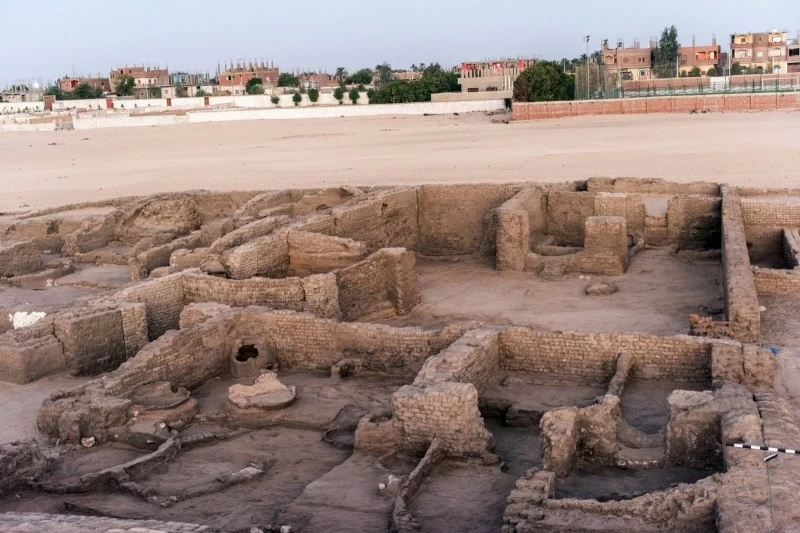
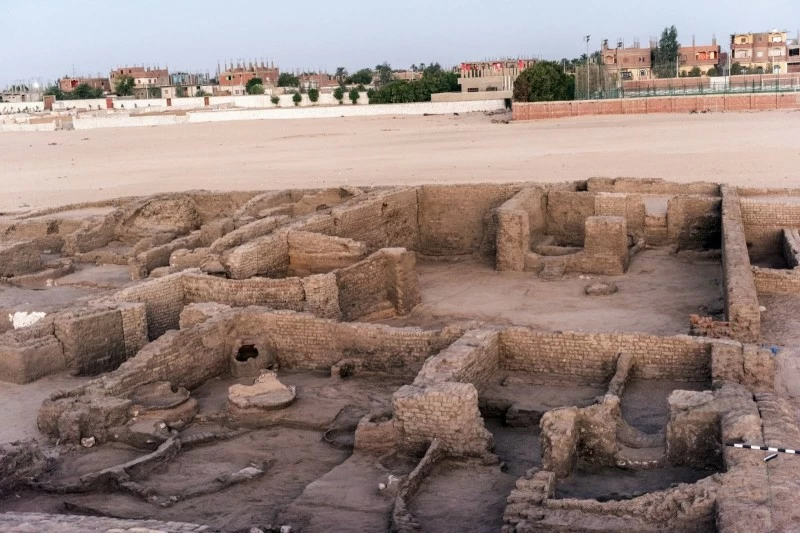
في كشف أثري جديد، نجحت البعثة الأثرية المصرية-الفرنسية المشتركة في الكشف عن أجزاء من مدينة سكنية مشيّدة من الطوب اللبن تعود إلى القرن الثامن عشر الميلادي بموقع شيخ العرب همام بقرية العركي بمحافظة قنا جنوب مصر، وذلك خلال فترة حكم شيخ العرب همام، كما كشفت الحفائر عن امتداد لجبانة قبطية من العصر البيزنطي تقع أسفل المدينة المكتشفة.
منازل ملحقة بها مبانٍ خدمية
وأوضح رئيس قطاع الآثار الإسلامية والقبطية واليهودية بالمجلس الأعلى للآثار الدكتور ضياء زهران أن أعمال الحفائر أسفرت عن الكشف عن ستة منازل ملحقة بها مبانٍ خدمية، ويجاورها جزء من منطقة صناعية.
وتشير الدراسات الأولية إلى أن بعض هذه المنازل كان مغطى بقباب مشيّدة من الطوب اللبن، بينما غُطيت أسقف المنازل الأخرى بجذوع النخيل، كما عثرت البعثة على آثار طلاء من الجير الأبيض ببعض الغرف، فيما لا تزال بقية أجزاء المدينة قيد الكشف.
اللقى الأثرية المكتشفة
وأضاف أن اللقى الأثرية المكتشفة تعكس ثراء الموقع وتنوع أنشطته، حيث شملت عملات برونزية، وقطعاً فخارية متنوعة، وألعاب أطفال، وحلياً، وقطعاً من النسيج، وغيرها من الأدلة الدالة على طبيعة الحياة اليومية بالموقع.
وفيما يتعلق بالجبانة القبطية المكتشفة، تم العثور على غطاء تابوت من الحجر الجيري يعود إلى العصر البيزنطي، وقد استُخدم كأرضية أمام أحد مداخل المدينة المكتشفة، الأمر الذي أثار تساؤلات حول أسباب وجوده في هذا الموضع.
وعلى إثر ذلك، تم التعاون مع هيئة الاستشعار من بُعد وعلوم الفضاء لإجراء مسح جيوفيزيقي للموقع بواسطة فريق متخصص برئاسة الدكتور عبدالعزيز الفضالي، وأسفرت نتائج المسح عن توجيه أعمال الحفر خلال الموسم الحالي، ليتم الكشف عن جزء من جبانة قبطية تقع أسفل المدينة السكنية.
جبانة قبطية من العصر البيزنطي
وتضم الجبانة عدداً من الدفنات التي تعود إلى العصر البيزنطي، وتنقسم إلى نمطين؛ الأول يتمثل في الدفن المباشر في التربة، بينما يتميز النمط الثاني بتحديد منطقة الدفن بمداميك من الطوب اللبن.
كما عُثر مع هذه الدفنات على عدد من القطع الفخارية، ولفائف كتانية، وأجزاء من «التونيك» المُعد للمتوفى والمنسوج بطريقة القباطي، ويزين العديد منها أشرطة زخرفية نباتية وهندسية وحيوانية، إضافة إلى أشكال الصليب وبعض الرموز والحروف باللغة القبطية. كما تم العثور على ختم نحاسي كان يُستخدم في زخرفة الكعك.
وبحسب بيان صادر عن وزارة السياحة والآثار المصرية، أكد وزير السياحة والآثار شريف فتحي أن المشروع يهدف إلى الكشف عن طبيعة الموقع وتاريخه والحفاظ عليه، تمهيداً لتأهيله وإدراجه على الخريطة السياحية للزيارة، لا سيما أنه يقع في موقع إستراتيجي يتوسط المسافة بين دندرة وأبيدوس، بما يسهم في تعزيز الحركة السياحية بالمنطقة.
فيما أكد الأمين العام للمجلس الأعلى للآثار الدكتور هشام الليثي أهمية هذا الكشف في تعميق فهم طبيعة الحياة والنشاط البشري في صعيد مصر بصفة عامة، ومنطقة العركي بوجه خاص، نظراً لندرة المعلومات الواردة عنها في المصادر التاريخية.
فيما أكد رئيس البعثة خبير الآثار الإسلامية بالمعهد الفرنسي للآثار الشرقية الدكتور أحمد الشوكي أن هذه الاكتشافات تمثل إضافة علمية مهمة لدراسة أنماط الاستيطان والممارسات الجنائزية والأنشطة الصناعية في صعيد مصر، كما تسهم في تقديم رؤى جديدة حول طبيعة التركز السكاني والتطور الجغرافي للمنطقة منذ العصر البيزنطي وحتى العصر الإسلامي.
وأشار مدير المعهد الفرنسي للآثار الشرقية الدكتور بيير تاليه إلى أنه سيتم إجراء دراسات بيو-أثرية على الهياكل العظمية المكتشفة، بهدف تحديد النظام الغذائي، والعمر، والجنس، والحالة الصحية للأفراد المدفونين بالموقع، والبالغ عددهم نحو 23 فرداً من الذكور والإناث والأطفال والمراهقين والبالغين، خصوصاً في ضوء وجود آثار للتحنيط على بعضهم.
شيخ العرب همام
يذكر أن همام بن يوسف بن أحمد، الملقب بـ«شيخ العرب همام»، يُعد من أبرز شخصيات صعيد مصر في القرن الثامن عشر، وُلد عام 1709م في فرشوط بمحافظة قنا، وتوفي عام 1769م. وهو الابن الأكبر للشيخ يوسف زعيم قبائل الهوارة، وقد تولى الحكم بعد وفاة والده، ووسع نطاق سلطانه ليشمل أقاليم الصعيد من المنيا شمالاً حتى أسوان جنوباً، ويُسجل الموقع ضمن عداد الآثار الإسلامية والقبطية بوزارة السياحة والآثار.
In a new archaeological discovery, the joint Egyptian-French archaeological mission succeeded in uncovering parts of a residential city built from mud bricks dating back to the 18th century AD at the site of Sheikh Al-Arab Hammam in the village of Al-Arki in Qena Governorate, southern Egypt, during the reign of Sheikh Al-Arab Hammam. The excavations also revealed an extension of a Coptic cemetery from the Byzantine era located beneath the discovered city.
Houses with Attached Service Buildings
The head of the Islamic, Coptic, and Jewish Antiquities Sector at the Supreme Council of Antiquities, Dr. Diaa Zahran, explained that the excavation work resulted in the discovery of six houses with attached service buildings, adjacent to a part of an industrial area.
Preliminary studies indicate that some of these houses were covered with domes made of mud bricks, while the roofs of the other houses were covered with palm trunks. The mission also found traces of white lime plaster in some rooms, while the remaining parts of the city are still being uncovered.
Discovered Archaeological Finds
He added that the discovered archaeological finds reflect the richness of the site and the diversity of its activities, including bronze coins, various pottery pieces, children’s toys, jewelry, textile fragments, and other evidence indicating the nature of daily life at the site.
Regarding the discovered Coptic cemetery, a limestone coffin lid dating back to the Byzantine era was found, which was used as a floor in front of one of the entrances to the discovered city, raising questions about the reasons for its presence in this location.
As a result, cooperation was established with the Remote Sensing and Space Sciences Authority to conduct a geophysical survey of the site by a specialized team headed by Dr. Abdel Aziz Al-Fadali. The results of the survey directed the excavation work during the current season, leading to the discovery of a part of a Coptic cemetery located beneath the residential city.
Coptic Cemetery from the Byzantine Era
The cemetery includes several burials dating back to the Byzantine era, divided into two styles; the first involves direct burial in the soil, while the second style is characterized by defining the burial area with mud brick walls.
Along with these burials, a number of pottery pieces, linen rolls, and parts of a “tunic” prepared for the deceased and woven in the Coptic style were found, many of which are adorned with decorative plant, geometric, and animal motifs, in addition to cross shapes and some symbols and letters in the Coptic language. A bronze seal that was used to decorate cakes was also discovered.
According to a statement issued by the Egyptian Ministry of Tourism and Antiquities, Minister of Tourism and Antiquities Sherif Fathy confirmed that the project aims to uncover the nature and history of the site and preserve it, in preparation for its rehabilitation and inclusion on the tourist map for visits, especially since it is located in a strategic position between Dendera and Abydos, contributing to enhancing tourism movement in the area.
The Secretary-General of the Supreme Council of Antiquities, Dr. Hisham El-Leithy, emphasized the importance of this discovery in deepening the understanding of the nature of life and human activity in Upper Egypt in general, and the Al-Arki area in particular, due to the scarcity of information about it in historical sources.
The head of the mission, Islamic antiquities expert at the French Institute of Oriental Archaeology, Dr. Ahmed Al-Shawki, confirmed that these discoveries represent an important scientific addition to the study of settlement patterns, funerary practices, and industrial activities in Upper Egypt, as well as contributing to providing new insights into the nature of population concentration and the geographical development of the region from the Byzantine era to the Islamic era.
Dr. Pierre Talhi, director of the French Institute of Oriental Archaeology, indicated that bio-archaeological studies will be conducted on the discovered skeletal remains, aiming to determine the diet, age, sex, and health status of the individuals buried at the site, numbering about 23 individuals, including males, females, children, adolescents, and adults, especially in light of the presence of signs of mummification on some of them.
Sheikh Al-Arab Hammam
It is worth mentioning that Hammam bin Yusuf bin Ahmed, nicknamed “Sheikh Al-Arab Hammam,” is considered one of the most prominent figures in Upper Egypt in the 18th century. He was born in 1709 in Farshout, Qena Governorate, and died in 1769. He is the eldest son of Sheikh Yusuf, the leader of the Hawara tribes, and he assumed power after his father’s death, expanding his authority to include the regions of Upper Egypt from Minya in the north to Aswan in the south. The site is recorded among the Islamic and Coptic antiquities at the Ministry of Tourism and Antiquities.