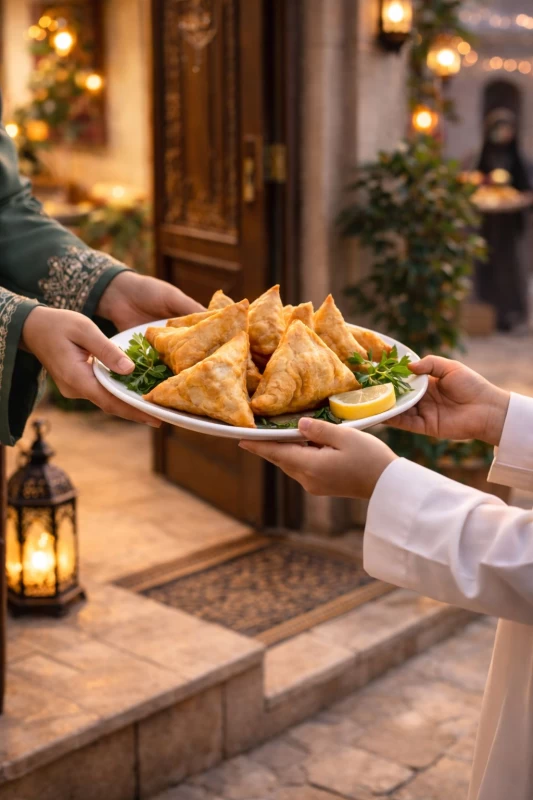
يتميّز رمضان بمظاهر التكافل والألفة و تعزيز العلاقات بين الناس وقربهم من بعضهم. ومن العادات الرمضانية في المدينة المنورة «الطُعمة»، وتتمثل في إرسال الطعام إلى الأهل والجيران وقت الإفطار، إذ يشارك كل بيت بما أعدّه، وتعود الصحون مليئة بأصناف متنوعة، فتسود مشاعر المحبة والتكافل بين الجميع.
وتقول أم أحمد: إن هذه العادة تُعرف في الحجاز باسم «طُعمة»، وتُعد عادة أساسية في كل حي بالمدينة المنورة عاشتها منذ طفولتها وحتى كبرها وانتقالاتها ما بين الأحياء، و لا يكاد يمرّ يوم من أيام رمضان دون تبادل الأطباق بين البيوت قبيل أذان المغرب. وتضيف، إن حضورها اليوم أصبح أقل انتشاراً مقارنة بالماضي، رغم ما تحمله من معانٍ دينية واجتماعية، أبرزها استشعار حق الجار وكسب الأجر. وتشير إلى أن من صورها الراسخة في الذاكرة ألا يُترك الجار يشمّ رائحة الطعام دون أن يُشارك فيه ويتذوق ما عند جاره.
من جانبها، تؤكد نورة الحربي أن «الطُعمة» كانت تسهم في بناء روابط اجتماعية، إذ يتولى الأطفال حمل الصحون بين البيوت وينتظرون فترة ما قبل أذان المغرب حتى يزوروا جيرانهم، في مشهد يومي يعكس الألفة بين سكان الحي. وترى أن تراجع هذه الممارسة اليوم يستدعي إعادة إحيائها بصيغ تتناسب مع واقع الحياة المعاصرة، حتى نحافظ على روح المحبة والتسامح التي ميّزت الشهر الكريم.
ويذكر عماد الحربي أنّ عادة «الطُعمة» واحدة من أبرز الصور الاجتماعية المرتبطة برمضان، إذ تقوم على تبادل الأطعمة بين الجيران والأقارب قبيل أذان المغرب، فيحرص كل منزل على مشاركة جزء من مائدته مع من حوله. وهذه العادة نشأت بصورة عفوية لا تحتاج إلى ترتيب أو دعوات رسمية؛ الأبواب مفتوحة، والأطباق تنتقل بين البيوت يحملها أطفال أو أحد أفراد الأسرة، تصاحبها كلمات الدعاء والود. ولم تكن مجرد تقديم طعام، بل تعبيراً صادقاً عن المشاركة الإنسانية، وتعزيز الروابط الاجتماعية، وترسيخ الشعور بأن الجميع أسرة واحدة يجمعها هذا الشهر الكريم. ويستذكر طفولته أن أثناء الإفطار كانت والدته تقوم بالتعريف بكل طبق ومَن قام بإرساله من الجيران مع الدعاء لهم.
وذكر أيضاً أنه مع التحولات الاجتماعية والعمرانية، وتراجع التواصل المباشر بين الجيران، أصبح حضور هذه العادة أقل انتشاراً، مع بقاء معناها في صور أخرى مثل موائد الإفطار الجماعية في الأحياء والمبادرات الخيرية التي تعكس روح العطاء والمشاركة. وأن عادات «الطُعمة» لم تكن مجرد طبق يُهدى، بل رسالة محبة وجسر تواصل وصورة من صور الترابط التي تؤكد أن رمضان شهر للتقارب والتراحم.
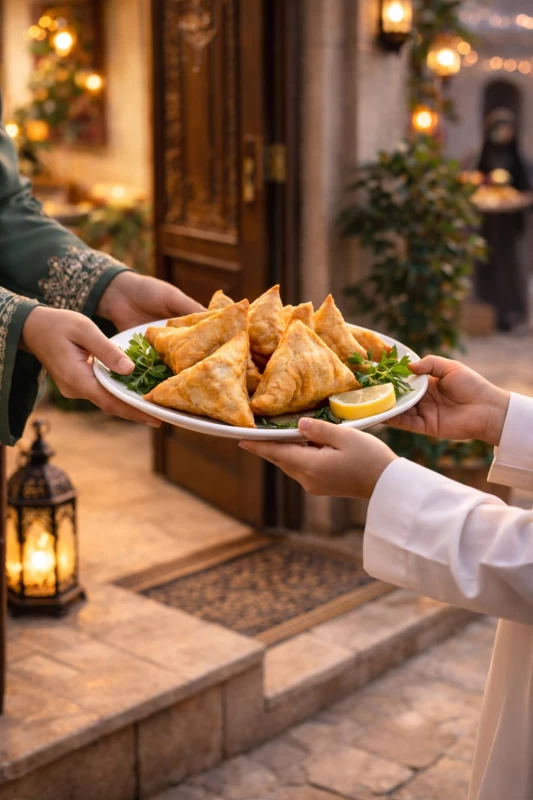
Ramadan is characterized by manifestations of solidarity, familiarity, and the strengthening of relationships among people, bringing them closer together. One of the Ramadan traditions in Medina is “Al-Tu’ma,” which involves sending food to family and neighbors at the time of Iftar. Each household contributes what it has prepared, and the plates return filled with a variety of dishes, fostering feelings of love and solidarity among everyone.
Um Ahmad says that this tradition is known in Hijaz as “Tu’ma,” and it is a fundamental custom in every neighborhood in Medina that she has experienced since her childhood and throughout her life as she moved between neighborhoods. Hardly a day of Ramadan goes by without the exchange of dishes between homes just before the Maghrib call to prayer. She adds that its presence today has become less widespread compared to the past, despite the religious and social meanings it carries, the most prominent of which is the awareness of the neighbor’s rights and earning rewards. She points out that one of the ingrained images in memory is that a neighbor should not be left to smell the aroma of food without being invited to share and taste what their neighbor has prepared.
For her part, Nora Al-Harbi confirms that “Al-Tu’ma” contributed to building social bonds, as children would carry the plates between homes and wait for the time before the Maghrib call to visit their neighbors, creating a daily scene that reflects the familiarity among the residents of the neighborhood. She believes that the decline of this practice today calls for its revival in forms that fit contemporary life, so that we can preserve the spirit of love and tolerance that characterizes this blessed month.
Imad Al-Harbi mentions that the tradition of “Al-Tu’ma” is one of the most prominent social images associated with Ramadan, as it involves the exchange of food between neighbors and relatives just before the Maghrib call to prayer. Each household is keen to share a part of its table with those around it. This custom arose spontaneously, requiring no formal arrangements or invitations; doors are open, and dishes are passed between homes, carried by children or family members, accompanied by words of prayer and goodwill. It was not merely about offering food, but a sincere expression of human sharing, strengthening social bonds, and reinforcing the feeling that everyone is one family united by this blessed month. He recalls his childhood, noting that during Iftar, his mother would introduce each dish and the neighbor who sent it, along with prayers for them.
He also mentioned that with social and urban transformations, and the decline of direct communication between neighbors, the presence of this tradition has become less widespread, although its meaning persists in other forms such as communal Iftar tables in neighborhoods and charitable initiatives that reflect the spirit of giving and sharing. The customs of “Al-Tu’ma” were not just about a dish being gifted, but a message of love, a bridge of communication, and a representation of the bonds that affirm that Ramadan is a month for closeness and compassion.