


قناة مائية
تحت الأرض
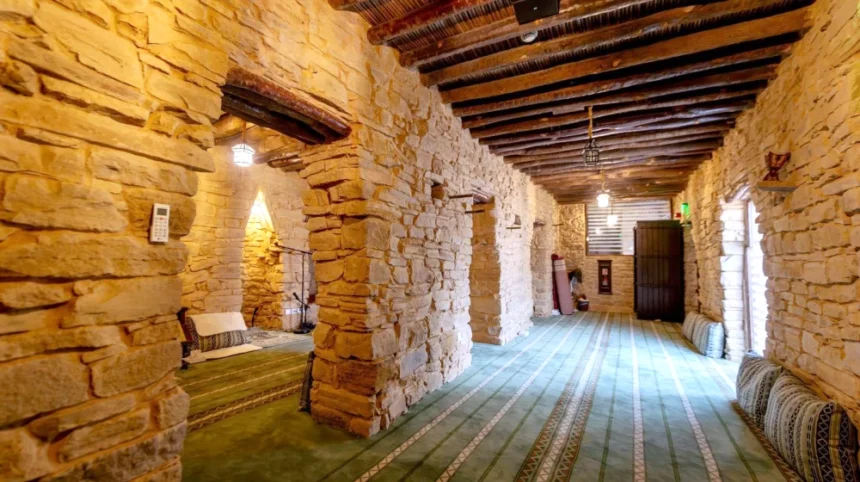
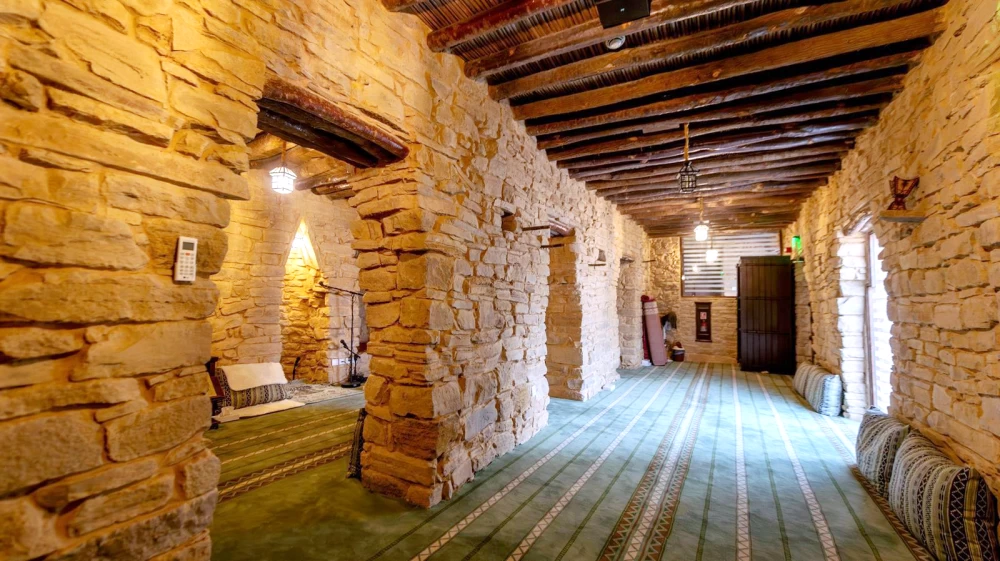
ويتميّز المسجد بعناصر معمارية فريدة، إذ تقع إلى جواره بئر تاريخية تُعرف باسم «أبا الجبال»، إلى جانب قناة مائية محفورة تحت الأرض ومبنية بالأحجار ومُسقوفة بها، تمتد بمحاذاة ساحة المسجد، وتضم فتحة مسقوفة ودرجاً يؤدي إلى مجرى مائي خُصص للوضوء، ما يجعله من المساجد القليلة التي امتلكت مرافق وضوء مائية متكاملة في تلك الحقبة.
وعمل مشروع الأمير محمد بن سلمان لتطوير المساجد التاريخية على تطوير المسجد وحمايته من العوامل البيئية، من خلال مزيج من القيم الفنية والتصميمية والمعرفية، مع تطبيق حلول مدروسة تراعي الظروف البيئية المحيطة، كما ستُنفذ أعمال التطوير وفق الطراز التراثي لمنطقة الجوف، باستخدام تقنيات البناء بالطين وتوظيف المواد الطبيعية، وهو أسلوب معماري تقليدي يتميز بقدرته على التكيف مع البيئة المحلية والمناخ الصحراوي.
البعد الحضاري للسعودية
يُمثل تطوير مسجد السعيدان بمدينة دومة الجندل، خطوة مهمة ضمن إطار الجهود الوطنية للحفاظ على المساجد التاريخية، بما يعزز حضورها ويُرسخ قيمتها الدينية والحضارية للأجيال القادمة.
ويُسهم مشروع الأمير محمد بن سلمان لتطوير المساجد التاريخية في إبراز البعد الثقافي والحضاري للمملكة العربية السعودية، من خلال تطبيق أربعة أهداف إستراتيجية تتمثل في: تأهيل المساجد التاريخية للعبادة والصلاة، واستعادة أصالتها العمرانية، وإبراز البعد الحضاري للمملكة، وتعزيز المكانة الدينية والثقافية للمساجد التاريخية، بما يسهم في المحافظة على الإرث العمراني والتاريخي للمملكة للأجيال القادمة.
يواصل مشروع الأمير محمد بن سلمان لتطوير المساجد التاريخية جهوده في صوْن المساجد العريقة في مختلف مناطق المملكة، من خلال تطويرها وتأهيلها بما يحفظ طابعها المعماري الأصيل ويعزز حضورها الديني والثقافي، ضمن منظومة الجهود الوطنية الهادفة إلى إبراز الإرث الحضاري للمملكة، انسجاماً مع مستهدفات رؤية المملكة 2030، ويأتي مسجد السعيدان في مدينة دومة الجندل بمنطقة الجوف ضمن المساجد التاريخية التي يجسد الحفاظ عليها امتداداً للذاكرة الدينية والعلمية والاجتماعية في المنطقة.
ويقع المسجد في حي الرحيبين بمدينة دومة الجندل، التي تبعد نحو 50 كيلومتراً (جنوب غربي مدينة سكاكا)، ويُعد من أبرز معالم المدينة، وثاني أقدم مساجدها بعد مسجد عمر بن الخطاب -رضي الله عنه-، حيث كان في السابق مسجداً جامعاً تُقام فيه صلاتا الجمعة والجماعة.
ويعود تاريخ تشييد المسجد إلى عام 620هـ الموافق 1223م، وقد بناه جماعة السعيدان ليؤدي دوراً دينياً وقضائياً مهماً، إذ كان مقراً لدار القضاء في منطقة الجوف للفصل في الخصومات، ويُذكر أن أول قاضٍ عُيّن من قبل الملك عبدالعزيز بن عبدالرحمن آل سعود -رحمه الله- هو الشيخ عطا الله الدغيمان السعيدان، الذي تولى كذلك إمامة المسجد في تلك الفترة.
واضطلع المسجد بدور علمي واجتماعي بارز، حيث كان مقصداً لحفّاظ القرآن الكريم وطلاب العلم، الذين كانوا يتلقّون تعليمهم على أيدي المشايخ في حلَق علمية تُعقد يومياً على فترتين، قبل الظهر، ومن العصر إلى المغرب، مما يعكس مكانته بوصفه منارة علمية في تاريخ المنطقة.
وتبلغ مساحة مسجد السعيدان نحو 179 متراً مربعاً، ومع إدراجه ضمن المرحلة الثانية من مشروع الأمير محمد بن سلمان لتطوير المساجد التاريخية ستُرفع مساحته إلى 202.39 متراً مربعاً، بطاقة استيعابية تصل إلى 68 مصلّياً، وذلك بعد أن كانت الصلاة قد توقفت فيه خلال فترات سابقة، في خطوة تهدف إلى إعادة إحيائه واستعادة دوره الديني.
Water Channel
Underground
The mosque is distinguished by unique architectural elements, as it is located next to a historical well known as “Aba Al-Jabal,” alongside an underground water channel carved from stone and covered with it, extending alongside the mosque’s courtyard. It includes a covered opening and a staircase leading to a water flow designated for ablution, making it one of the few mosques that had complete water ablution facilities during that era.
The Prince Mohammed bin Salman Project for the Development of Historical Mosques aims to develop the mosque and protect it from environmental factors through a blend of artistic, design, and knowledge values, applying thoughtful solutions that consider the surrounding environmental conditions. The development work will be carried out in accordance with the traditional style of the Al-Jouf region, using mud construction techniques and employing natural materials, which is a traditional architectural style characterized by its ability to adapt to the local environment and desert climate.
The Civilizational Dimension of Saudi Arabia
The development of the Al-Saidan Mosque in the city of Dumat Al-Jandal represents an important step within the framework of national efforts to preserve historical mosques, enhancing their presence and reinforcing their religious and civilizational value for future generations.
The Prince Mohammed bin Salman Project for the Development of Historical Mosques contributes to highlighting the cultural and civilizational dimension of the Kingdom of Saudi Arabia by implementing four strategic objectives: rehabilitating historical mosques for worship and prayer, restoring their architectural authenticity, highlighting the civilizational dimension of the Kingdom, and enhancing the religious and cultural status of historical mosques, contributing to the preservation of the architectural and historical heritage of the Kingdom for future generations.
The Prince Mohammed bin Salman Project for the Development of Historical Mosques continues its efforts to preserve the ancient mosques in various regions of the Kingdom by developing and rehabilitating them in a way that maintains their original architectural character and enhances their religious and cultural presence, as part of the national efforts aimed at highlighting the Kingdom’s civilizational heritage, in line with the objectives of Vision 2030. The Al-Saidan Mosque in the city of Dumat Al-Jandal in the Al-Jouf region is among the historical mosques whose preservation embodies the continuity of the religious, scientific, and social memory in the region.
The mosque is located in the Al-Ruhaybain neighborhood of Dumat Al-Jandal, which is about 50 kilometers (southwest of Sakaka). It is considered one of the most prominent landmarks of the city and the second oldest mosque after the Mosque of Omar ibn Al-Khattab – may Allah be pleased with him – as it was previously a congregational mosque where Friday and group prayers were held.
The mosque was constructed in the year 620 AH, corresponding to 1223 AD, and was built by the Al-Saidan group to play an important religious and judicial role, as it served as the headquarters for the judiciary in the Al-Jouf region to settle disputes. It is noted that the first judge appointed by King Abdulaziz bin Abdulrahman Al Saud – may Allah have mercy on him – was Sheikh Attallah Al-Dughaiman Al-Saidan, who also served as the imam of the mosque during that period.
The mosque played a prominent scientific and social role, as it was a destination for Quran memorizers and students of knowledge, who received their education from scholars in scientific circles held daily in two sessions, before noon and from the afternoon until sunset, reflecting its status as a scientific beacon in the region’s history.
The area of the Al-Saidan Mosque is approximately 179 square meters, and with its inclusion in the second phase of the Prince Mohammed bin Salman Project for the Development of Historical Mosques, its area will be increased to 202.39 square meters, with a capacity to accommodate 68 worshippers. This comes after prayers had previously ceased there, in a step aimed at reviving it and restoring its religious role.