


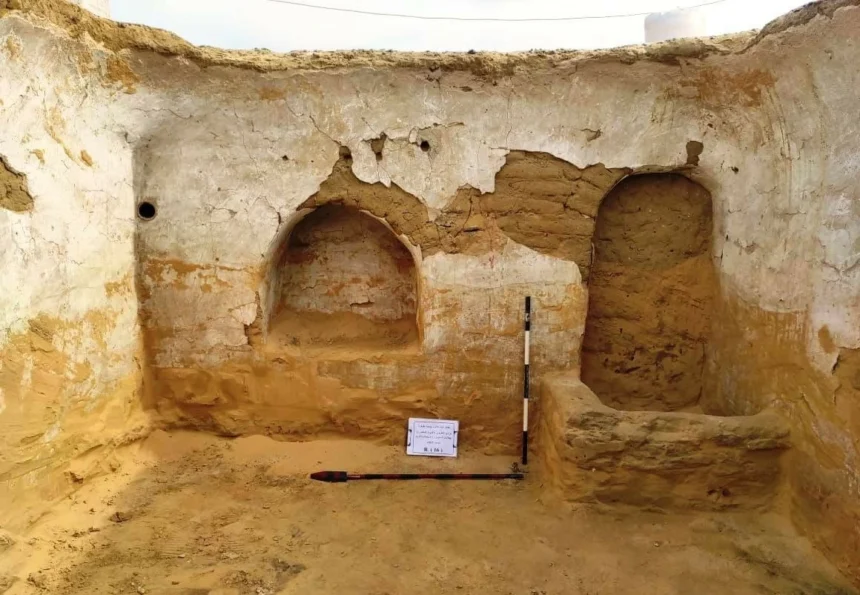
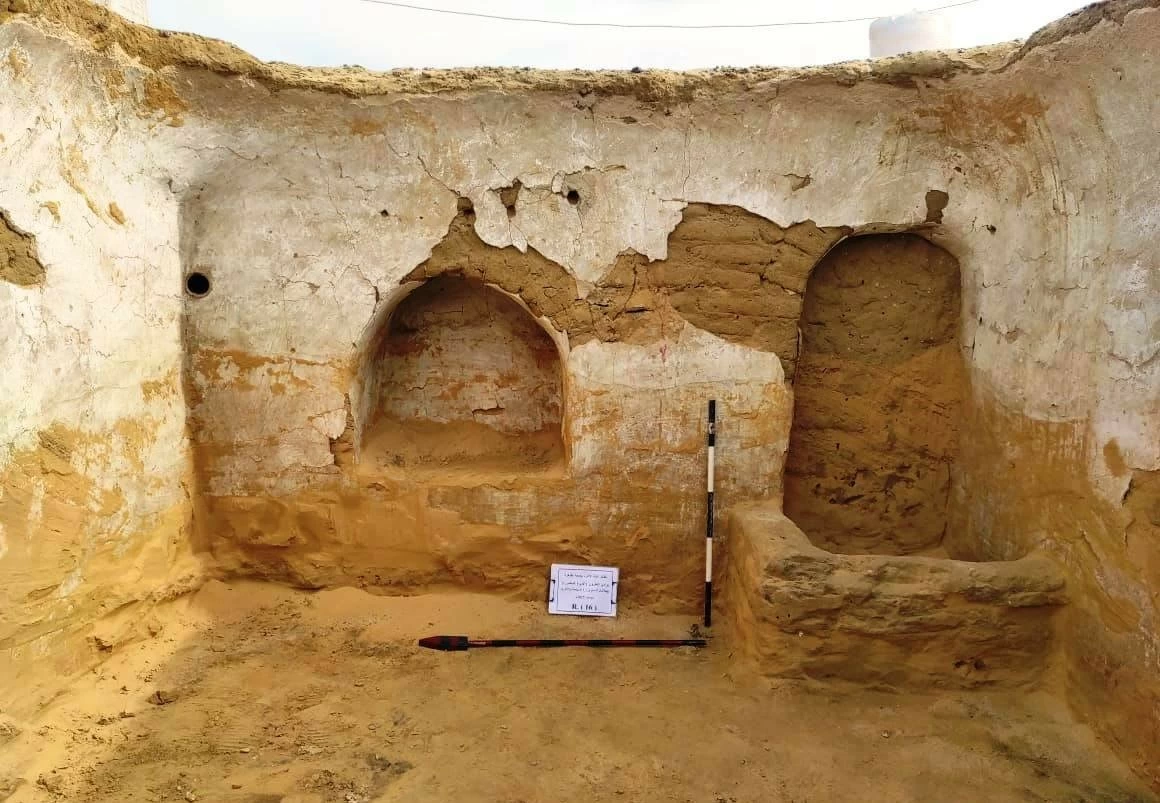
نجحت البعثة الأثرية المصرية المشتركة بين المجلس الأعلى للآثار وكلية الآثار بجامعة القاهرة، في الكشف عن بقايا مبنى دير أثري يرجع تاريخه إلى الفترة ما بين القرنين الرابع والسادس الميلادي، وذلك بمنطقة الأديرة المطمورة بوادي النطرون بمحافظة البحيرة، والتي تُعد إحدى أهم مراكز نشأة الرهبنة في مصر والعالم.
التخطيط المعماري للأدير
وبحسب بيان صادر عن وزارة السياحة والآثار المصرية، يمثل هذا الكشف مرحلة مهمة في تطور الحياة الرهبانية المبكرة، حيث يلقي الضوء على التخطيط المعماري للأديرة الأولى في هذه المنطقة ذات القيمة الدينية والتاريخية الكبيرة.
وتبلغ مساحة المبنى المكتشف نحو 2000 متر مربع، وهو مشيد من الطوب اللبن، حيث يصل سُمك الجدران الخارجية إلى متر كامل، بينما تتراوح سماكة الجدران الداخلية ما بين 60 و70 سم، ويتراوح ارتفاعها بين 1.80 و2.20 متر.
حجرات الرهبان
ويضم المبنى فناءً مركزياً مكشوفاً يتوسط التخطيط العام، تحيط به مجموعة من الوحدات المعمارية التي تشمل أفنية فرعية تفتح عليها قلالي (حجرات الرهبان) بأشكال ومساحات متنوعة، ما بين المربع والمستطيل. كما تم الكشف عن مجموعة من الملحقات الخدمية في الجزء الغربي من المبنى، تضم مطابخ متكاملة وأفراناً وأماكن لتخزين المؤن.
كما أسفرت أعمال الحفائر عن الكشف عن عدد من أماكن الدفن داخل المبنى، تحتوي على بقايا عظام بشرية يُرجح أنها تعود لرهبان الدير، في دلالة على الطابع الجنائزي المرتبط بالحياة الرهبانية في تلك الفترة.
وأظهرت الدراسات المعمارية استخدام أنظمة تسقيف متنوعة، منها الأقبية والقباب المبنية من الطوب اللبن، كما كُسيت الجدران بطبقة من الملاط الأبيض، وزُينت برسومات جدارية تضم صلباناً وأشجار نخيل وزخارف نباتية وهندسية متنوعة.
كما تم العثور على عدد من النقوش بالخط القبطي، تتضمن أسماء رهبان أقاموا بالدير، إلى جانب كتابات دينية تتضرع بالرحمة والمغفرة، مما يسهم في تأريخ المبنى وتوثيق الحياة اليومية للرهبان.
من جانبه، أكد وزير السياحة والآثار المصري شريف فتحي، أن الكشف الأثري يُمثل إضافة نوعية لفهمنا لبدايات الرهبنة في مصر، والتي انطلقت من أرض مصر لتنتشر في مختلف أنحاء العالم.
وأضاف أن وادي النطرون يُعد أحد أهم المراكز الروحية والتاريخية في مصر، وهذا الاكتشاف يعزز من مكانته على خريطة السياحة الدينية والثقافية الدولية.
مسار رحلة العائلة المقدسة
كما أشار إلى حرص الوزارة على دمج المواقع الأثرية القبطية ضمن المنتجات السياحية المتكاملة، خصوصا في إطار مسار رحلة العائلة المقدسة، بما يحقق تنوعاً في التجربة السياحية ويُبرز ثراء التراث المصري.
ومن جانبه، أوضح الأمين العام للمجلس الأعلى للآثار الدكتور هشام الليثي، أن هذا الكشف يأتي في إطار جهود الوزارة المستمرة للكشف عن التراث المدفون وصيانته، مشيراً إلى أن المواقع القبطية تشهد اهتماماً متزايداً خلال الفترة الأخيرة.
وأكد رئيس جامعة القاهرة الدكتور محمد سامي عبد الصادق، أن الكشف تم بأيادٍ مصرية خالصة وباستخدام أحدث الأساليب العلمية في أعمال الحفائر، في إطار التعاون الوثيق مع وزارة السياحة والآثار.
وأشار عميد كلية الآثار بجامعة القاهرة الدكتور محسن صالح إلى أن البعثة وضعت خطة متكاملة لتوثيق المبنى المكتشف وصيانته وفقاً لأحدث المعايير العلمية، مع مراعاة طبيعة مواد البناء الطينية وتحقيق مبادئ الاستدامة.
وأوضح رئيس قطاع الآثار الإسلامية والقبطية الدكتور ضياء زهران أن المبنى يُعد نموذجاً متكاملاً لمباني الرهبنة المبكرة، حيث يحتفظ بمعظم عناصره المعمارية.
كما أكد رئيس الإدارة المركزية لآثار الوجه البحري وسيناء الدكتور محمد طمان أن الكشف يضيف بعداً جديداً لفهم تخطيط الأديرة المبكرة، خصوصا مع وجود أماكن دفن داخلية تعكس طبيعة الحياة الرهبانية.
وفي السياق ذاته، أوضح رئيس البعثة الأثرية الدكتور ياسر إسماعيل عبد السلام أن هذا الكشف يمثل دليلاً مادياً مهماً يؤكد الروايات التاريخية حول نشأة الرهبنة في وادي النطرون، مشيراً إلى أن المبنى يعكس مرحلة انتقالية في تطور العمارة الرهبانية بين القلالي الفردية والأديرة الكبيرة.
The joint Egyptian archaeological mission between the Supreme Council of Antiquities and the Faculty of Archaeology at Cairo University has successfully uncovered the remains of a monastic building dating back to the period between the 4th and 6th centuries AD, in the area of the buried monasteries in Wadi Natrun, Beheira Governorate, which is considered one of the most important centers for the emergence of monasticism in Egypt and the world.
Architectural Planning of the Monasteries
According to a statement issued by the Egyptian Ministry of Tourism and Antiquities, this discovery represents an important stage in the development of early monastic life, shedding light on the architectural planning of the earliest monasteries in this region of great religious and historical value.
The discovered building covers an area of about 2000 square meters and is constructed from mud bricks, with the thickness of the outer walls reaching a full meter, while the thickness of the inner walls ranges between 60 and 70 cm, and their height ranges between 1.80 and 2.20 meters.
Monks’ Cells
The building includes an open central courtyard that is at the heart of the overall layout, surrounded by a group of architectural units that include subsidiary courtyards leading to cells (monks’ rooms) of various shapes and sizes, ranging from square to rectangular. A number of service annexes have also been uncovered in the western part of the building, including fully equipped kitchens, ovens, and storage areas for supplies.
Excavation work has also revealed several burial sites within the building, containing remains of human bones believed to belong to the monks of the monastery, indicating the funerary nature associated with monastic life during that period.
Architectural studies have shown the use of various roofing systems, including vaults and domes made of mud bricks. The walls were coated with a layer of white plaster and adorned with wall paintings featuring crosses, palm trees, and various plant and geometric decorations.
A number of inscriptions in Coptic script were also found, including the names of monks who resided in the monastery, alongside religious writings pleading for mercy and forgiveness, contributing to the dating of the building and documenting the daily life of the monks.
For his part, Egyptian Minister of Tourism and Antiquities Sherif Fathy confirmed that the archaeological discovery represents a qualitative addition to our understanding of the beginnings of monasticism in Egypt, which originated from the land of Egypt and spread to various parts of the world.
He added that Wadi Natrun is considered one of the most important spiritual and historical centers in Egypt, and this discovery enhances its status on the map of international religious and cultural tourism.
The Path of the Holy Family
He also pointed out the ministry’s keenness to integrate Coptic archaeological sites into comprehensive tourism products, especially within the framework of the path of the Holy Family’s journey, achieving diversity in the tourism experience and highlighting the richness of Egyptian heritage.
For his part, Dr. Hisham El-Leithy, Secretary-General of the Supreme Council of Antiquities, explained that this discovery is part of the ministry’s ongoing efforts to uncover and preserve buried heritage, noting that Coptic sites have been receiving increased attention recently.
Dr. Mohamed Sami Abd El-Sadek, President of Cairo University, confirmed that the discovery was made by purely Egyptian hands using the latest scientific methods in excavation work, in the context of close cooperation with the Ministry of Tourism and Antiquities.
Dr. Mohsen Saleh, Dean of the Faculty of Archaeology at Cairo University, pointed out that the mission has developed a comprehensive plan to document and preserve the discovered building according to the latest scientific standards, taking into account the nature of the earthen building materials and achieving sustainability principles.
Dr. Diaa Zahran, Head of the Islamic and Coptic Antiquities Sector, clarified that the building is a complete model of early monastic buildings, retaining most of its architectural elements.
Dr. Mohamed Taman, Head of the Central Administration of Lower Egypt and Sinai Antiquities, confirmed that the discovery adds a new dimension to understanding the planning of early monasteries, especially with the presence of internal burial sites reflecting the nature of monastic life.
In this context, Dr. Yasser Ismail Abdel Salam, Head of the archaeological mission, explained that this discovery represents an important material evidence confirming historical narratives about the emergence of monasticism in Wadi Natrun, indicating that the building reflects a transitional phase in the development of monastic architecture between individual cells and large monasteries.