مع انتشار التعليم في دول الخليج العربية، وافتتاح الجامعات، وتأسيس الأندية الثقافية، وظهور وزارات أو هيئات حكومية معنية بالشأن الثقافي، دخلت المنطقة في حالة حراك ثقافي غير مسبوق، وتعزّز هذا الحراك بظهور العديد من مجلات الثقافة الدورية الرصينة، من تلك التي حرصت على تقديم زاد معرفي محكم بأقلام كبار المبدعين في العالم العربي.
من أمثلة هذه المجلات المبكرة: «قافلة الزيت» الشهرية (القافلة حالياً) الصادرة عن شركة أرامكو النفطية بالظهران (صدر عددها الأول في أكتوبر 1953)، و«العربي» الشهرية الصادرة عن وزارة الإعلام بدولة الكويت (صدر عددها الأول في ديسمبر 1958)، و«المنهل» الشهرية التي أسّسها الأديب السعودي عبدالقدوس الأنصاري في المدينة المنورة (صدر عددها الأول في فبراير 1937). و«العرب» الشهرية (تحولت لاحقاً إلى فصلية) التي ظهرت على يد علامة الجزيرة الشيخ حمد الجاسر في الرياض (صدر العدد الأول منها في أكتوبر 1966).
لاحقاً، شهدت منطقة الخليج والجزيرة العربية طفرة في عدد الدوريات والفصليات الصادرة عن الجامعات أو المؤسسات العلمية أو وزارات الإعلام والثقافة، ومن أمثلتها: مجلة «الفيصل» ومجلة «رسالة الخليج العربي» السعوديتان، مجلة «نزوى» العمانية، مجلة «الدوحة» القطرية، مجلة «البحرين الثقافية» و«الخليج العربي للبحوث العلمية» البحرينيتان، مجلة «دراسات» الإماراتية، مجلة «دراسات الخليج والجزيرة العربية» الكويتية، وغيرها.
ويمكن القول إن دولة الكويت، ومن خلال مجلسها الوطني للثقافة والفنون والآداب، كانت الأنشط في هذا المجال، ولعبت دوراً رائداً ومعتبراً في نشر العلم والمعرفة في الخليج والوطن العربي، بما دأبت على إصداره من مطبوعات رصينة مكتنزة بالفكر والثقافة والعلوم الإنسانية الرفيعة. ونجد أبرز تجليات ذلك في سلسلة «عالم المعرفة»، وهي عبارة عن كتب ثقافية تصدر مطلع كل شهر منذ يناير 1978، بهدف ربط القارئ بأحدث التيارات الفكرية والثقافية المعاصرة. ونجدها متجلية ثانياً في سلسلة «المسرح العالمي»، وهي عبارة أيضاً عن كتب شهرية (صدر العدد الأول منها في مارس 1971)، وتهدف إلى تنمية الوعي بالفن المسرحي وإثرائه فكرياً وأدبياً عن طريق نشر المسرحيات العالمية لكبار كتاب المسرح على مستوى العالم بعد ترجمتها من لغتها الأصلية إلى العربية بإتقان وإخضاعها للتحكيم العلمي. ونجدها متجلية ثالثاً في مجلة «عالم الفكر»، وهي دورية ثقافية محكمة (ظهر عددها الأول في أبريل عام 1970)، ولا يعرف قدرها ومكانتها الرفيعة سوى الأكاديميين والجامعيين العرب.
دعونا نقرأ ما كتبه الشاعر والكاتب الأردني يوسف أبواللوز في صحيفة «الخليج» (19/12/2019) عن أثر هذه الدوريات، وتحديداً سلسلة «عالم المعرفة» كمشروع فكري تنويري. يقول أبواللوز: «هي بحق ظاهرة ثقافية عربية في تاريخ الآداب، والعلوم، والفنون والجماليات والفكر والنقد واللغات والأديان والأساطير والثقافات الشعبية والتراثيات العالمية.. وكل ذلك بطباعة نظيفة أنيقة وأسعار أقل من رمزية.. أسعار ثابتة رغم تغيّر أسعار العملات في العالم على مدى أكثر من أربعين عاماً وحتى اليوم».
ويضيف: «وراء تأسيس هذه السلسلة نبل ثقافي وروح عربية وحدوية، هي جزء أصيل من طبيعة الكويت والمثقف الكويتي. فالسلسلة الشهرية تصل إلى كل أقطار الوطن العربي، وفور وصولها إلى مكتبات وأكشاك العواصم العربية تنفد بعد وقت قصير، وكم يشعر المثقف العربي بغبن نفسه بنفسه إذا لم يسارع إلى الحصول على نسخته من العنوان الجديد في هذه السلسلة التاريخية. أسّس سلسلة عالم المعرفة، كما يعرف ملايين القرّاء العرب الشاعر الكويتي أحمد مشاري العدواني (1923ــ2010)، إلى جانب المفكر المصري الدكتور فؤاد زكريا (1927ــ2010). وعندما أسّس هذان العلمان العربيان سلسلة عالم المعرفة كانا في أوائل الخمسينات من عمريهما، ما يؤشر إلى وعي فكري وثقافي مبكر عندهما بالنظر إلى تأسيس مشروع في حجم سلسلة عالم المعرفة آنذاك، وبالنظر إلى ضمان نجاحه واستمراريته».
أما عن سلسلة «المسرح العالمي»، فقد كتب الدكتور محمد فتحي فرج في مجلة «العربي» (العدد 687) فقال إنها «سدت نقصاً في المكتبة العربية أحدثه غياب (سلسلة المسرح العالمي) التي كانت تصدرها وزارة الثقافة المصرية. وقدّمت لنا هذه السلسلة روائع المسرح العالمي لعمالقة الشعراء والمسرحيين منذ عهد اليونان وحتى الآن، فقدمت أعمالاً لفوكليس، وشكسبير، وراسين، وجوته، وبيكيت، وغيرهم».
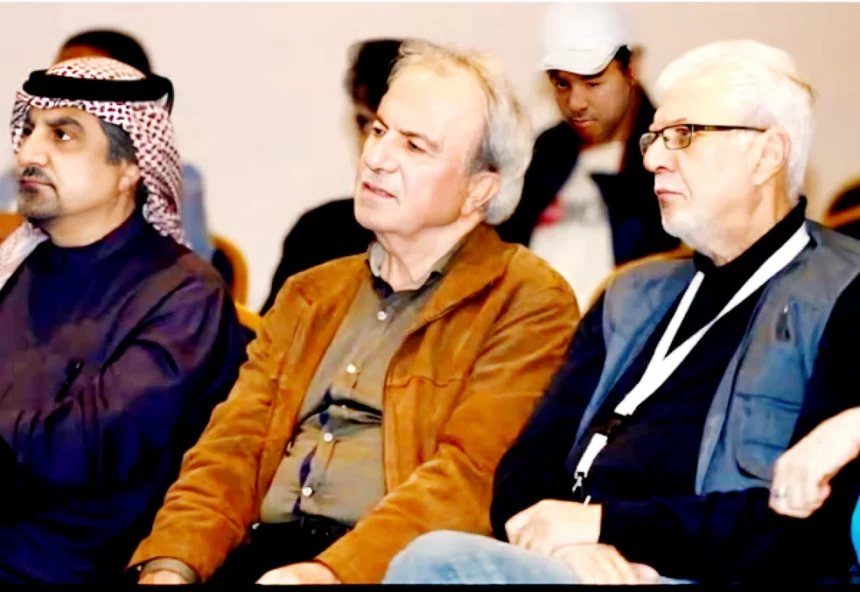
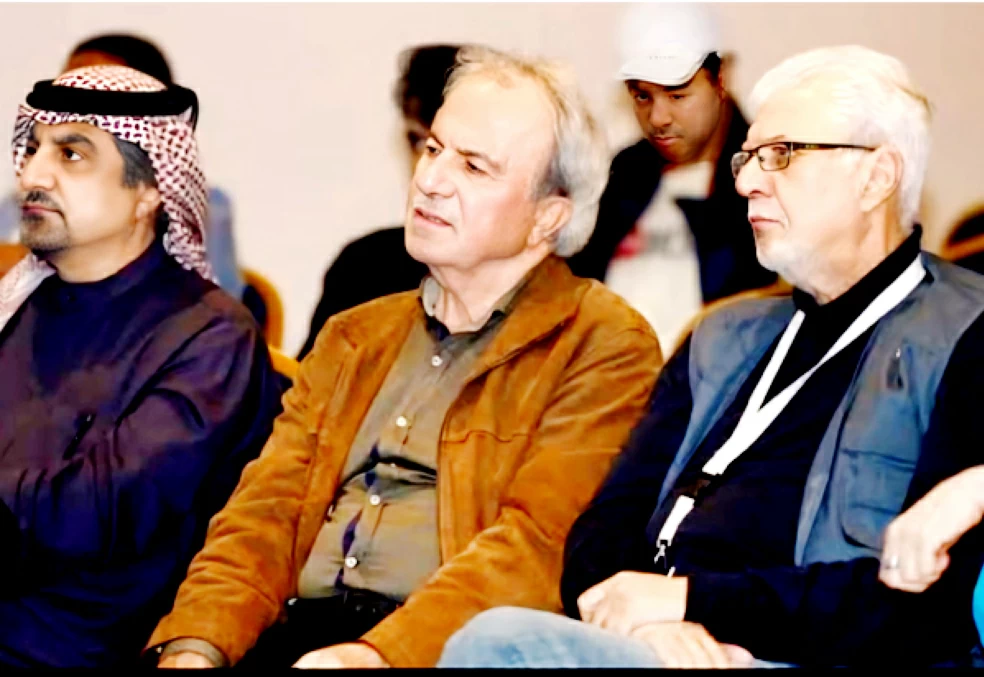
ومما لا شك فيه أن تلك الدوريات الكويتية لم تكن لتخلق أثراً مدوياً وإشعاعاً فكرياً خالداً لولا وقوف ثلة من النجباء والمثقفين الكويتيين والعرب خلف دفتها. وإذا كان أحد هؤلاء الكويتيين هو الأديب الشاعر أحمد مشاري العدواني، فإن إحدى الشخصيات العربية البارزة التي رافقته لسنوات ووضعت علمها وخبرتها تحت تصرفه لإنجاز إصدارات المجلس الوطني للثقافة والفنون والآداب على أكمل وأفضل وأثرى وجه هو «صدقي عبدالله خطاب»، الذي سنحاول في هذه المادة توثيق سيرته منذ أن وطئت قدماه أرض الكويت لخدمتها ثقافياً.
أتى على ذكر حطاب الناقد والكاتب المصري جابر العصفور في مقال نشره بمجلة «العربي» الكويتية (العدد 703)، خصّصه لسرد ذكرياته في السنوات التي عمل فيها بالكويت، فقال: «ولا أكاد أذكر أحمد العدواني إلا ويرد على ذهني ذكر مساعده الأستاذ صدقي حطاب، الفلسطيني الجنسية، الذي عاش أغلب سنوات عمره في الكويت، بعد أن تخرج في قسم اللغة الإنجليزية من جامعة القاهرة. ولا تزال صلتي بالأستاذ حطاب قائمة، وأسأل عنه دائماً كلما ذهبت إلى عمَّان، فهو من أصدقاء الزمن الجميل بسنواته التي لا تنسى، والتي لا أزال أراها بمنزلة الحلم الذي كان يجمعني بشخصيات هي رموز مضيئة في كل مجال من مجالات المعرفة. وأعتقد أن إسهام صدقي حطاب في تأسيس سلسلة (عالم المعرفة) الكويتية كان عظيماً، فهو الذي كان بمنزلة الدينامو، الذي كان يكمن وراءها، والذي ظل يعمل على استمرارها وتجددها إلى أن اضطرته أحواله الصحية إلى التخلي عنها والعودة إلى مستقره الدائم في عمَّان، حفظه الله ومنحه المزيد من العمر والعافية».
وكتب عنه في صحيفة «الرأي» الأردنية (30/3/2011) صديقه وزميله في العمل في اللجنة العليا لتطوير الفنون في الكويت، ثم في الأمانة العامة للمجلس الوطني للثقافة والفنون والآداب، المسرحي الكويتي عبدالعزيز السريع، فوصفه بالمعلم المثقف، وسرد الكثير من ذكرياته معه، متطرقاً إلى جهوده الكبيرة وإخلاصه وتفانيه في العمل، في الحقل التربوي وفي الحياة العامة ومشيراً إلى مؤلفاته العديدة. ومما قاله: «توثقت علاقتي به وازدادت عمقاً بمرور الوقت لإعجابي بشخصه وثقافته الواسعة والمتنوعة على الوجهين التراثي والمعاصر.. العربي والعالمي، حيث خدم الأستاذ صدقي حطاب بإخلاص في الكويت، ولعب دوراً بارزاً في العمل التربوي والثقافي، وقد قام بأمر مباشر من صديقيه عبدالعزيز حسين وأحمد العدواني بتأسيس قسم اليونيسكو في (دائرة المعارف) عام 1957، وعمل إلى جوارهما في النشاط الثقافي لوزارة التربية وفي مدارسها وفي الحياة العامة». وأضاف ما معناه أن حطاب أمضى 35 سنة يعمل في الكويت بحب وإخلاص، وبعد تركها للإقامة في الأردن كان الحنين لها يشده فيقوم بزيارتها وزيارة أصدقائه الكثر بها.
ونشرت صحيفة «الحياة الجديدة» الفلسطينية (31/10/2017) سردية مفصلة عن نشأته ودراسته ومسيرته المهنية، بمناسبة رحيله إلى مثواه الأخير في عام 2017 بمدينة عمّان الأردنية، بدأتها بالإعراب عن الأسف لتجاهل خبر وفاته وشح أخباره، «رغم إنجازاته الفكرية، والأدبية، والعلمية، ذائعة الصيت في الكويت، التي عاش بها سنين عديدة، وعمل في فضائها الثقافي، ليكون واحداً من الأسماء العملاقة التي أثرت المكتبات العربية بالأدب المترجم، والمجلات الفكرية».
وبعد انتشار خبر وفاته قامت وكالة الأنباء الفلسطينية (وفا) في 30/10/2017 بنعيه من خلال بيان عنونته بـ«صدقي خطاب.. قامة أدبية عميقة ترحل».
وُلد صدقي عبدالله حطاب بقرية «كفرصور» التابعة لقضاء طولكرم سنة 1932، ورحل عن الدنيا بمدينة عمّان الأردنية في أواخر أكتوبر 2017 عن عمر ناهز 85 عاماً. وكالكثير من أبناء فلسطين الذين اضطروا للنزوح إلى دول الجوار بعد حرب 1948، عاش حطاب وترعرع وأكمل تعليمه النظامي في الأردن، قبل أن ينتقل إلى مصر لمواصلة تعليمه الجامعي.
في مصر التحق حطاب بجامعة القاهرة، طالباً بكلية آداب اللغة الإنجليزية، التي منحته درجة الليسانس في عام 1955، لينتظر بعدها عدة سنوات إلى أن تهيأت له الظروف لمواصلة تعليمه العالي الذي أتمه في عام 1967 في جامعة لندن التي منحته درجة الماجستير عن أطروحة بعنوان «مذهب ريتشارد في النقد الأدبي». بعد ذلك واصل دراسته بجامعة لندن إلى أن نال منها درجة الدكتوراه عن أطروحة بعنوان «أثر إليوت في الأدب العربي المعاصر».
من التعليم إلى المسرح
بدأت مسيرته المهنية فور تخرجه من جامعة القاهرة، حيث كان ضمن الخريجين الفلسطينيين الذين تعاقدت معهم دائرة المعارف الكويتية للعمل بالكويت قبل استقلالها. وهكذا حلّ حطاب في الكويت وبدأ عمله مدرساً للغة الإنجليزية في العام الدراسي 1955/ 1956. وفي عام 1957 تمّ نقله للعمل بقسم اليونيسكو في دائرة المعارف الكويتية. وفي الوقت نفسه قاده شغف العطاء وتثقيف من حوله إلى المساهمة في البرامج الثقافية لإذاعة الكويت مثل إعداد وتقديم برنامج «من المسرح العالمي» (استمر بثه لسبع سنوات من 1977 وحتى 1984، وضم 350 حلقة اشتملت على تعريف بالمؤلف وتلخيص لإحدى مسرحياته وتقديم شاهد من المسرحية ونقد له)، ثم إعداد وتقديم بعض البرامج المتلفزة من خلال تلفزيون الكويت مثل برنامج «الأدب في أسبوع» الذي داوم على تقديمه مع سليمان الشطي وعبدالعزيز السريع. إلى ذلك انشغل في هذه المرحلة من حياته بالترجمة، فقام بترجمة العديد من الدراسات والأبحاث والكتب ذات العلاقة بالتربية والتعليم والمسرح من الإنجليزية إلى العربية، ومنها: «منهج المدرسة الابتدائية» في عام 1965، «وسائل وتقنيات جديدة في التربية» و«ناظر المدرسة الناجح» في عام 1966، «فن السيرة الذاتية» في عام 1972. علاوة على قيامه في عام 1970 بترجمة أربع مسرحيات لكل من يونسكو وأداموف وأربال وألبي، صدرت ضمن سلسلة «من المسرح العالمي».
والحقيقة أن البصمة الإبداعية الحقيقية في تجربة حطاب جاءت من قيامه، وسط الظروف والأزمات السياسية والاجتماعية الصعبة التي أعقبت هزيمة حزيران، بطرق باب أصعب الترجمات، ونعني بذلك ترجمة الفنون المسرحية، بدءاً بترجمة «فن المسرحية» لفريد ميليت وجيرالد ايدس بنتلي، الذي نهل منه كبار مبدعي العمل المسرحي. ثم واصل الرجل تجربته الأدبية والفنية من خلال الاحتكاك بروّاد المسرح في فلسطين والأردن والكويت، وهو ما ساعده على تحريك الفضاء المسرحي العربي من خلال طرح أسئلة تناولت معضلات مثل: لماذا اختار مارتن إسلين مسرحيات يونسكو وبيكيت وجينيه وأداموف، لتكون نموذجاً حرياً بالجمع بين دفتي كتاب «مسرح العبث» النقدي؟
1977.. التحول المفصلي
شكّلت سنة 1977 منعطفاً مفصلياً في حياته امتد تأثيره الثقافي حتى أغسطس عام 1990 الذي شهد تدمير القوات العراقية الغازية لكل نبت ثقافي جميل زرعته الكويت. ذلك أن الفترة من 1977 وحتى 1990 شهدت انتقاله للعمل مديراً لدائرة الشؤون الثقافية والفنية في المجلس الوطني للثقافة والفنون والآداب بالكويت. واستمر ممسكاً بهذا المنصب حتى عام 1989، الذي تمّ فيه تعيينه مديراً للمشاريع الثقافية في المجلس ذاته حتى أغسطس 1990، وفي الوقت نفسه كان عضواً مؤسساً ونائباً لرئيس اللجنة الدائمة للثقافة العربية التابعة للمنظمة العربية للتربية والثقافة والعلوم (ألسكو). كما شهدت تلك السنوات تألقه وإنجازاته الفكرية والأدبية والعلمية في الفضاء الكويتي والخليجي والعربي كواحد من الأسماء العربية ذات التأثير في الأدب المترجم والفكر العربي، خصوصاً أنه كان خلال هذه الفترة عضو هيئة التحرير في كل من: سلسلة «عالم المعرفة» من يناير 1978 وحتى أغسطس 1990، ومجلة «الثقافة العالمية» من عام 1981 وحتى عام 1990، قبل أن يخرج من الكويت مضطراً بسبب الغزو العراقي وتوقف الأنشطة الثقافية، ويستقر في الأردن حيث تولى رئاسة تحرير مجلة «المشكاة» الأردنية (مجلة علمية صادرة عن عمادة البحث العلمي في جامعة العلوم الإسلامية العالمية بعمّان) منذ عام 1992، ثم صار مديراً لتحرير «مجلة العلوم التطبيقية» الأردنية حتى عام 1998.
ونختتم بالإشارة إلى أن لحطاب ابنة اقتفت أثره، وهي الباحثة والكاتبة والأكاديمية الدكتورة «منن صدقي حطاب» التي وافتها المنية في 27 مارس 2026.
With the spread of education in the Gulf Arab states, the opening of universities, the establishment of cultural clubs, and the emergence of ministries or governmental bodies concerned with cultural affairs, the region entered an unprecedented cultural movement. This movement was further strengthened by the emergence of numerous serious cultural periodicals, which were keen to provide a well-rounded intellectual nourishment through the writings of prominent creators in the Arab world.
Examples of these early magazines include: the monthly “Oil Caravan” (currently known as Al-Qafilah) published by Aramco in Dhahran (its first issue was released in October 1953), the monthly “Al-Arabi” published by the Ministry of Information in Kuwait (its first issue was released in December 1958), and the monthly “Al-Manhal” founded by the Saudi writer Abdul Quddus Al-Ansari in Medina (its first issue was released in February 1937). Also, the monthly “Al-Arab” (which later became quarterly) appeared under the auspices of the distinguished scholar Sheikh Hamad Al-Jaser in Riyadh (its first issue was released in October 1966).
Later, the Gulf region and the Arabian Peninsula witnessed a surge in the number of periodicals and journals published by universities, scientific institutions, or ministries of information and culture. Examples include: the Saudi magazines “Al-Faisal” and “Message of the Arabian Gulf,” the Omani magazine “Nizwa,” the Qatari magazine “Al-Doha,” the Bahraini magazines “Cultural Bahrain” and “Arab Gulf for Scientific Research,” the Emirati magazine “Studies,” and the Kuwaiti magazine “Studies of the Gulf and Arabian Peninsula,” among others.
It can be said that Kuwait, through its National Council for Culture, Arts, and Letters, was the most active in this field, playing a pioneering and significant role in disseminating knowledge and culture in the Gulf and the Arab world, through the publications it regularly issued, which were rich in thought, culture, and high human sciences. The most prominent manifestation of this is found in the series “World of Knowledge,” which consists of cultural books published at the beginning of each month since January 1978, aimed at connecting the reader with the latest contemporary intellectual and cultural trends. Another manifestation is the “World Theater” series, which also consists of monthly books (its first issue was released in March 1971), aimed at enhancing awareness of theatrical art and enriching it intellectually and literarily by publishing the world’s plays by major playwrights after translating them from their original languages into Arabic with precision and subjecting them to scientific review. A third manifestation is the magazine “World of Thought,” which is a peer-reviewed cultural periodical (its first issue appeared in April 1970), and its value and high status are known only to Arab academics and university students.
Let us read what the Jordanian poet and writer Youssef Abu Al-Lawz wrote in the newspaper “Al-Gulf” (19/12/2019) about the impact of these periodicals, specifically the “World of Knowledge” series as an enlightening intellectual project. Abu Al-Lawz states: “It is truly a cultural phenomenon in Arab history in literature, sciences, arts, aesthetics, thought, criticism, languages, religions, myths, popular cultures, and global heritage… all with clean, elegant printing and prices less than symbolic… fixed prices despite the changes in currency rates around the world for more than forty years and until today.”
He adds: “Behind the establishment of this series lies a noble cultural spirit and an Arab unity spirit, which is an integral part of the nature of Kuwait and the Kuwaiti intellectual. The monthly series reaches all corners of the Arab homeland, and as soon as it arrives at libraries and kiosks in Arab capitals, it sells out quickly. How often does the Arab intellectual feel regret if he does not hurry to obtain his copy of the new title in this historical series? The “World of Knowledge” series was founded by the Kuwaiti poet Ahmad Mashari Al-Adwani (1923-2010), alongside the Egyptian thinker Dr. Fouad Zakaria (1927-2010). When these two Arab luminaries established the “World of Knowledge” series, they were in their early fifties, indicating an early intellectual and cultural awareness in them, considering the establishment of a project the size of the “World of Knowledge” series at that time, and considering the guarantee of its success and continuity.”
As for the “World Theater” series, Dr. Mohamed Fathi Farag wrote in the magazine “Al-Arabi” (issue 687) that it “filled a gap in the Arab library created by the absence of the (World Theater series) that was published by the Egyptian Ministry of Culture. This series presented us with the masterpieces of world theater from the giants of poets and playwrights from the time of the Greeks until now, offering works by Aeschylus, Shakespeare, Racine, Goethe, Beckett, and others.”
There is no doubt that these Kuwaiti periodicals would not have created a resounding impact and a lasting intellectual radiance without the support of a group of distinguished Kuwaiti and Arab intellectuals behind them. If one of these Kuwaitis is the writer and poet Ahmad Mashari Al-Adwani, then one of the prominent Arab figures who accompanied him for years and offered his knowledge and experience to assist him in achieving the publications of the National Council for Culture, Arts, and Letters in the most complete, best, and richest manner is “Sediq Abdullah Khattab,” whose biography we will attempt to document in this article since he set foot in Kuwait to serve it culturally.
The critic and writer Egyptian Jaber Al-Asfour mentioned Khattab in an article published in the Kuwaiti magazine “Al-Arabi” (issue 703), dedicated to recounting his memories during the years he worked in Kuwait, saying: “I can hardly mention Ahmad Al-Adwani without thinking of his assistant, Mr. Sediq Khattab, of Palestinian nationality, who spent most of his life in Kuwait after graduating from the English Language Department at Cairo University. My connection with Mr. Khattab remains, and I always ask about him whenever I go to Amman, for he is one of the friends of beautiful times, those unforgettable years, which I still see as a dream that brought me together with personalities that are bright symbols in every field of knowledge. I believe that Sediq Khattab’s contribution to establishing the Kuwaiti ‘World of Knowledge’ series was immense; he was like the dynamo that lay behind it, working to ensure its continuity and renewal until health issues forced him to abandon it and return to his permanent residence in Amman; may God protect him and grant him more years and health.”
His friend and colleague in the Higher Committee for the Development of Arts in Kuwait, and then in the General Secretariat of the National Council for Culture, Arts, and Letters, the Kuwaiti theater artist Abdulaziz Al-Sari’ wrote about him in the Jordanian newspaper “Al-Rai” (30/3/2011), describing him as a cultured teacher and recounting many of his memories with him, touching on his great efforts, dedication, and commitment to work in the educational field and public life, and referring to his numerous publications. He stated: “My relationship with him deepened over time due to my admiration for his personality and his wide and diverse culture on both the heritage and contemporary levels… Arab and global, as Mr. Sediq Khattab served faithfully in Kuwait and played a prominent role in educational and cultural work. He was directly tasked by his friends Abdulaziz Hussein and Ahmad Al-Adwani to establish the UNESCO Department in the (Department of Knowledge) in 1957, and he worked alongside them in the cultural activities of the Ministry of Education and in its schools and in public life.” He added that Khattab spent 35 years working in Kuwait with love and dedication, and after leaving it to reside in Jordan, he felt nostalgic for it, prompting him to visit and see his many friends there.
The Palestinian newspaper “Al-Hayat Al-Jadida” (31/10/2017) published a detailed narrative about his upbringing, education, and professional journey, on the occasion of his passing to his final resting place in 2017 in Amman, beginning with expressing regret for the neglect of news about his death and the scarcity of information about him, “despite his intellectual, literary, and scientific achievements, which are well-known in Kuwait, where he lived for many years and worked in its cultural space, to be one of the giant names that enriched Arab libraries with translated literature and intellectual magazines.”
After the news of his death spread, the Palestinian news agency (Wafa) announced his passing on 30/10/2017 through a statement titled “Sediq Khattab… a profound literary figure departs.”
Sediq Abdullah Khattab was born in the village of “Kafr Sur” in the Tulkarm district in 1932 and passed away in Amman, Jordan, in late October 2017 at the age of nearly 85. Like many Palestinians who were forced to flee to neighboring countries after the 1948 war, Khattab lived, grew up, and completed his formal education in Jordan before moving to Egypt to continue his university education.
In Egypt, Khattab enrolled at Cairo University, studying in the Faculty of Arts in the English Language Department, which awarded him a bachelor’s degree in 1955. He then waited several years until circumstances allowed him to pursue his higher education, which he completed in 1967 at the University of London, where he obtained a master’s degree with a thesis titled “Richard’s Method in Literary Criticism.” He continued his studies at the University of London until he earned a doctorate with a thesis titled “Eliot’s Influence on Contemporary Arabic Literature.”
From Education to Theater
His professional journey began immediately after graduating from Cairo University, as he was among the Palestinian graduates contracted by the Kuwait Knowledge Department to work in Kuwait before its independence. Thus, Khattab arrived in Kuwait and began his work as an English teacher in the 1955/1956 academic year. In 1957, he was transferred to work in the UNESCO Department at the Kuwait Knowledge Department. At the same time, his passion for giving and educating those around him led him to contribute to cultural programs for Kuwait Radio, such as preparing and presenting the program “From World Theater” (which continued to air for seven years from 1977 to 1984, comprising 350 episodes that included an introduction to the author, a summary of one of his plays, a presentation of a scene from the play, and a critique of it), and then preparing and presenting some television programs through Kuwait Television, such as the program “Literature in a Week,” which he continued to present with Suleiman Al-Shatti and Abdulaziz Al-Sari’. During this phase of his life, he also engaged in translation, translating numerous studies, research, and books related to education and theater from English to Arabic, including: “The Primary School Curriculum” in 1965, “New Methods and Techniques in Education,” and “The Successful School Principal” in 1966, and “The Art of Autobiography” in 1972. In addition, in 1970, he translated four plays by Ionesco, Adamov, Arbel, and Albee, which were published in the “From World Theater” series.
In fact, Khattab’s true creative imprint came from his undertaking, amidst the difficult political and social crises that followed the June defeat, the challenging translations, particularly the translation of theatrical arts, starting with the translation of “The Art of the Play” by Fred Millet and Gerald Eades Bentley, which was drawn upon by major creators of theatrical work. He then continued his literary and artistic experience through interaction with theater pioneers in Palestine, Jordan, and Kuwait, which helped him to invigorate the Arab theatrical space by raising questions addressing dilemmas such as: Why did Martin Esslin choose the plays of Ionesco, Beckett, Genet, and Adamov to be a model worthy of being compiled in the critical book “Theater of the Absurd”?
1977… A Pivotal Transformation
The year 1977 marked a pivotal turning point in his life, the cultural impact of which extended until August 1990, when the Iraqi invading forces destroyed every beautiful cultural plant that Kuwait had nurtured. The period from 1977 to 1990 saw him transition to work as the Director of the Cultural and Artistic Affairs Department at the National Council for Culture, Arts, and Letters in Kuwait. He held this position until 1989, when he was appointed Director of Cultural Projects at the same council until August 1990. At the same time, he was a founding member and deputy chairman of the Permanent Committee for Arab Culture under the Arab Organization for Education, Culture, and Science (ALECSO). These years also witnessed his brilliance and intellectual, literary, and scientific achievements in the Kuwaiti, Gulf, and Arab spaces as one of the influential Arab names in translated literature and Arab thought, especially since he was during this period a member of the editorial board of both the “World of Knowledge” series from January 1978 until August 1990, and the “Global Culture” magazine from 1981 until 1990, before he was forced to leave Kuwait due to the Iraqi invasion and the cessation of cultural activities, settling in Jordan where he became the editor-in-chief of the Jordanian magazine “Al-Mishkat” (a scientific magazine published by the Deanship of Scientific Research at the World Islamic Sciences University in Amman) since 1992, and then became the managing editor of the “Applied Sciences Magazine” until 1998.
We conclude by noting that Khattab has a daughter who followed in his footsteps, the researcher, writer, and academic Dr. “Munan Sediq Khattab,” who passed away on March 27, 2026.