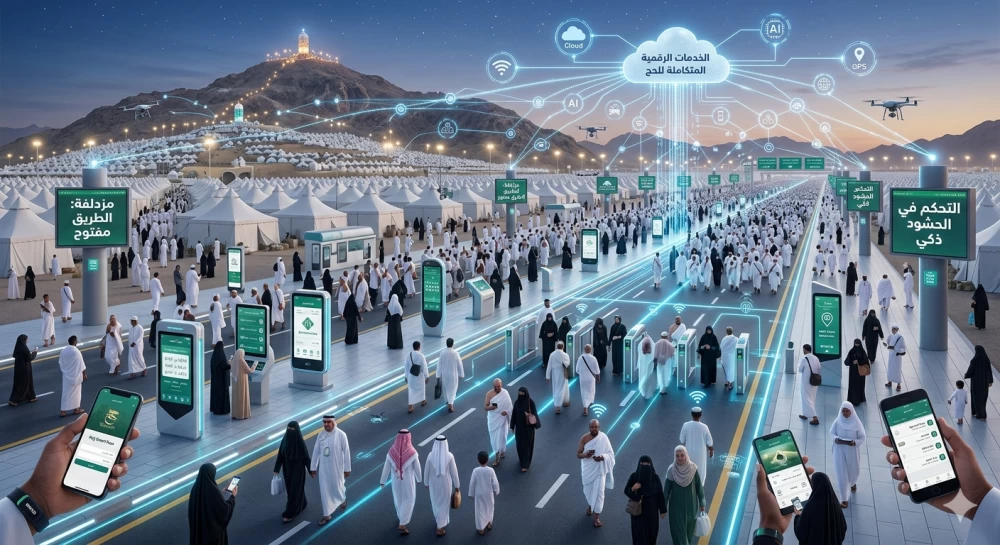
لم تعد المشاعر المقدسة مجرد أماكن تستقبل الحجاج لأيام معدودة، بل تحولت إلى مدينة موسمية ذكية تُدار بأحدث التقنيات والأنظمة التشغيلية المتقدمة، في مشهد يجسد حجم التحول الذي تقوده المملكة في خدمة ضيوف الرحمن. فخلال فترة قصيرة كل عام، تنبض هذه المشاعر بالحياة عبر منظومة متكاملة تشمل الطاقة والمياه والاتصالات والنقل والخدمات الرقمية، ثم تعود إلى هدوئها الطبيعي بعد انتهاء الموسم، بعدما تكون قد استوعبت ملايين الحجاج بكفاءة تشغيلية عالية.
ويبدأ الاستعداد لهذا التحول قبل موسم الحج بوقت طويل، من خلال تجهيز البنية التحتية، واختبار الأنظمة التقنية، ورفع جاهزية مراكز التحكم والخدمات الميدانية، لتظهر المشاعر كمدينة حديثة متكاملة أُنشئت خصيصاً لخدمة الحجاج. وقد شهدت المشاعر هذا العام توسعاً كبيراً في مشاريع التظليل والتلطيف، خصوصاً حول جبل الرحمة، إضافة إلى تطوير مسارات المشاة واستراحات الحجاج، وزيادة المساحات الخضراء ضمن مبادرة (المشاعر الخضراء) التي رفعت أعداد الأشجار والمساحات المزروعة إلى مستويات غير مسبوقة.
وتعكس هذه المنظومة قدرة المملكة على إدارة واحدة من أعقد البيئات التشغيلية الموسمية في العالم، عبر توظيف الذكاء الاصطناعي والتقنيات الرقمية والخدمات الذكية، لتتحول المشاعر المقدسة إلى نموذج عالمي للمدن الموسمية الحديثة التي تظهر بكامل جاهزيتها لخدمة ملايين الحجاج، ثم تختفي بانتهاء الموسم بعد أداء دورها بكفاءة عالية.
وفي مشهد هندسي وتقني يتكرر كل عام، تتحول المشاعر المقدسة إلى واحدة من أكبر المدن الموسمية الذكية في العالم، تستوعب ملايين الحجاج خلال أيام قليلة عبر منظومة متكاملة من الطاقة والمياه والاتصالات والنقل والخدمات الرقمية، تُدار ببنية تحتية عملاقة تعمل على مدار الساعة لضمان انسيابية الحركة ورفع كفاءة الخدمات وتحقيق أعلى معايير السلامة والراحة.
وتبدأ ملامح هذه المدن الذكية بالظهور قبل الموسم بوقت طويل، من خلال تجهيز شبكات الكهرباء والمياه والاتصالات، وتحديث الأنظمة الرقمية ومراكز التحكم، إضافة إلى اختبار الخطط التشغيلية والتقنية في المشاعر التي تتحول خلال أيام قليلة إلى مراكز حضرية نابضة بالحياة.
وكشف عدد من المختصين لـ«عكاظ» أن ما تشهده المشاعر المقدسة اليوم يفوق الوصف، ويؤكد حرص الحكومة الرشيدة على اكتمال الخدمات وراحة ضيوف الرحمن.
من إجراءات معقدة إلى ثوانٍ معدودة
أستاذ التاريخ السابق البروفيسور متعب القثامي أوضح أن خدمات الحج، في السنوات الأخيرة، شهدت قفزة نوعية مذهلة، تجاوزت كل ما كان مألوفاً في القرون الماضية، بعد دخول التقنية الرقمية والذكاء الاصطناعي في أدق تفاصيل الخدمة المقدمة لضيوف الرحمن. وقال: إن هذا التحول لم يعد مجرد تحسينات جزئية، بل أصبح منظومة متكاملة تُدار بذكاء وسرعة ودقة غير مسبوقة.
وضرب القثامي مثالاً واحداً من بين مئات الأمثلة التي تعكس حجم التطور، وهو (تصريح الحج) الذي كان في الماضي يتطلب وقتاً وجهداً وإجراءات متعددة، بينما أصبح اليوم يُستخرج خلال ثوانٍ معدودة وفي أي زمان ومكان لمن تنطبق عليه الشروط التنظيمية. وبمجرد حصول الحاج على التصريح إلكترونياً، يجد نفسه مسجّلاً ضمن قوائم الحجاج، قادراً على استكمال رحلته الإيمانية من الوقوف بعرفة إلى النفرة لمزدلفة ثم منى، وسط منظومة تنظيمية دقيقة تضمن انسيابية الحركة وسهولة أداء الشعائر.
وأضاف أن هذا التطور الهائل في مختلف الاتجاهات أدهش حتى القادمين من شتى أصقاع الأرض، الذين يشاهدون بأعينهم حجم الرقمنة والحوكمة وسرعة الإنجاز التي وصلت إليها خدمات الحج. وأكد أن المملكة باتت في طليعة دول العالم في توظيف الخدمات الذكية وتحويل المعاملات إلى إجراءات إلكترونية تُنجز عبر الهاتف المحمول دون الحاجة إلى السفر أو المراجعات التقليدية.
وأشار القثامي إلى أن الحج أصبح اليوم نموذجاً عالمياً يُحتذى به في كيفية تقديم خدمات ميسّرة لضيوف الرحمن، عبر منظومة تقنية وتنظيمية متقدمة تختصر الوقت والجهد، وترفع جودة الخدمة، وتمنح الحاج تجربة روحانية أكثر راحة وطمأنينة.
من مشقة الأسفار إلى سكينة المناسك
قال الدكتور عايض الزهراني: إن رحلة الحج في العهد السعودي شهدت تحولاً جذرياً انتقل بها من مشقة الأسفار القديمة إلى منظومة حضارية متكاملة تتسم بالأمن والراحة والكرامة. فالحاج في الأزمنة الماضية كان يقطع الصحارى القاحلة والبحار لأشهر طويلة، يواجه الخوف من قطاع الطرق، ويعاني ندرة الماء والطعام، ويكابد ضعف الرعاية الصحية وغياب التنظيم، في رحلة كانت أقرب إلى مغامرة محفوفة بالمخاطر منها إلى عبادة مطمئنة.
وأوضح الزهراني أن المملكة العربية السعودية سخّرت اليوم إمكاناتها المادية والبشرية لخدمة ضيوف الرحمن، فأنفقت مئات المليارات على توسعة الحرمين الشريفين وتطوير المشاعر المقدسة، وأنشأت بنية تحتية ضخمة تربط بين المواقع الدينية وتسهّل الوصول إليها. وربطت مكة المكرمة بالمدينة المنورة عبر قطار الحرمين الشريفين، كما فعّلت قطار المشاعر لتيسير حركة الحجاج بين منى وعرفات ومزدلفة، في نقلة نوعية جعلت التنقل جزءاً من السلاسة التنظيمية لا من العناء.
وأضاف أن إدارة الحشود تطورت تطوراً كبيراً بفضل التقنيات الحديثة والذكاء الاصطناعي، إلى جانب الارتقاء بالخدمات الصحية والنظافة والسقيا والإرشاد. وبذلك انتقل الحج من خوف الطريق إلى سكينة العبادة، ومن قسوة الظروف إلى كرامة الخدمة، ومن رحلة نجاة فردية إلى رعاية دولة جعلت خدمة الحرمين الشريفين رسالة دينية وحضارية وإنسانية تتجدد عاماً بعد عام.
حضارة وتنظيم
كشف المختص بتاريخ مكة المكرمة فواز علي بن جنيدب الدهاس أن المشاعر المقدسة مرّت عبر العقود الماضية بتحولات عميقة نقلتها من مشاهد بدائية يغلب عليها الاجتهاد الفردي والعشوائية، إلى منظومة حضارية متكاملة تُدار بأعلى مستويات التنظيم والخدمات الحديثة، بما يضمن للحجاج أقصى درجات الراحة والأمان.
وأوضح أن المشاعر في بدايات الدولة السعودية الأولى كانت تعتمد على خيام بسيطة، يقيم خلفها الباعة والمطوفون لعرض ما يحتاجه الحجاج من مأكولات ومشروبات ومستلزمات مختلفة. وكانت دورات المياه تُنشأ بطرق بدائية عبر حفر تُغطى بالأخشاب وتُحاط بسواتر بسيطة لتصريف المياه، في مشهد يعكس محدودية الإمكانات آنذاك.
وأشار الدهاس إلى أن منطقة الجمرات كانت صغيرة المساحة لا تتجاوز بضعة أمتار، وكان الحجاج يذبحون أضاحيهم قرب مواقع إقامتهم، وسط ضعف في الإضاءة واعتماد كبير على الأتاريك والفوانيس وأسطوانات الغاز البدائية والحطب. كما كانت السيارات والجمال تدخل المشاعر دون تنظيم واضح، مما يزيد من الازدحام والفوضى.
وبيّن أن الحلاقة كانت تتم بأدوات تقليدية، وأن بعض المواقع كانت تتحول بعد انتهاء الموسم إلى تجمعات للنفايات والروائح والحشرات، في ظل غياب شبكات الطرق المعبدة والخدمات الأساسية التي نعرفها اليوم.
وأكد الدهاس أن ما تشهده المشاعر المقدسة اليوم يمثل نقلة نوعية تعكس حجم العناية التي أولتها الدولة لخدمة ضيوف الرحمن. فقد أصبح الدخول إلى المشاعر منظّماً عبر التصاريح، وتوفرت مواقع سكن مجهزة، وشُيّدت شبكات طرق ومياه واتصالات متطورة، إلى جانب خدمات صحية ومرورية ومطاعم تعمل وفق معايير عالية من السلامة والجودة.
وأضاف أن المشاعر باتت تضم مواقع مستقلة لذبح الأضاحي، وصوالين حلاقة مجهزة، ودورات مياه حديثة توفر خدمات الاستحمام، فضلاً عن مشاريع متكاملة تُعنى بجودة الحياة، مما جعل رحلة الحج أكثر راحة وطمأنينة، في صورة حضارية تعكس الاهتمام المستمر بضيوف الرحمن.
كفاءة تشغيل وإدارة حشود
عضو لجنة الحج والعمرة بغرفة مكة خالد بن فهد اللقماني أكد أن المملكة تواصل تسخير جميع إمكاناتها البشرية والتقنية لخدمة ضيوف الرحمن، عبر مشاريع تطويرية ضخمة وخطط تنظيمية متقدمة تعكس مكانتها وريادتها الإسلامية. وأشار إلى أن الحج أصبح اليوم مرتبطاً ارتباطاً وثيقاً باستخدام الحلول التقنية والمنصات الذكية، التي سهّلت إجراءات الحجاج منذ إصدار التصاريح وحتى إتمام المناسك، من خلال خدمات إلكترونية متطورة تُسهم في إدارة الحشود وتنظيم التفويج ومتابعة الخدمات بشكل لحظي ودقيق.
وأضاف اللقماني أن تطبيقات الذكاء الاصطناعي والتحليلات الرقمية أسهمت في رفع كفاءة التشغيل وتحسين تجربة الحاج، إلى جانب توفير خدمات إرشادية بعدة لغات تضمن سهولة التواصل والوصول إلى المعلومات والخدمات بسرعة وموثوقية. وبيّن أن المشاعر المقدسة شهدت تنفيذ سلسلة من المشاريع التطويرية؛ شملت تحسين شبكات الطرق، وزيادة المساحات المظللة، وتوسعة مناطق الخدمات، ورفع كفاءة التكييف والبنية التحتية، فضلاً عن تطوير منظومة النقل عبر الحافلات الحديثة وقطار المشاعر لتسهيل حركة الحجاج وتقليل الازدحام، مع التركيز على تحسين جودة السكن والإعاشة والخدمات اللوجستية وفق أعلى المعايير التشغيلية والتنظيمية.
ولفت إلى أن الجهات المختصة عملت على تنفيذ خطط أمنية وصحية متكاملة لضمان سلامة الحجاج، من خلال تجهيز المستشفيات والمراكز الصحية بأحدث الإمكانات، وتوفير فرق إسعافية ميدانية، واستخدام تقنيات متقدمة لمتابعة الحالات الصحية وإدارة الطوارئ بكفاءة عالية. وأكد اللقماني أن موسم حج 1447هـ يعكس حجم التطور الكبير الذي تشهده منظومة الحج في المملكة، ضمن مستهدفات رؤية السعودية 2030 التي تهدف إلى الارتقاء بخدمة ضيوف الرحمن وتقديم تجربة حج استثنائية تجمع بين التنظيم المتقن والتقنية الحديثة والضيافة الرفيعة.
خدمات رقمية وراحة وأمان
المهتم بشؤون الحج والعمرة محمد السميح أشار إلى أن رحلة الحج شهدت عبر التاريخ تطوراً هائلاً، وانتقلت خلاله من رحلات شاقة محفوفة بالمخاطر تستغرق شهوراً على ظهور الإبل، إلى منظومة حديثة متكاملة توفر أعلى درجات الراحة والأمان، وتُدار بأحدث التقنيات ووسائل النقل السريعة. وأشار إلى أن منظومة الحج شهدت طفرة رقمية وتقنية كبيرة ضمن مستهدفات رؤية المملكة 2030، ما جعل رحلة ضيف الرحمن منظومة استباقية متكاملة تهدف إلى الارتقاء بجودة الخدمات وتسهيل أداء المناسك في مكة المكرمة والمشاعر المقدسة.
وأضاف السميح أن التقنيات الحديثة أسهمت في تجويد الخدمات المقدمة للحجاج، سواء في مقار سكنهم بمكة المكرمة أو المدينة المنورة، أو خلال وجودهم في المشاعر المقدسة أثناء أداء المناسك. وأوضح أن هذه الخدمات أصبحت محل تقدير وثناء من جميع الحجاج، لما لمسوه من تطور كبير في مستوى العناية والرعاية المقدمة لهم، وما وجدوه من تسهيلات تعكس حجم الجهود المبذولة لخدمتهم.
مستشار خدمات الحج والعمرة أحمد صالح حلبي أوضح أن الحديث عن نقل الحجاج بين الماضي والحاضر يستدعي إلى الذاكرة صوراً ومواقف لا تُنسى، تجسد حجم المعاناة التي كان يعيشها الحجاج أثناء أدائهم لفريضة الحج؛ فإلى جانب غياب الأمن العام والغذائي والصحي، كانت معاناة أخرى تتمثل في وسائل النقل البدائية التي لم تكن تتجاوز الدواب والجمال. وأشار إلى أن الشقادف كانت تُعد الوسيلة الأكثر راحة نسبياً لنقل الحجاج على ظهور الجمال قديماً، حيث كانت مخصصة غالباً للنساء وبعض الحجاج، إضافة إلى حمل العفش. ويتكون الشقدف من مقعدين على جانبي الجمل، ورغم ذلك لم يكن الجالس عليه أفضل حالاً من السائر على قدميه، فكلاهما يتعرضان لحرارة الشمس، وزحف الرمال، وصعوبة الطريق، والخوف من قطاع الطرق واللصوص.
وأضاف حلبي أن السيارات عُرفت كوسيلة نقل للحجاج بين جدة ومكة المكرمة والمدينة المنورة في مطلع العهد السعودي، وتحديداً في النصف الأول من أربعينيات القرن الماضي، بين عامي 1343 و1345هـ. وقد حُددت أجور نقل الحجاج بخطاب وكيل وزارة المالية والاقتصاد الوطني لرئيس المطوفين رقم «3752» بتاريخ 11/19 /1352هـ، وذلك على سيارات شركات النقل المعروفة آنذاك باسم (الأبلكاش). وفي عامي 1366هـ و1367هـ تم تعديل أجور الإركاب، ومنع نقل الأمتعة غير الضرورية داخل السيارات، على أن تُنقل تلك الزائدة على الجمال. ومع توسع الحركة التنظيمية، صدر الأمر السامي(11501) باعتماد نظام النقابة العامة للسيارات، ثم أصدرت وزارة المالية والاقتصاد الوطني في عام 1377هـ تعرفة الحج التي تضمنت أجور النقل بشكل رسمي.
ولفت حلبي إلى أن دخول الحافلات لم يكن مجرد بديل للجمال والشقادف، بل جاء ضمن نقلة تنظيمية كبيرة تمثلت في تطبيق نظام النقل بالرحلات الترددية في المشاعر المقدسة لأول مرة عام 1416هـ؛ بهدف نقل الحجاج بين المشاعر في أقل وقت ممكن، وتقليل عدد الحافلات للحد من التلوث البيئي. ثم جاءت النقلة الكبرى مع إنشاء قطار المشاعر المقدسة الذي يربط مكة المكرمة بالمشاعر (منى، عرفات، مزدلفة)، حيث بدأ تنفيذه عام 2008م، ودخل الخدمة عام 2010م، بطول مسار يبلغ نحو 18.1 كيلومتر، وطاقة استيعابية تصل إلى 72 ألف راكب في الساعة الواحدة. ويضم القطار تسع محطات بطول 300 متر لكل محطة، تبدأ من مكة المكرمة، ثم ثلاث محطات في عرفات، وثلاث في مزدلفة، ومحطتين في منى، وصولاً إلى المحطة الأخيرة عند الدور الرابع بجسر الجمرات.
وختم حلبي حديثه بالتأكيد على أن استحضار قصص المعاناة الأولى يجعلنا أكثر فخراً بما تحقق اليوم من تطور هائل في خدمة ضيوف الرحمن، وما تقدمه المملكة من منظومة نقل حديثة وآمنة تُعد نموذجاً عالمياً في إدارة الحشود وتيسير أداء المناسك.
The holy sites are no longer just places that receive pilgrims for a few days; they have transformed into a smart seasonal city managed with the latest technologies and advanced operational systems, in a scene that embodies the scale of transformation led by the Kingdom in serving the guests of الرحمن. During a short period each year, these sites come alive through an integrated system that includes energy, water, communications, transportation, and digital services, and then return to their natural calm after the season ends, having efficiently accommodated millions of pilgrims.
The preparation for this transformation begins long before the Hajj season, through the development of infrastructure, testing of technical systems, and enhancing the readiness of control centers and field services, allowing the holy sites to appear as a modern, integrated city created specifically to serve the pilgrims. This year, the holy sites witnessed significant expansion in shading and cooling projects, particularly around Mount Arafat, in addition to the development of pedestrian paths and resting areas for pilgrims, and an increase in green spaces as part of the “Green Sites” initiative, which has raised the number of trees and planted areas to unprecedented levels.
This system reflects the Kingdom’s ability to manage one of the most complex seasonal operational environments in the world, by employing artificial intelligence, digital technologies, and smart services, transforming the holy sites into a global model for modern seasonal cities that are fully prepared to serve millions of pilgrims, and then disappear after the season ends, having performed their role with high efficiency.
In a recurring engineering and technical scene every year, the holy sites transform into one of the largest smart seasonal cities in the world, accommodating millions of pilgrims over a few days through an integrated system of energy, water, communications, transportation, and digital services, managed by a massive infrastructure that operates around the clock to ensure smooth movement, enhance service efficiency, and achieve the highest standards of safety and comfort.
The features of these smart cities begin to emerge long before the season, through the preparation of electricity, water, and communication networks, updating digital systems and control centers, in addition to testing operational and technical plans in the holy sites, which transform into vibrant urban centers within a few days.
A number of specialists revealed to “Okaz” that what the holy sites are witnessing today is beyond description and confirms the government’s commitment to completing services and ensuring the comfort of the guests of الرحمن.
From Complex Procedures to Seconds
Former history professor Muteb Al-Qathami explained that Hajj services in recent years have witnessed a remarkable qualitative leap, surpassing everything that was familiar in past centuries, following the introduction of digital technology and artificial intelligence into the most intricate details of the services provided to the guests of الرحمن. He stated that this transformation is no longer just partial improvements; it has become an integrated system managed with unprecedented intelligence, speed, and accuracy.
Al-Qathami cited one example among hundreds that reflect the scale of development: the (Hajj permit), which in the past required time, effort, and multiple procedures, whereas today it can be obtained in just a few seconds, at any time and place, for those who meet the regulatory conditions. Once a pilgrim receives the permit electronically, they find themselves registered among the lists of pilgrims, able to complete their spiritual journey from standing at Arafat to moving to Muzdalifah and then Mina, all within a precise organizational system that ensures smooth movement and ease of performing rituals.
He added that this tremendous development in various directions has amazed even those coming from all corners of the earth, who witness firsthand the extent of digitization, governance, and the speed of achievement that Hajj services have reached. He confirmed that the Kingdom has become at the forefront of countries in employing smart services and transforming transactions into electronic procedures completed via mobile phones without the need for travel or traditional reviews.
Al-Qathami pointed out that Hajj has become today a global model to be emulated in how to provide facilitated services to the guests of الرحمن, through an advanced technical and organizational system that shortens time and effort, raises the quality of service, and grants the pilgrim a more comfortable and reassuring spiritual experience.
From the Hardships of Travel to the Serenity of Rituals
Dr. Aaidh Al-Zahrani stated that the journey of Hajj in the Saudi era has witnessed a radical transformation, moving from the hardships of ancient travel to a comprehensive civilized system characterized by security, comfort, and dignity. In the past, pilgrims would traverse barren deserts and seas for long months, facing the fear of bandits, suffering from scarcity of water and food, and enduring poor healthcare and lack of organization, in a journey that was closer to a perilous adventure than a reassuring act of worship.
Al-Zahrani explained that the Kingdom of Saudi Arabia has today harnessed its material and human resources to serve the guests of الرحمن, spending hundreds of billions on the expansion of the Two Holy Mosques and the development of the holy sites, and establishing a massive infrastructure that connects religious sites and facilitates access to them. It linked Mecca to Medina via the Haramain Train, and activated the Train of the Holy Sites to ease the movement of pilgrims between Mina, Arafat, and Muzdalifah, in a qualitative leap that made transportation part of the organizational smoothness rather than a burden.
He added that crowd management has significantly evolved thanks to modern technologies and artificial intelligence, alongside the enhancement of health, sanitation, water supply, and guidance services. Thus, Hajj has transitioned from the fear of the road to the serenity of worship, from harsh conditions to dignified service, and from an individual survival journey to the care of a state that has made serving the Two Holy Mosques a religious, civilizational, and humanitarian message that renews itself year after year.
Civilization and Organization
Fawaz Ali bin Junaydab Al-Dahhas, a specialist in the history of Mecca, revealed that the holy sites have undergone profound transformations over the past decades, moving from primitive scenes dominated by individual effort and randomness to a comprehensive civilized system managed at the highest levels of organization and modern services, ensuring the utmost comfort and safety for pilgrims.
He explained that the holy sites in the early days of the first Saudi state relied on simple tents, behind which vendors and guides set up to offer what pilgrims needed in terms of food, drinks, and various supplies. Restrooms were created in primitive ways through pits covered with wood and surrounded by simple barriers for drainage, reflecting the limited resources at that time.
Al-Dahhas pointed out that the Jamaraat area was small, not exceeding a few meters, and pilgrims would slaughter their sacrifices near their places of residence, amid poor lighting and heavy reliance on lanterns and primitive gas cylinders and firewood. Cars and camels entered the holy sites without clear organization, increasing congestion and chaos.
He noted that shaving was done with traditional tools, and some locations would turn into waste and odor gatherings after the season ended, in the absence of paved road networks and basic services that we know today.
Al-Dahhas confirmed that what the holy sites are witnessing today represents a qualitative leap reflecting the level of care that the state has devoted to serving the guests of الرحمن. Access to the holy sites has become organized through permits, equipped accommodation sites are available, and advanced road, water, and communication networks have been established, along with health, traffic, and restaurant services that operate according to high standards of safety and quality.
He added that the holy sites now include independent locations for slaughtering sacrifices, equipped barber shops, and modern restrooms that provide shower services, in addition to comprehensive projects that focus on quality of life, making the Hajj journey more comfortable and reassuring, in a civilized image that reflects the continuous attention to the guests of الرحمن.
Operational Efficiency and Crowd Management
Khalid bin Fahd Al-Luqmani, a member of the Hajj and Umrah Committee at the Makkah Chamber, confirmed that the Kingdom continues to harness all its human and technical capabilities to serve the guests of الرحمن, through massive development projects and advanced organizational plans that reflect its position and Islamic leadership. He pointed out that Hajj has today become closely linked to the use of technical solutions and smart platforms, which have facilitated the procedures for pilgrims from the issuance of permits to the completion of rituals, through advanced electronic services that contribute to crowd management, organizing groups, and monitoring services in real-time and with precision.
Al-Luqmani added that applications of artificial intelligence and digital analytics have contributed to enhancing operational efficiency and improving the pilgrim’s experience, alongside providing guidance services in multiple languages that ensure easy communication and quick and reliable access to information and services. He indicated that the holy sites have witnessed the implementation of a series of development projects, including improving road networks, increasing shaded areas, expanding service areas, enhancing air conditioning and infrastructure efficiency, as well as developing the transportation system through modern buses and the Train of the Holy Sites to facilitate the movement of pilgrims and reduce congestion, with a focus on improving the quality of accommodation, food, and logistical services according to the highest operational and organizational standards.
He pointed out that the relevant authorities have worked to implement comprehensive security and health plans to ensure the safety of pilgrims, by equipping hospitals and health centers with the latest capabilities, providing field emergency teams, and using advanced technologies to monitor health conditions and manage emergencies with high efficiency. Al-Luqmani confirmed that the Hajj season of 1447 AH reflects the significant development that the Hajj system in the Kingdom is witnessing, within the objectives of Saudi Vision 2030, which aims to elevate the service of the guests of الرحمن and provide an exceptional Hajj experience that combines meticulous organization, modern technology, and high hospitality.
Digital Services, Comfort, and Safety
Mohammed Al-Sumaih, an expert in Hajj and Umrah affairs, pointed out that the journey of Hajj has witnessed tremendous development throughout history, transitioning from arduous journeys fraught with dangers lasting months on the backs of camels to a modern, integrated system that provides the highest levels of comfort and safety, managed with the latest technologies and rapid means of transportation. He noted that the Hajj system has seen a significant digital and technical leap within the objectives of Saudi Vision 2030, making the journey of the guest of الرحمن a proactive, integrated system aimed at enhancing the quality of services and facilitating the performance of rituals in Mecca and the holy sites.
Al-Sumaih added that modern technologies have contributed to improving the services provided to pilgrims, whether in their accommodations in Mecca or Medina, or during their presence in the holy sites while performing rituals. He explained that these services have become a source of appreciation and praise from all pilgrims, due to the significant development in the level of care and attention provided to them, and the facilities they found that reflect the size of the efforts made to serve them.
Hajj and Umrah services consultant Ahmed Saleh Halabi explained that discussing the transportation of pilgrims between the past and present brings to mind unforgettable images and situations that embody the suffering that pilgrims experienced while performing the Hajj; alongside the absence of general, food, and health security, there was another suffering represented by primitive means of transportation that did not exceed animals and camels. He noted that the “shaqdaf” was considered the most relatively comfortable means of transporting pilgrims on the backs of camels in the past, as it was often designated for women and some pilgrims, in addition to carrying luggage. The shaqdaf consists of two seats on either side of the camel, and despite that, the person sitting on it was not in a better situation than the one walking on foot, as both were exposed to the heat of the sun, the shifting sands, the difficulty of the road, and the fear of bandits and thieves.
Halabi added that cars were recognized as a means of transporting pilgrims between Jeddah, Mecca, and Medina at the beginning of the Saudi era, specifically in the first half of the 1940s, between the years 1343 and 1345 AH. The fares for transporting pilgrims were determined by a letter from the Ministry of Finance and National Economy’s agent to the head of the guides, numbered “3752,” dated 11/19/1352 AH, for the transport companies known at that time as (the ablakash). In the years 1366 AH and 1367 AH, the fares for transportation were adjusted, and the transport of unnecessary luggage inside the cars was prohibited, with the excess to be transported on camels. As the organizational movement expanded, a royal order (11501) was issued to approve the general transportation system, and then the Ministry of Finance and National Economy issued the Hajj tariff in 1377 AH, which included transportation fares officially.
Halabi pointed out that the introduction of buses was not just a substitute for camels and shaqdafs, but came as part of a major organizational shift represented by the implementation of a shuttle transportation system in the holy sites for the first time in 1416 AH; aimed at transporting pilgrims between the holy sites in the shortest possible time and reducing the number of buses to limit environmental pollution. Then came the major leap with the establishment of the Train of the Holy Sites, which connects Mecca to the holy sites (Mina, Arafat, Muzdalifah), which began implementation in 2008 and entered service in 2010, with a route length of about 18.1 kilometers and a capacity of up to 72,000 passengers per hour. The train includes nine stations, each 300 meters long, starting from Mecca, then three stations in Arafat, three in Muzdalifah, and two in Mina, reaching the final station at the fourth level of the Jamaraat Bridge.
Halabi concluded his remarks by emphasizing that recalling the stories of the early hardships makes us prouder of the tremendous development achieved today in serving the guests of الرحمن, and what the Kingdom offers in terms of a modern and safe transportation system that is a global model in crowd management and facilitating the performance of rituals.