



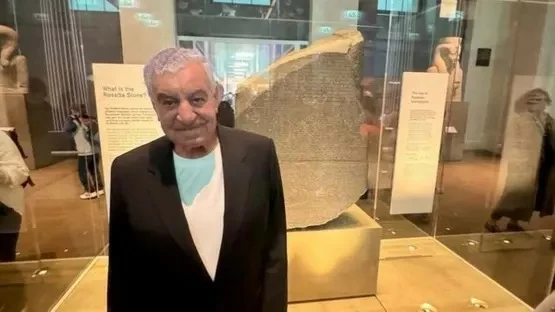
وجه عالم الآثار المصري الشهير الدكتور زاهي حواس نداء حاداً إلى المجتمع الدولي، خلال كلمة له أمام الفاترينة الزجاجية التي يُعرض فيها حجر رشيد داخل المتحف البريطاني، مطالباً بعودة هذا الأثر التاريخي الفريد إلى مصر.
وقال حواس في كلمته من داخل المتحف: «نحن لا نطلب عودة كل القطع الأثرية المصرية الموجودة داخل أروقة المتحف البريطاني، ولكنني أطالب بشكل قاطع وحاسم بمطلب واحد محدد… وهو عودة حجر رشيد».
وأكد حواس على الأحقية التاريخية والثقافية لمصر في هذا الحجر، قائلاً: «إن هذا الحجر الذي كان مفتاحاً لفك رموز الحضارة المصرية القديمة، يجب أن يكون مكانه الطبيعي والشرعي هو المتحف المصري الكبير، ليتكامل مع الكنوز المصرية ويُروى تاريخه برؤية حضارية على أرض مصر».
وحجر رشيد هو لوح بازلتي اكتشف عام 1799 خلال الحملة الفرنسية على مصر، ويحتوي على نص ثلاثي اللغات (الهيروغليفية، الديموطيقية، واليونانية)، مما سمح للعالم جان فرانسوا شامبليون بفك رموز الهيروغليفية عام 1822.
ونقلت القوات البريطانية الحجر التاريخي إلى لندن عام 1801 بعد هزيمة الفرنسيين، وهو معروض في المتحف البريطاني منذ عام 1802.
ويُعد الحجر أحد أشهر القطع الأثرية في العالم، ويجذب ملايين الزوار سنوياً، وتطالب مصر منذ سنوات بعودته، معتبرة أنه انتزع في ظروف الاحتلال، بينما يرى المتحف البريطاني أنه حصل عليه بشكل قانوني بموجب معاهدة الإسكندرية.
وأعلن الدكتور زاهي حواس تصعيد الجهود الشعبية والدولية من خلال حملة توقيعات عالمية يقودها، مستهدفاً جمع مليون توقيع كرسالة ضغط ثقافي دولية قوية، مشدداً في لقاءاته الصحفية مع وسائل الإعلام البريطانية على أن «الوقت قد حان» لاسترداد مصر لحقوقها التاريخية.
كما ذكر حواس قطعاً أثرية أخرى بارزة، مثل رأس نفرتيتي في متحف برلين، والقبة السماوية (الزودياك) في متحف اللوفر بباريس، معتبراً عودة حجر رشيد خطوة أولى نحو تصحيح الإرث الاستعماري في المتاحف الغربية.
The famous Egyptian archaeologist Dr. Zahi Hawass made a strong appeal to the international community during a speech in front of the glass showcase displaying the Rosetta Stone at the British Museum, demanding the return of this unique historical artifact to Egypt.
Hawass said in his speech from inside the museum: “We are not asking for the return of all the Egyptian artifacts located within the halls of the British Museum, but I am firmly and decisively demanding one specific request… which is the return of the Rosetta Stone.”
Hawass emphasized Egypt’s historical and cultural right to this stone, stating: “This stone, which was the key to deciphering the symbols of ancient Egyptian civilization, must have its natural and legitimate place in the Grand Egyptian Museum, to complement the Egyptian treasures and narrate its history with a civilizational perspective on Egyptian soil.”
The Rosetta Stone is a basalt slab discovered in 1799 during the French campaign in Egypt, and it contains a trilingual text (hieroglyphic, demotic, and Greek), which allowed the scholar Jean-François Champollion to decipher hieroglyphs in 1822.
The British forces transported the historical stone to London in 1801 after the defeat of the French, and it has been on display at the British Museum since 1802.
The stone is considered one of the most famous artifacts in the world, attracting millions of visitors annually, and Egypt has been demanding its return for years, considering that it was taken under conditions of occupation, while the British Museum argues that it acquired it legally under the Treaty of Alexandria.
Dr. Zahi Hawass announced the escalation of popular and international efforts through a global petition campaign he is leading, aiming to collect one million signatures as a strong international cultural pressure message, stressing in his press meetings with British media that “the time has come” for Egypt to reclaim its historical rights.
Hawass also mentioned other prominent artifacts, such as the bust of Nefertiti in the Berlin Museum and the celestial globe (zodiac) in the Louvre Museum in Paris, considering the return of the Rosetta Stone as a first step towards correcting the colonial legacy in Western museums.


