

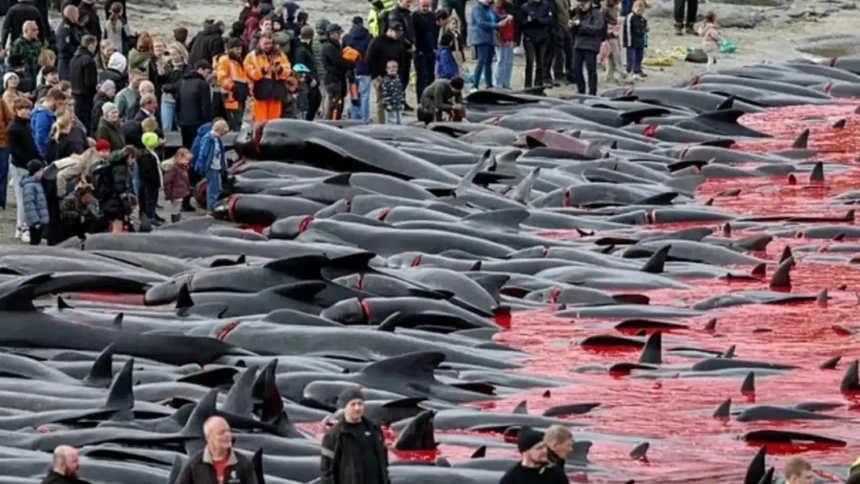
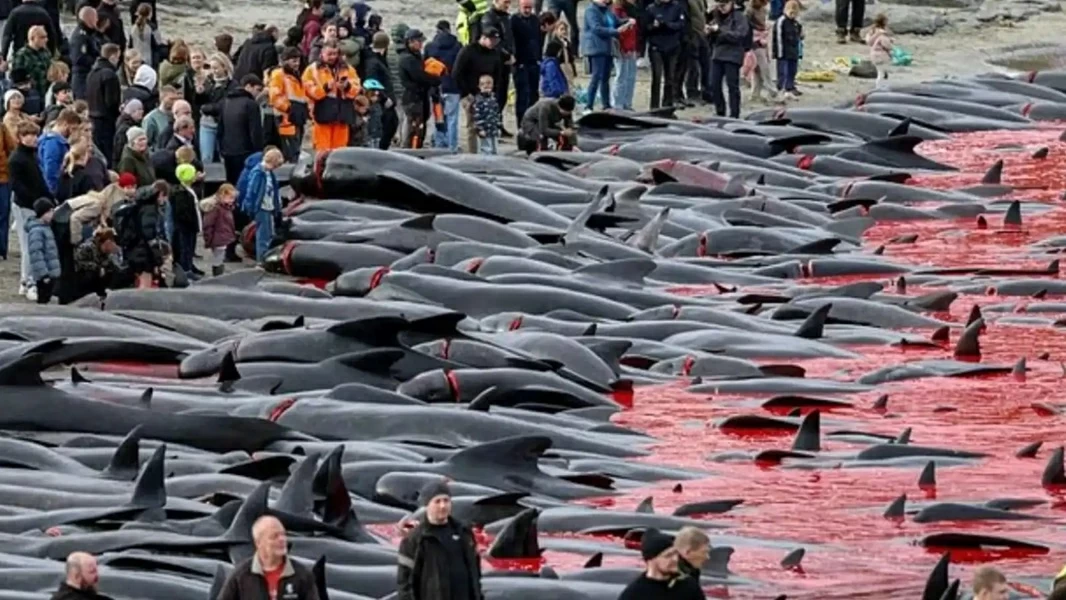
في مشهد يتكرر كابوسه مطلع كل صيف، اصطبغت شواطئ جزر فارو في شمال المحيط الأطلسي باللون الأحمر القاني، بعدما تحولت مياهها النظيفة إلى بركة دماء شاسعة إثر مجزرة دامية طالت المئات من «حيتان الطيار» والدلافين.
طقس «الغرينداد»
هذا التقليد التاريخي، المعروف محلياً باسم «غرينداد راب» (Grindadráp)، ليس وليد اليوم؛ إذ يمتد لجذور ضاربة في التاريخ تعود لأكثر من ألف عام منذ عهد «الفايكنغ». غير أن آلياته اليوم باتت أكثر حسماً وقسوة؛ حيث يعمد الصيادون إلى رصد مجموعات الحيتان والدلافين في عرض البحر، ثم محاصرتها بأسطول من القوارب والمحركات لدفعها ذعراً وقسراً نحو المياه الضحلة حتى تلتصق أجسادها الضخمة بالرمال وتفقد القدرة على الحركة.
هنا، تبدأ المرحلة الأكثر قتامة؛ حيث يندفع المئات من السكان المحليين نحو الشواطئ، مستخدمين السكاكين لقطع الحبال الشوكية للحيوانات المنهكة وذبحها في جزر عشوائي، وسط حشود جماهيرية غفيرة.
صدمة 2026
اللقطات والمقاطع المصورة التي توثق الحدث حظيت بانتشار واسع ورافقتها صدمة عالمية؛ إذ أظهرت صفوفاً طويلة من جثث الحيتان النافقة الممتدة على طول الساحل، بينما صبغت دماؤها غزارة الأمواج. غير أن المشهد الأكثر إثارة للجدل والمشحون بالغرابة، كان حضور الأطفال الصغار في قلب هذا الصخب الدموي؛ حيث شوهد بعضهم يلهون بلمس الحيوانات المذبوحة، بينما احتشد آخرون فوق التلال المحيطة وكأنهم يتابعون عرضاً ترفيهياً عائلياً.
صرخة بيئية
تواجه هذه الممارسة السنوية إدانات دولية متصاعدة؛ إذ تصفها جمعيات الرفق بالحيوان بأنها سلوك «بربري ووحشي» لا مكان له في العالم الحديث. وتحذر المنظمات البيئية من الخطر الوجودي الذي تشكله هذه المجازر على المنظومة البيئية للمحيطات، خصوصاً أن «حيتان الطيار» تعد عنصراً حيوياً لاستقرار التوازن البحري، وتتميز بدورة تكاثر بطيئة للغاية، حيث لا تلد الأنثى سوى عجل واحد كل ثلاث إلى ست سنوات، ما يجعل تعويض هذه الأعداد المفقودة أمراً بالغ الصعوبة.
بين الهوية المحلية والميزان الدولي
في المقابل، تقف حكومة جزر فارو – الإقليم الذي يتمتع بالحكم الذاتي تحت التاج الدنماركي – في موقع الدفاع المستميت عن هذا الطقس. وترى السلطات المحلية أن «الغرينداد» جزء لا يتجزأ من الهوية الثقافية والموروث التاريخي للمنطقة، بل وتعتبره وسيلة اقتصادية مهمة لتوفير اللحوم والدهون بالمجان للمجتمع المحلي خارج حسابات التجارة والربح.
ورغم أن القوانين المحلية لا تفرض حصصاً رسمية محددة أو قيوداً على أعداد الصيد، فإن التقديرات تشير إلى إبادة مئات الكائنات البحرية سنوياً؛ إذ بلغت حصيلة الضحايا في العام الماضي وحده نحو 814 حوتاً ودولفيناً، ما يضع هذه الجزر المعزولة في مواجهة مفتوحة ومستمرة مع الضمير البيئي العالمي.
In a scene that repeats its nightmare at the beginning of every summer, the beaches of the Faroe Islands in the North Atlantic have turned a deep crimson, as their clean waters transformed into a vast pool of blood following a bloody massacre that claimed the lives of hundreds of “pilot whales” and dolphins.
The “Grindadráp” Tradition
This historical tradition, locally known as “Grindadráp,” is not a recent phenomenon; it has roots that stretch back over a thousand years to the Viking era. However, its mechanisms today have become more decisive and brutal; fishermen track groups of whales and dolphins in the open sea, then encircle them with a fleet of boats and engines to drive them in terror and force towards shallow waters until their massive bodies become stuck in the sand and lose the ability to move.
Here, the darkest phase begins; hundreds of local residents rush to the beaches, using knives to cut the spiny ropes of the exhausted animals and slaughter them in a chaotic manner, amidst large crowds.
The Shock of 2026
The footage and videos documenting the event went viral and were accompanied by global shock; they showed long lines of dead whales stretching along the coast, while their blood stained the waves. However, the most controversial and bizarre scene was the presence of small children in the heart of this bloody chaos; some were seen playing by touching the slaughtered animals, while others gathered on the surrounding hills as if they were watching a family entertainment show.
An Environmental Outcry
This annual practice faces increasing international condemnation; animal welfare organizations describe it as a “barbaric and savage” behavior that has no place in the modern world. Environmental organizations warn of the existential threat these massacres pose to the oceanic ecosystem, especially since pilot whales are a vital element for marine balance, characterized by an extremely slow reproductive cycle, with females giving birth to only one calf every three to six years, making it exceedingly difficult to replace the lost numbers.
Between Local Identity and International Balance
In contrast, the government of the Faroe Islands – an autonomous region under the Danish crown – stands firmly in defense of this tradition. Local authorities see the “Grindadráp” as an integral part of the cultural identity and historical heritage of the region, and consider it an important economic means of providing meat and fat for free to the local community outside the realms of trade and profit.
Although local laws do not impose specific quotas or restrictions on the numbers caught, estimates indicate the slaughter of hundreds of marine creatures annually; last year alone, the toll reached about 814 whales and dolphins, placing these isolated islands in an ongoing and open confrontation with global environmental conscience.