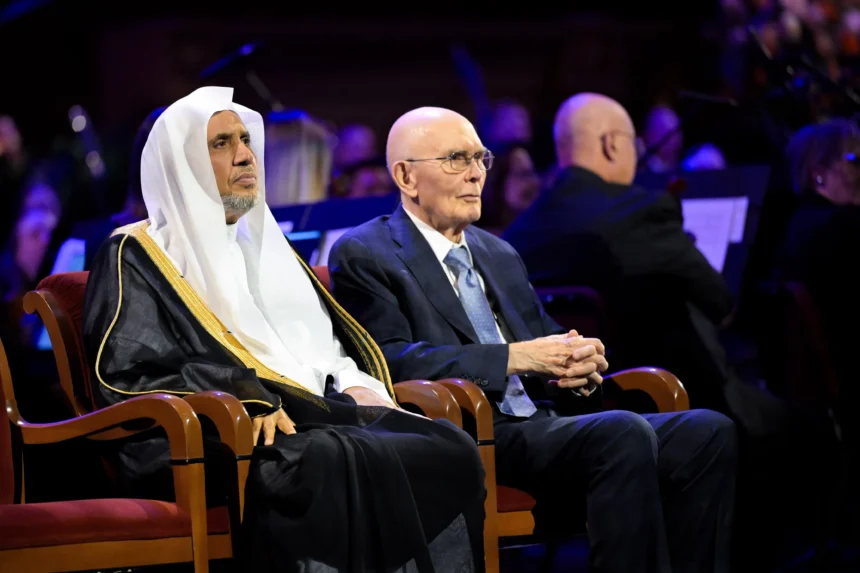
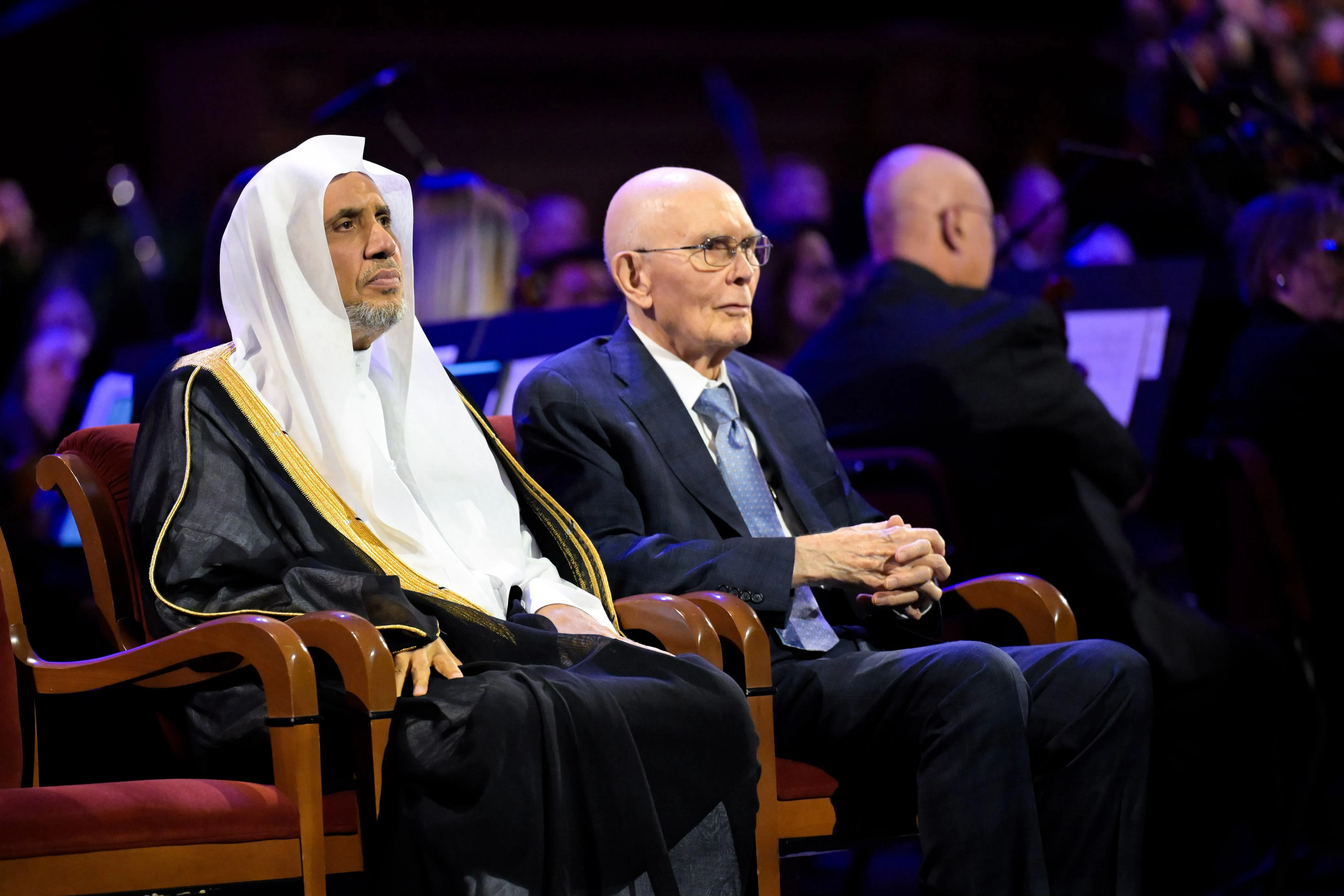
شارك الأمين العام لرابطة العالم الإسلامي، رئيس هيئة علماء المسلمين الدكتور محمد عبدالكريم العيسى، بصفته ضيف الشرف والمتحدث الرئيسي لهذا العام في منتدى الأديان لمجموعة العشرين (G20)، الذي استضافته ولاية «يوتا» الأمريكية، تزامناً مع انعقاد قمة المجموعة في الولايات المتحدة الأمريكية.
وشهد المنتدى حضور قادة الأديان وممثليهم، فيما تناول العيسى أهمية إسهام الأديان في تعزيز السلام العالمي والتماسك المجتمعي، محذراً من مخاطر الاستقطاب بكافة أساليبه ومهدداته.
وأكّد أنّ القيادات الدينية تتحمّل مسؤولية خاصة؛ وذلك أن مفاهيم الاستقطاب والتحريض والعنف كثيراً ما تستدعي خطاباً دينياً محرفاً.
ولفت إلى أنّ رابطة العالم الإسلامي عملت على «الإسهام» في ردم سلبيات الفجوة بين الأمم والشعوب، مشيراً إلى أن من أبرز جهودها في هذا مبادرة «بناء جسور التفاهم والتعاون بين الشرق والغرب»، التي انعقد مؤتمرها التاريخي داخل مقر الأمم المتحدة بنيويورك عام 2023م، بحضور قادة الأمم المتحدة والفعاليات الدينية والفكرية والبحثية.
وأكد العيسى أن العمل جارٍ على «مواصلة» تنفيذ مخرجات المؤتمر الرامية إلى الإسهام في الجهود الدولية نحو تعزيز السلام والتعاون بين الأمم والشعوب وتجاوز التحديات والمهددات في ضوء مشتركاتهم الإنسانية التي تم التعاهد بموجبها على ميثاقهم الأممي في 26 يونيو 1945م، وما تلاه من الاتفاقيات والمعاهدات والمواثيق والإعلانات والقرارات الدولية.
واستعرض العيسى عدداً من المبادرات الإنسانية التي نُفّذت بالتعاون مع منظمات دولية.
كما تناول استضافة منتدى «دافوس» العالمي، للمرة الأولى في تاريخه، ندوةً حواريةً تناولت دور الأديان في معالجة عدد من القضايا الدولية، مؤكداً أن ذلك يعكس الإيمان بأهمية أن تكون الدبلوماسية الدينية حاضرةً وفاعلةً.
The Secretary-General of the Muslim World League, President of the Association of Muslim Scholars, Dr. Mohammed Abdulkarim Al-Issa, participated as the guest of honor and keynote speaker this year at the G20 Interfaith Forum, hosted by the state of Utah in the United States, coinciding with the G20 summit in the United States.
The forum witnessed the presence of religious leaders and their representatives, during which Al-Issa addressed the importance of the contribution of religions to enhancing global peace and social cohesion, warning of the dangers of polarization in all its forms and threats.
He emphasized that religious leaders bear a special responsibility, as the concepts of polarization, incitement, and violence often invoke distorted religious discourse.
He pointed out that the Muslim World League has worked to “contribute” to bridging the negative gaps between nations and peoples, noting that one of its most prominent efforts in this regard is the initiative “Building Bridges of Understanding and Cooperation between East and West,” which held its historic conference at the United Nations headquarters in New York in 2023, with the presence of United Nations leaders and religious, intellectual, and research figures.
Al-Issa confirmed that work is ongoing to “continue” implementing the outcomes of the conference aimed at contributing to international efforts to enhance peace and cooperation between nations and peoples and to overcome challenges and threats in light of their shared human values, which they pledged under their international charter on June 26, 1945, and the subsequent agreements, treaties, pacts, declarations, and international resolutions.
Al-Issa reviewed a number of humanitarian initiatives that were implemented in cooperation with international organizations.
He also addressed the hosting of the “Davos” Global Forum, for the first time in its history, a dialogue session that discussed the role of religions in addressing several international issues, affirming that this reflects the belief in the importance of having religious diplomacy present and effective.