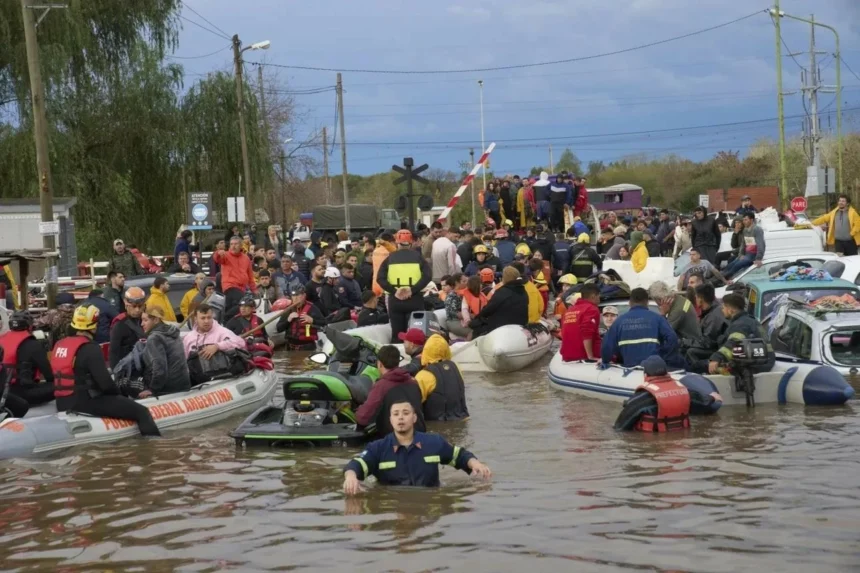
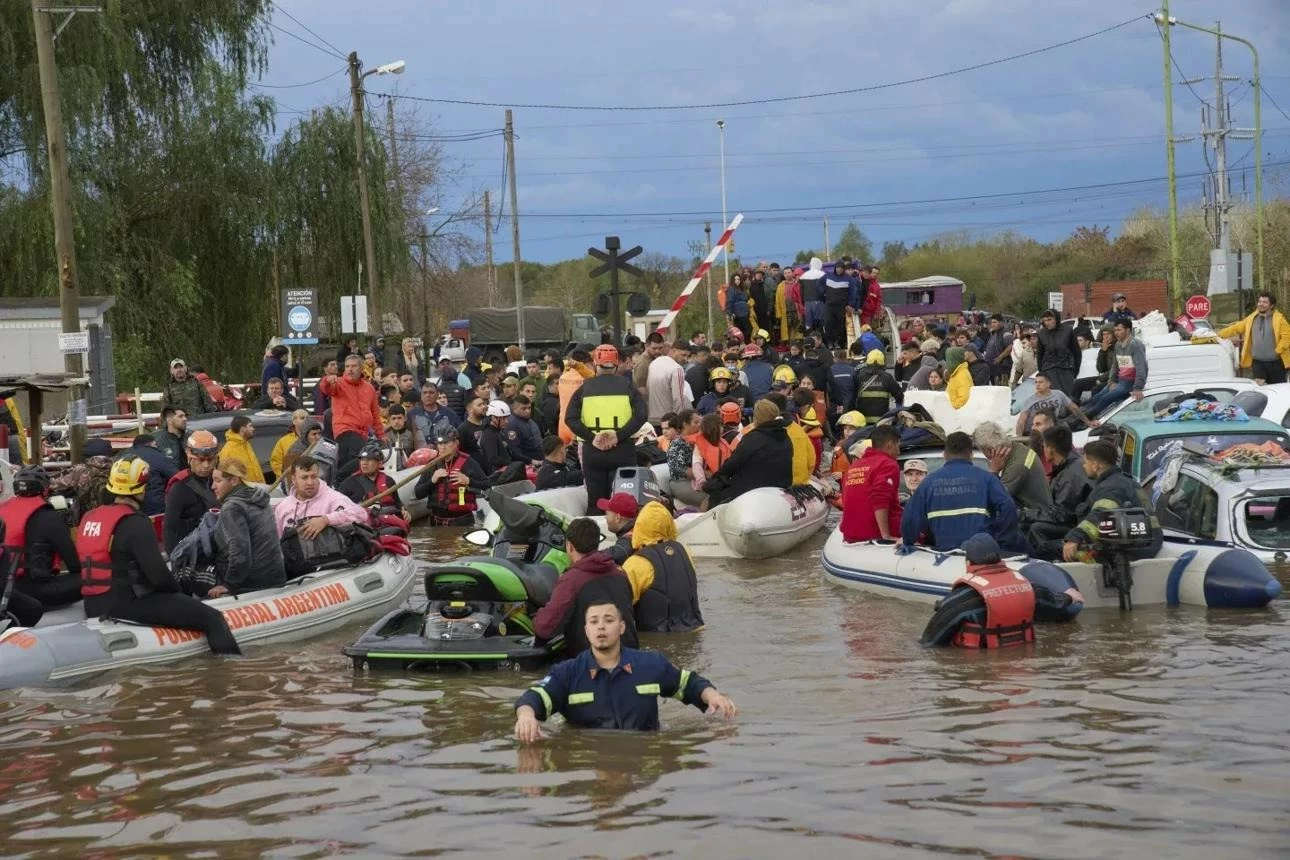
لقي شخصان مصرعهما واضطر أكثر من ألفي شخص إلى مغادرة منازلهم، جراء فيضانات واسعة تضرب شمال شرقي الأرجنتين، مع استمرار ارتفاع مناسيب الأنهار وتحذيرات من أن الأزمة قد تمتد لأسابيع أو حتى أشهر.
وتسببت الأمطار الغزيرة المرتبطة بظاهرة «إل نينيو» في ارتفاع خطير لمناسيب أنهار بارانا وأوروغواي وإيغوازو، ما أدى إلى غمر أحياء سكنية وقطع طرق وإجبار آلاف السكان على الإجلاء في عدة مقاطعات.
أكثر من ألفي نازح
وفي مقاطعة تشاكو، غادر ما بين 1200 و1300 شخص منازلهم، معظمهم في بلدتي بويرتو فيليلاس وبارانكيراس، بحسب مسؤول الحماية المدنية في المقاطعة غوستافو سانتوس.
وفي مقاطعة كورينتس المجاورة، اضطر أكثر من ألف شخص إلى ترك منازلهم، وفق بيانات للدفاع المدني، وسط استمرار تدفق المياه إلى المناطق المنخفضة.
انهيار حاجز وغرق أحياء
وشهدت بلدة باسو دي لا باتريا السياحية على ضفاف نهر بارانا غمر عدة أحياء بالمياه بعد انهيار حاجز ترابي تحت ضغط ارتفاع منسوب النهر.
وفي بعض المناطق، لم يعد يظهر من المنازل سوى أسطحها، فيما اضطر السكان وفرق الإنقاذ إلى استخدام القوارب للتنقل وسط الشوارع التي غمرتها المياه.
وفاة عاملين أثناء إنقاذ الماشية
وأكدت السلطات وفاة عاملين ريفيين غرقاً في مقاطعة كورينتس أثناء محاولتهما نقل الماشية بين الجزر وإبعادها عن مناطق ارتفاع المياه.
وحذرت السلطات من أن الأمطار المتوقعة في أحواض نهري بارانا وأوروغواي قد تؤدي إلى موجات ارتفاع جديدة في مناسيب المياه خلال الأسبوع المقبل.
منازل متضررة وطرق مغلقة
وفي مقاطعة ميسيونس، تسببت العواصف في تضرر أكثر من 100 منزل، إضافة إلى إغلاق طرق وجسور بعد فيضان الجداول.
كما ارتفع تدفق نهر إيغوازو في منتصف أكتوبر إلى نحو 10 أضعاف متوسطه الموسمي، ما أدى إلى استمرار إغلاق الوصول إلى منطقة «حلق الشيطان» الشهيرة في شلالات إيغوازو رغم إعادة فتح بعض المسارات السياحية الأخرى.
وحذر مسؤولون محليون من أن مستويات المياه قد تستمر في الارتفاع والانخفاض خلال الأشهر المقبلة مع استمرار تأثير «إل نينيو» على أنماط الأمطار في المنطقة.
Two people have died and more than two thousand have been forced to leave their homes due to widespread flooding hitting northeastern Argentina, with river levels continuing to rise and warnings that the crisis could last for weeks or even months.
Heavy rains associated with the “El Niño” phenomenon have caused dangerously high levels in the Paraná, Uruguay, and Iguazú rivers, leading to the inundation of residential neighborhoods, road closures, and the evacuation of thousands of residents in several provinces.
More than two thousand displaced
In Chaco province, between 1,200 and 1,300 people have left their homes, mostly in the towns of Puerto Vilelas and Paranaque, according to the province’s civil protection official, Gustavo Santos.
In the neighboring province of Corrientes, more than a thousand people have been forced to leave their homes, according to civil defense data, as water continues to flow into low-lying areas.
Barrier collapse and neighborhood flooding
The tourist town of Paso de la Patria on the banks of the Paraná River has seen several neighborhoods inundated after an earthen barrier collapsed under the pressure of rising river levels.
In some areas, only the rooftops of houses are visible, while residents and rescue teams have had to use boats to navigate the streets that have been flooded.
Death of two workers while rescuing livestock
Authorities confirmed the drowning of two rural workers in Corrientes province while they were attempting to move livestock between islands and away from areas of rising water.
Officials warned that expected rains in the Paraná and Uruguay river basins could lead to new surges in water levels over the coming week.
Damaged homes and closed roads
In Misiones province, storms have damaged more than 100 homes, in addition to closing roads and bridges after streams flooded.
The flow of the Iguazú River surged to nearly ten times its seasonal average in mid-October, leading to continued closure of access to the famous “Devil’s Throat” area at Iguazú Falls, despite the reopening of some other tourist paths.
Local officials warned that water levels may continue to rise and fall over the coming months as the effects of “El Niño” persist on rainfall patterns in the region.