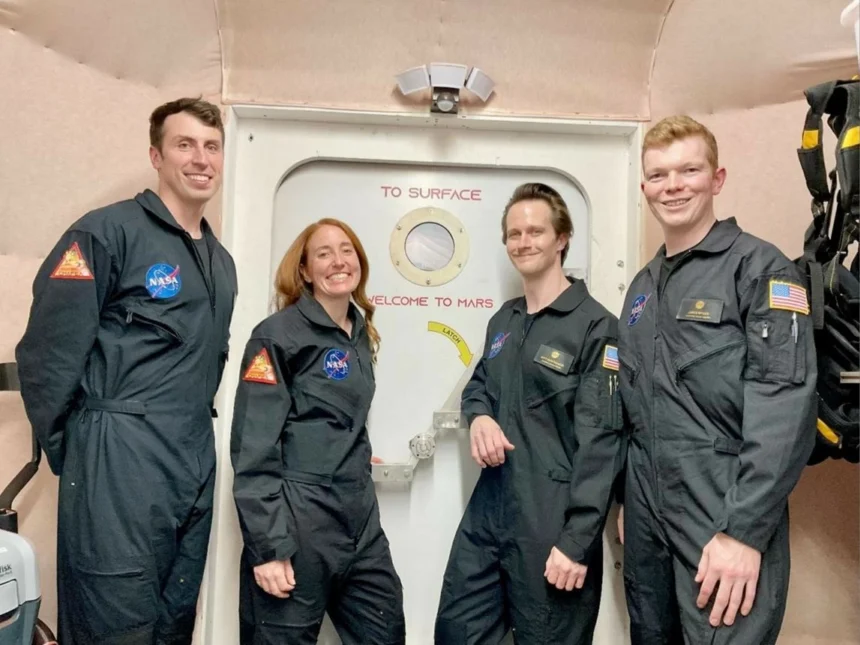
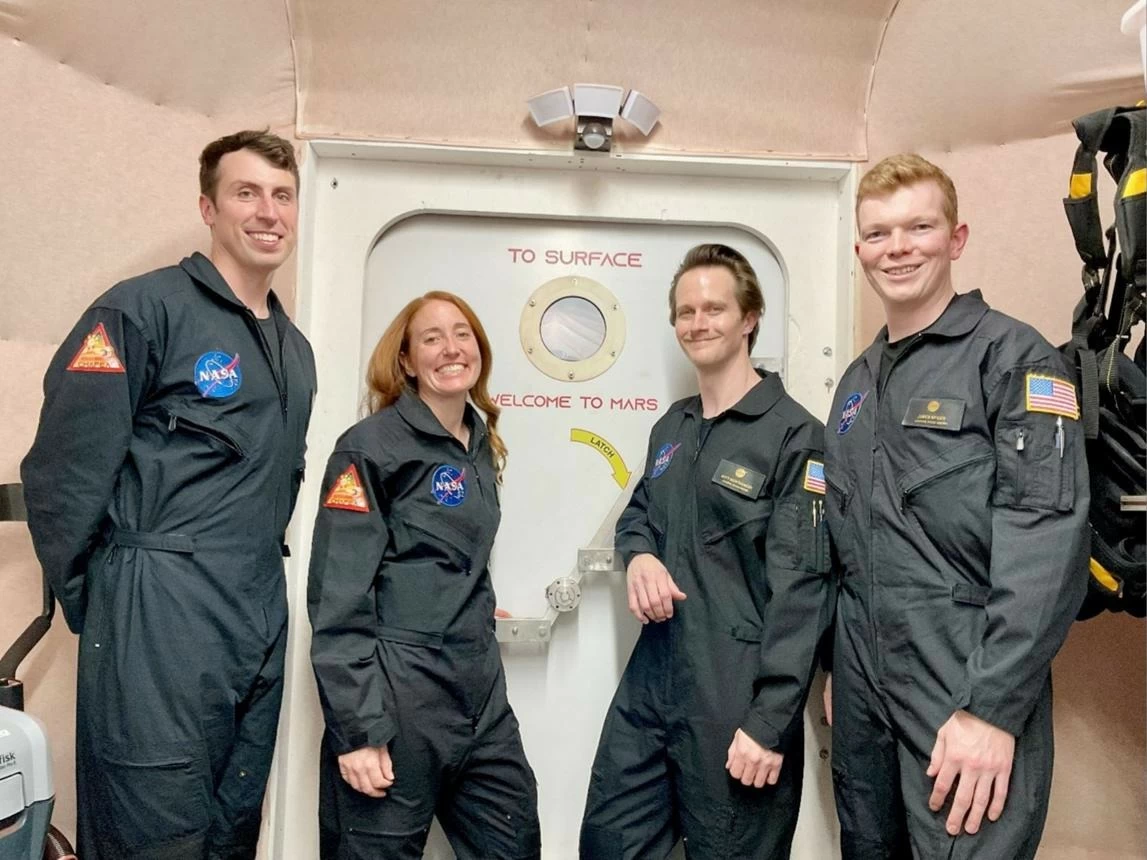
خرج أربعة متطوعين من منشأة تابعة لوكالة الفضاء الأمريكية «ناسا» في مركز جونسون للفضاء بمدينة هيوستن، بعد قضائهم 378 يومًا في عزلة ضمن تجربة تحاكي الحياة على سطح المريخ، بهدف دراسة قدرة البشر على التعامل مع ظروف المهمات الفضائية الطويلة والتحديات التي قد تواجه رواد الفضاء مستقبلًا.
أكثر من عام داخل بيئة معزولة
بدأت المهمة الثانية ضمن برنامج «CHAPEA» في 19 أكتوبر 2025، عندما دخل أفراد الفريق منشأة «Mars Dune Alpha» المطبوعة بتقنية ثلاثية الأبعاد، قبل أن يخرجوا منها في 31 أكتوبر 2026 للمرة الأولى منذ أكثر من عام.
وضم الفريق روس إلدر قائد المهمة، وإلين إليس المسؤولة الطبية، وماثيو مونتغومري المسؤول العلمي، وجيمس سبايسر مهندس الطيران.
وتبلغ مساحة المنشأة نحو 1700 قدم مربعة، أي ما يقارب 158 مترًا مربعًا، وصُممت لمحاكاة مقر إقامة فريق بشري على المريخ، مع مناطق خاصة للنوم والعمل والطعام والرعاية الطبية، إضافة إلى مساحة تحاكي سطح الكوكب الأحمر لتنفيذ أنشطة خارجية مشابهة لما قد يقوم به رواد الفضاء.
زراعة وصيانة ومهمات على «سطح المريخ»
وخلال فترة العزلة، نفذ أعضاء الفريق مجموعة واسعة من المهمات، شملت زراعة النباتات والمحافظة على المحاصيل، وإجراء تجارب علمية، وصيانة أنظمة المنشأة، وممارسة التمارين الرياضية، وتنفيذ أنشطة خارجية بملابس خاصة تحاكي السير والعمل على سطح المريخ.
كما تدرب الفريق على التعامل مع محدودية الغذاء والموارد والمعدات، وهي تحديات تتوقع «ناسا» أن تكون جزءًا أساسيًا من أي مهمة بشرية طويلة إلى المريخ.
تأخير في الاتصال وعزلة عن العالم
ولم تقتصر التجربة على البقاء داخل المنشأة، إذ فرضت «ناسا» تأخيرًا متعمدًا في الاتصالات لمحاكاة المسافة الكبيرة بين الأرض والمريخ، والتي يمكن أن تجعل الرسائل تستغرق نحو 22 دقيقة للوصول في اتجاه واحد.
وخضع الفريق أيضًا لفترة تحاكي انقطاع الاتصال بالأرض لنحو أسبوعين، اضطر خلالها أفراده إلى الاعتماد بدرجة أكبر على أنفسهم والإجراءات المخطط لها مسبقًا لإنجاز أعمالهم والتعامل مع أي مشكلات.
وخلال المهمة لم يكن أفراد الفريق يتواصلون مع عائلاتهم بالطريقة المعتادة، إذ جرى الاتصال عبر البريد الإلكتروني مع تأخير يحاكي ظروف التواصل بين الأرض والمريخ.
دراسة تأثير العزلة على البشر
وتركز التجربة على جمع بيانات حول الصحة الجسدية والنفسية والأداء البشري خلال المهمات الطويلة، بما يساعد العلماء على معرفة تأثير العزلة والضغط ومحدودية الموارد في قدرة أفراد الطاقم على العمل واتخاذ القرارات والتعاون.
كما تدرس «ناسا» كيفية تنظيم وقت الطاقم، وكميات الغذاء المطلوبة، والتمارين الرياضية المناسبة، والدعم الطبي والنفسي الذي قد يحتاج إليه رواد الفضاء عند وجودهم على مسافات بعيدة عن الأرض.
أسبوعان من الفحوص بعد الخروج
وبعد انتهاء العزلة، بدأ أفراد الفريق مرحلة جديدة تشمل نحو أسبوعين من التقييمات الطبية والعلمية وجلسات الاستجواب مع الباحثين، بهدف مقارنة حالتهم قبل المهمة وبعدها وتحليل البيانات التي جُمعت طوال الـ378 يومًا.
وتعد هذه ثاني مهمة طويلة ضمن برنامج «CHAPEA»، بعدما أنهى فريق آخر تجربة مماثلة استمرت 378 يومًا في يوليو 2024.
وتأمل «ناسا» أن تساعد نتائج التجربتين في تطوير مساكن وأنظمة غذاء ورعاية صحية ودعم نفسي تناسب المهمات البشرية الطويلة، سواء ضمن خطط استكشاف القمر أو في التحضير لإرسال البشر مستقبلًا إلى المريخ.
Four volunteers emerged from a facility belonging to the American space agency “NASA” at the Johnson Space Center in Houston after spending 378 days in isolation as part of an experiment simulating life on the surface of Mars, aimed at studying humans’ ability to cope with the conditions of long space missions and the challenges that astronauts may face in the future.
More than a Year in an Isolated Environment
The second mission under the “CHAPEA” program began on October 19, 2025, when the team members entered the “Mars Dune Alpha” facility, which is 3D-printed, before emerging from it on October 31, 2026, for the first time in over a year.
The team included mission commander Ross Elder, medical officer Ellen Ellis, science officer Matthew Montgomery, and flight engineer James Spicer.
The facility covers approximately 1,700 square feet, or about 158 square meters, and is designed to simulate a living space for a human team on Mars, with designated areas for sleeping, working, eating, and medical care, in addition to a space that simulates the surface of the red planet for conducting outdoor activities similar to what astronauts might do.
Farming, Maintenance, and Missions on the “Surface of Mars”
During the isolation period, team members carried out a wide range of missions, including planting crops and maintaining them, conducting scientific experiments, maintaining the facility’s systems, exercising, and performing outdoor activities in special suits that simulate walking and working on the surface of Mars.
The team also trained to deal with limited food, resources, and equipment, challenges that “NASA” expects to be a fundamental part of any long human mission to Mars.
Communication Delays and Isolation from the World
The experiment was not limited to staying inside the facility, as “NASA” imposed a deliberate delay in communications to simulate the vast distance between Earth and Mars, which can make messages take about 22 minutes to arrive in one direction.
The team also underwent a period simulating a communication blackout with Earth for about two weeks, during which its members had to rely more on themselves and pre-planned procedures to accomplish their tasks and deal with any issues.
During the mission, team members did not communicate with their families in the usual way, as contact was made via email with a delay simulating the communication conditions between Earth and Mars.
Studying the Effects of Isolation on Humans
The experiment focuses on collecting data on physical and mental health and human performance during long missions, helping scientists understand the impact of isolation, stress, and limited resources on crew members’ ability to work, make decisions, and cooperate.
“NASA” is also studying how to organize the crew’s time, the amounts of food required, appropriate exercise, and the medical and psychological support that astronauts may need when they are at great distances from Earth.
Two Weeks of Assessments After Exit
After the isolation ended, team members entered a new phase that includes about two weeks of medical and scientific evaluations and interviews with researchers, aimed at comparing their condition before and after the mission and analyzing the data collected over the 378 days.
This is the second long mission under the “CHAPEA” program, following another team that completed a similar 378-day experiment in July 2024.
“NASA” hopes that the results of both experiments will help develop habitats, food systems, healthcare, and psychological support suitable for long human missions, whether as part of lunar exploration plans or in preparation for sending humans to Mars in the future.