


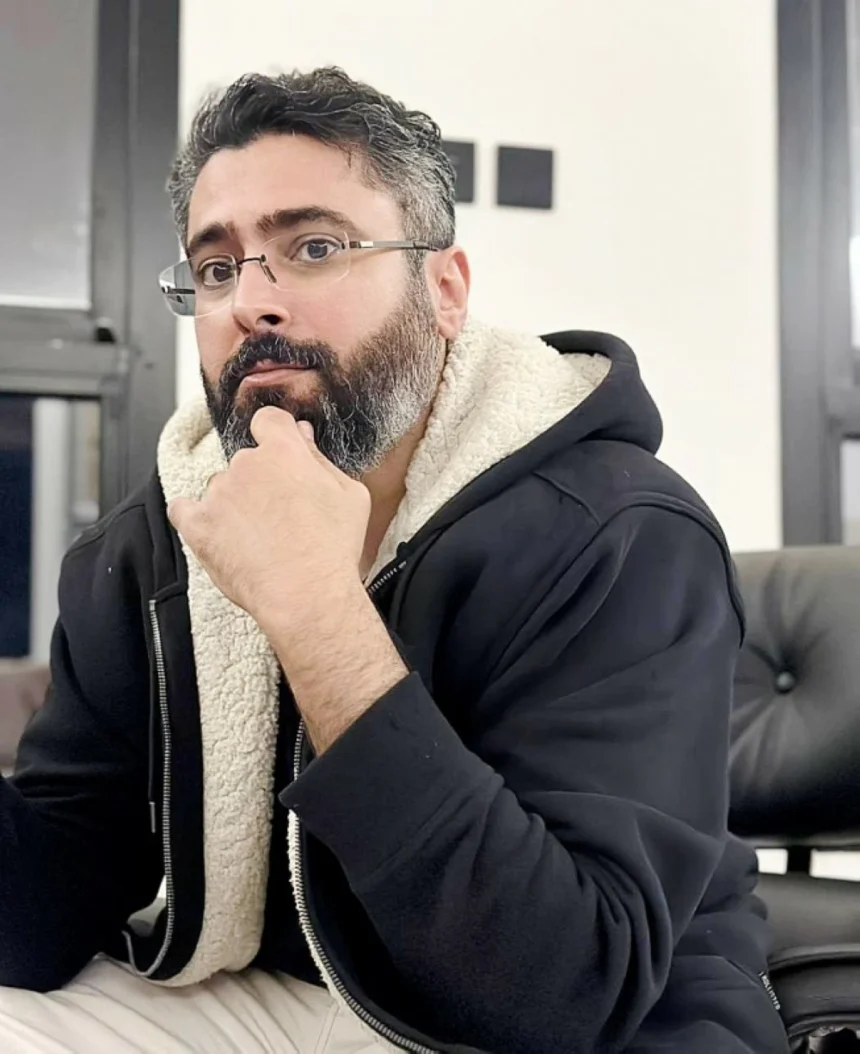
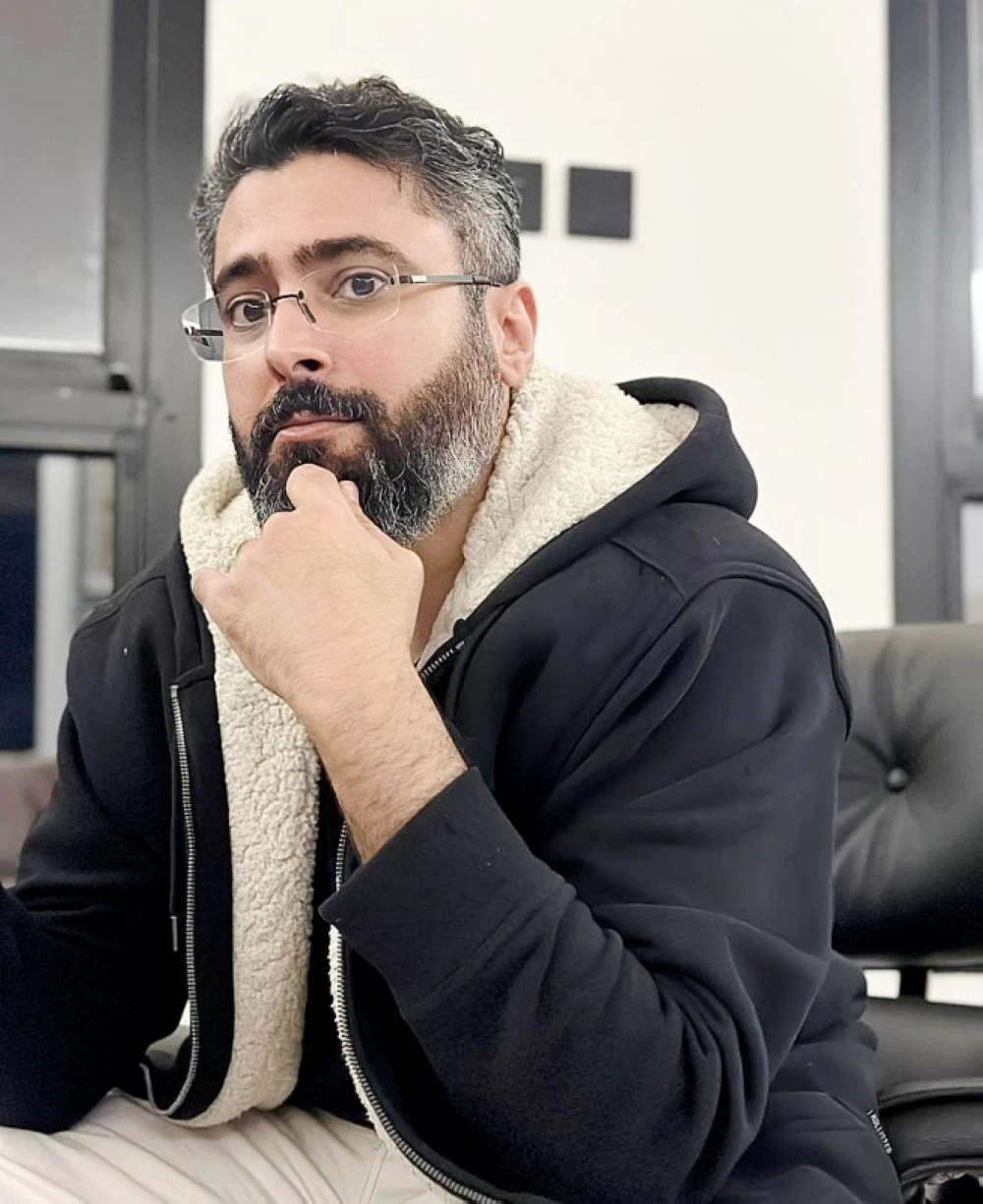
برز اسم الكاتب أحمد الحقيل في المشهد الثقافي السعودي، بوصفه صوتاً سردياً واعياً بتحولات المجتمع وأسئلة الكتابة والإنسان.
لا تكتفي كتاباته برصد الواقع، بل تحاوره، وتعيد تفكيكه بلغة تجمع العمق، والبساطة، والحسّ الإبداعي، والتأمل الفكري.
في هذا الحوار، اجتهدنا في الاقتراب من تجربة أحمد الحقيل، توقفنا عند تعريفه لنفسه، وبداياته، ومشاغله الإبداعية، ورؤيته للكتابة والثقافة، إضافة إلى قراءته للمشهد الأدبي السعودي اليوم، وما يعتمل في داخله من أسئلة المستقبل وهموم الكتابة، فإلى الحوار:
• من هو أحمد الحقيل؟
•• هو أحمد الحقيل، كما تعرفه أمي، وكما يعرفه أصدقاءٌ كنا نلاحق سوياً «سيارة الفليت» وأصدقاءٌ آخرون صرنا نتحدث عن تعقيدات ما بعد الحداثة في الأدب الأمريكي، وكما يعرفه زملاء زاملتهم وأنا محررٌ «أباري الساس» وزملاءٌ آخرون زاملتهم وأنا مدير «أدفش» الأبواب وأناطح طواحين الهواء. هو كما يعرفه قارئ قرأ لي ولم يقابلني، وكما يتعرَّف عليه قارئ لم يسمع بي. هو الحكيم الذي أصلح بين اثنين يتعاركان على موقف سيارة، وهو الأهوج الذي تضارب مع آخر على موقف سيارة. ولذا فإنني أحيلُ السؤال إلى الآخر، إذ سيعرفني كل واحد منهم بشكل مختلف. أما أنا كما أراني، فإنني أستعين بسياقي كولد فلَّاح يتجنب الحديث عن نفسه مباشرةً قدر الإمكان لأتملَّص من الإجابة.
• متى شعرت أن الكتابة لم تعد هواية، بل قدر شخصي لا فكاك منه؟
•• لا أدري إن كانت قَدَراً، فهي خيارٌ، مهما أصبغنا عليها من الشعر. ولكن سأقول إنها صارت طبعاً راسخاً. وأظنه رسخ قديماً. أعظمُ ما في الكتابة أنها إعادة اكتشاف الحسّ. كلما كبرتَ في العمر تقلَّص نشاط الدماغ في تسجيل الأشياء لأنك شهدتها من قبل، ولهذا يبدو الزمن أسرع حينما يمر اليوم دون مدخلات جديدة. ولكن الكتابة تعيدك إلى النشاط الدماغي الذي كنتَه في طفولتك وشبابك. كم مرةً مشيت على شاطئ؟ كثير، ماذا ستسجل جديداً؟ ولكنك تكتب المشهد، فتعيد معايشته بتفاصيله، وكأنك ترى الأشياء لأول مرة: الرمل بين الأصابع، صوت المد والجزر، حركة الناس، انعكاس الشمس على الماء. أذكر أن طفولتي كانت تراوح بين اثنين: الشارع، والبيت. في الشارع تكون التجارب خاماً مجهولاً، تقتنص منه انطباعات فورية وغامضة ومثيرة عن الناس والمعيشة والاحتمالات. أما البيت فهو أكثر خطابية، أشخاصه وعوالمه أكثر مباشرة وأعمق تواصلاً. كلا العالمين عائم وغزير، يتداخلان في بعضهما ويتكدسان بمدخلات جديدة كل يوم. وأذكر أنني حينما كنت أقرأ الكتب والصحف أو أشاهد الأفلام والتلفاز، يذهلني أن هنالك أناساً يستطيعون استخراج المعنى من كل هذه الغزارة التي أعيشها. أظن أن الكتابة رسخت طبعاً منذ ذلك الوقت، لأنها بدت أداة محتملة لترتيب الفوضى، وكلما كبرتُ وتقلَّصت المدخلات أدركت أهميتها أكثر لأنها تُبطئ الزمن السريع خارجها. ولذا فإن الكتابة في الصِّغر معرضة للابتذال؛ لأنها انعكاس مباشر ومستثار للانطباعات المدخلة، وفي الرُّشد تكون أكثر جزالة وإتقاناً؛ لأنها نظرة استرجاعية متأنية لتلك الانطباعات.
• ما أول نص نشرته؟ وهل ما زلت تتذكر شعورك لحظة رؤيته مطبوعاً؟
•• كان الكتاب مجموعة قصصية طبعه مشكوراً نادي الرياض الأدبي، وأحاول جاهداً منذ سنوات أن أنسبه إلى «أحمد الحقيل» آخر، مات شاباً بعدما سقط عليه مكيف صحراوي معلق في الدور الثاني وهو يمشي في الشارع. ولكن للأسف لم يصدقني أحد، وما زال يُنسب إلي. ولذا لا أخجل من القول إنني لم أكن سعيداً به، كنت أعلم وأنا أمسكه أنَّ لدي أفضل منه. كما أذكر أنني كنت مرعوباً من استعراض عقلي أمام الناس، كما كان عبدالملك بن مروان مرعوباً من استعراض عقله في كل خطبة جمعة.
• من هم الكتّاب الذين شكّلوا وعيك السردي في بداياتك؟
•• كُثر، يصعب حصرهم، ويتناقض أثرهم بتناقض تقلباتك الذوقية والفكرية. نشأت في بيئة تراثية شعبية، فقرأت التراث العربي القديم (شعراً ونثراً) وسمعتُ الأدب الشعبي (شعراً وحكايات)، ثم أحببت الأفلام حتى صار موظف محل الفيديو يأخذ بترشيحاتي، وهو ما أدخلني إلى الأدب الحديث، عربياً وعالمياً، فقرأت الكلاسيكيات، ثم الأحدث فالأحدث. تعلمت الإنجليزية لأقرأ ما أسمع عنه ولم يُترجم. في كل مرحلة هنالك أسماء شكلت الوعي، تجبُّها أسماء المرحلة التالية، ولذا يصعب انتقاء أسماء محددة. فالبداية مرحلة ضخمة تستهلك شطراً من حياتك، ويجتمع فيها من الأسماء والقراءات ما يتناقض مع مواقفك المتغيرة دائماً. ولذا سيبدو غريباً -وربما استعراضياً- لو أنني جمعت التوحيدي والطبري وابن لعبون وابن جدلان ودوستويفسكي وبيكيت وفيلليني وأوزو وسيبولد وتشيفر في سياقِ تأثيرٍ واحد، ولكنه منطقي، أليس كذلك؟
• يلاحظ القارئ لكتاباتك حضور المكان بقوة في أعمالك، هل هو مكان واقعي أم متخيل أم مزيج بينهما؟
•• أزعم أنه واقعي، إلى حدِّ أن بإمكانك تقفِّي أثره خرائطياً. كانت تزعجني الكتابات التي تبدو خارج المكان، بما فيها كتاباتي. أحببتُ بيكيت مثلاً، الذي كان يكتب خارج الزمان والمكان، ولكنَّ هذا بدا خياراً متعمَّداً ضمن سياقه ما بعد الحداثي. ولذا حاولت تقليده، ولكنني كلما جربتُ أكثر استوعبتُ أعمق أنني أريد الكتابة عن أشيائي، عن ناسي، عن ربعي، عن جماعتي. كيف أكتب عنهم دون أماكنهم؟ فأنا في النهاية لست أوروبياً أعيش في باريس بعد الحرب العالمية الثانية، لستُ بيكيت. ثم إن معظم الأدب الذي أحببته تاريخٌ للمتغيرات والجغرافيا. ألستَ قادراً على زيارة أماكن المتنبي التي كتبها في شعره كما فعل عبدالعزيز المانع؟ ألستَ قادراً تتبع طرق أمريكا التي كتب عنها جاك كرواك وصورها فيم فندرس؟ كيف أكتب أدباً واقعياً دون أن يكون المكان عنصراً أساسياً وحقيقياً يكاد يكون ملموساً؟
• في رواياتك ميل واضح إلى البناء غير التقليدي، هل كتابتك جمالية؟ أم نتيجة طبيعية لطريقة تفكيرك؟
•• كما قلت، أنا ولد فلَّاح، وإن كنتُ أعرف عن الأدب والفن أكثر مما يعرفه دارسوه، عشت في سدير، خالطتُ أناساً – «حضر وبدو»- يتحدثون شعراً ولكنهم متقشِّفون حدَّ النخاع، مشاعرهم مكنونةٌ وأقوالهم حذرة، واقعيون وتصويريون وحسيُّون بفطرتهم. لم أرغب في كتابة نثر جمالي خطابي مباشر، وإنما أردت أن أعكس تلك التجربة الحقيقية لهؤلاء الناس الغامضة مكامنهم والصريحة مظاهرهم. واعتمدت في ذلك البنيةَ السردية المشهدية السينمائية، التي تشبههم. ولذا أزعم أنني كاتب بنّائي، وإن بدا أنني حكَّاء، تماماً مثل «الشيبان» والعجائز الذين يحكون حكاية قصيرة ويملأونها تفاصيل وإحالات تبدو بسيطة في بناء سليقي معقد.
• كيف تبدأ نصك عادة.. بفكرة؟ بشخصية؟ أم بصورة عابرة؟
•• يتكوَّن النص على شكل صورة عابرة، غالباً. وهي عملية معقدة وغامضة، ما زلتُ أجد صعوبة في شرحها. أغلب الأفكار ومضة، تقتنصها، ثم تبني عليها، وتكتشف سريعاً أن لديك قوام نص، لا تكاد تعرف كيف تجمَّع. وهو في ذلك يشبه الحياة، كلها ومضات مشتتة تتجمَّع في وعي يتشكل بطيئاً. كم مرةً نهضت وقد اكتشفت فجأة حقيقة صادمة عن الحياة؟
• هل تكتب وفق مخطط مسبق؟ أم تترك النص يقودك؟
•• أخطط كثيراً، إلى حدِّ أنني لا أكتب إلا وأنا أكاد أتخيل المشهد أمامي. ولكنه تخطيط انطباعي، يحدث كله في الذهن، ولا يعتمد على القولبة أو التلقين أو النظريات الكتابية حول ما يجدر وما لا يجدر بك فعله. ولذا لا أدري إن كان تخطيطاً أم تأملاً. أظنه أقرب إلى التأمل.
• ما الذي يرهقك أكثر في الكتابة.. البداية؟ أم الاستمرار؟ أم النهاية؟
•• البداية، طبعاً. بداية كل شيء هي أصعبها. ومثل «الشيبان» والعجائز الذين يحبون القيل والقال، يكفيهم «طرفْ عِلم» كي يأتوا بـ«العلم» كاملاً.
• كتبت القصة القصيرة والرواية، أيهما أقرب إليك؟
•• لا أظن أن شكلاً من أشكال الكتابة أقرب إليك من الآخر. كل حالة تفرض نفسها. لقد كتبت كل أشكال الكتابة، ولم أجد أنني أميل إلى شكل أكثر من الآخر. ما يقوله النص يرضخ له القالب، هذه قاعدتي.
• هل ترى أن القصة القصيرة مظلومة نقدياً في المشهد العربي؟
•• نعم، نقدياً وجماهيرياً. أظن أن الرواية تعطي انطباعاً بـ«الاكتمال»، فالناقد يدرسها عملاً كاشفاً بوحدة موضوعية، والقارئ يقرأها عملاً مستحوِذاً بتجربة مستمرة. أما المجموعة القصصية فتبدو فسيفساء تحتاج إلى تشكيل وتجميع.
• هل يمكن القول إن بعض نصوصك تتحرك في المنطقة الرمادية بين الأجناس الأدبية؟
•• ربما، بعضها. الكتاب الأخير «الحافة المطلة على العالم» مزيج من سيرة وقصص قصيرة متخيلة. فهو في منطقة رمادية فعلاً. لكن أظن أن معظم ما أكتبه يمكن إسقاطه على قوالب محددة، حتى إن حوى تجريباً داخله.
• إلى أيّ حدّ تؤمن بأن على الأدب أن يكون مفهوماً للقارئ؟
•• أعطيتُ قصيدة كتبها سعد بن جدلان لابنة أختي، فلم تفهم أكثرها. أحد أصدقائي يحفظ كثيراً من الشعر الشعبي ولكنه يجد صعوبة في فهم نثر الجاحظ. هل هذا يعني أن بن جدلان والجاحظ لا يُفهمان؟ الشيء نفسه يُقال عن جيمس جويس، هل يوليسيس غير مفهومة؟ هل الشعر الحديث – الذي ينتقده كاتب حداثي وطليعي مثل غومبروفيتش- غير مفهوم؟ أعتقد أن النقد يجب أن يُركز على صلب العمل أكثر من تلقِّيه. لذا حينما ينتقد غومبروفيتش الشعر فهو يركز على ما يقوله هذا الشعر في ذاته، وكيف أن بعضه منفصل عن اتصاله الواقعي والحقيقي. التلقِّي مسألة أخرى، ولا أظن أن من الجيد ربطها بتقييم العمل. ولو فتحنا هذا الباب لصار الإبداع رهيناً لعالم التجارة والإنتاج مطلقاً، ولطُلب من كل مبدع أن يكون رهينا لتعقيدات التلقِّي.
• ما علاقتك بالناقد؟ هل تنتظر قراءته؟ أم تتوجس منها؟
•• علاقتي معه مثل علاقتي مع القارئ. كلاهما يتلقى الكتاب بطريقته، يحبه أو يكرهه أو يكون حيادياً تجاهه، وشرطي أن يكون رد الفعل محترماً ولا يخترق الخصوصية. لا أظن أنَّ من الحكمة افتراض علاقة بين الكاتب والناقد، وكأنهما يشتغلان لبعضهما.
• كيف ترى المشهد الروائي السعودي اليوم؟
•• هنالك نشاط ملحوظ، ولكنه محدود. كل من في المشهد هواة يدفعهم شغفهم دون أي فائدة تُذكر، لا مالياً ولا معنوياً ولا تسويقياً ولا جوائزياً. كل الكتاب الذي أعرفهم يكتبون لأنهم يحبون الكتابة، بإمكانهم أن يفوزوا بعوائد أكبر – مادية وتسويقية ونقدية ومعنوية- لو أنهم اتجهوا إلى قطاعات أخرى. ولكنهم يكدحون ويعملون في فراغ محتمل. مشاكل في التسويق، مشاكل في التوزيع، مشاكل في الدراسات، مشاكل في الوصول إلى القارئ. والكاتب المحظوظ هو من يجد شريحة من القراء يركن إليهم، وإلا فإنه سيعمل في فراغ مؤكد.
• ما الذي ينقص الكاتب السعودي برأيك.. النقد؟ المنابر؟ أم الصبر؟
•• ما ينقص الكاتب السعودي هو ما قد ينقص أي كاتب في أي مشهد إبداعي ناقص: المعنى. لماذا تكتب؟ إذا كنت تكتب هوايةً، وهذا حال معظم الكتاب عندنا، فالمعنى شخصي، ولا يمكن أن تأتي لهاوٍ يكتب بدوافع شخصية وتقول له يجب أن تكتب بدوافع محددة من خارجك. لماذا أفعل ذلك؟ في أمريكا وأوروبا يرتبط الكاتب بالمؤسسات التجارية والأكاديمية والجوائزية والتسويقية التي تصنع مشهداً متكاملاً يعطي كل كاتب ميزة أيا كان أسلوبه أو مستهدفاتُه، هنا يرتبط بماذا؟ يرتبط بشخصه فقط، ولذا ينقصه كل شيء خارجه. الشعر الشعبي عندنا مثلاً، مشهد متكامل يفرض نفسه كأعظم منتج إبداعي في الخليج، لأنه يرتبط بسياقات راسخة تاريخياً وتسويقياً ومعنوياً ونقدياً، بل حتى مؤسساتياً في بعض الأحيان. الأمر نفسه لا ينطبق على أشكال كثيرة من الأدب عندنا. ولذا كما قلت، الكاتب المحظوظ هو من يجد شريحة قرائه ويرتبط بهم، لأنه لن يجد شيئاً غيرهم. ومن هذه العلاقة تتشكل كتابته، تتطور أو تتراجع بناء عليها.
• كيف تنظر إلى تأثير وسائل التواصل الاجتماعي على الكتابة والقراءة؟
•• وسائل التواصل الاجتماعي وسيط، طريقة نشر وتلقِّي. والوسيط أحياناً يُسيِّر المضمون. الصحافة مثلا تغيرت في النشر الإلكتروني لأنها انفصلت عن الإخراج الورقي والتلفزيوني، وبالتالي تغيرت في ذاتها، طريقة تقديم الخبر والتقرير تغيرت. الأفلام والمسلسلات تغيرت لأن منصات العرض تجنح إلى تبسيط العمل للمشاهد الذي قد يكون مشغولاً بجواله. الوسائط تغيِّر، وهذه حتمية لا مفر منها. المشكلة في وسائل التواصل أنها صارت غاية، وليست وسيطاً. صار كثير من الكتَّاب يقولب نفسه عليها بدلاً من أن يستغلها لإيصال صوته. وهنا صراع فلسفي وتجاري: الوسيط أم المضمون. ربما أكون مثالياً، ولكنني أرى أن العلاقة يجب أن تكون تكاملية. إذا أطلقتَ يد الوسيط، ما الذي سيبقى في سلطة المضمون؟ والعكس أيضاً.
• ماذا بقي من أحمد الحقيل خارج الكتابة؟
•• هو في خارجها أكثر مما هو في داخلها. وأتمنى أن يستمر ذلك.
• لماذا تتضايق ممن يقول إنّ الصحافة ماتت، والكتابة تراجعت، والقرّاء لم يعد لهم وجود؟
•• ربما لأنها، في كثير من الأحيان، نظريات معلبة متأثرة بالانطباع الآني. تتناقش مع شخص يقول إن الصحافة انتهت، لتكتشف أنه يقصد أن الصحافة التقليدية انتهت وليست الصحافة في ذاتها. تتناقش مع آخر يتساءل بحسرة أين القراء؟ لتكتشف أنه منعزل عن مجتمعات القراءة ولا يعرف أرقام مبيعات الكتب. تدرسُ أزمة الكتابة لتكتشف أن جزءاً كبيراً منها يكمن في مشاكل أخرى مثل التوزيع والتسويق. فالاعتراض على التعليب والمجانية الكسولة في طرح الفكرة، وليس الفكرة نفسها. وستُصدم كيف أن كثيراً من المتخصصين وبيوت الاستشارات الكبيرة «يسلقون» نظرياتهم المستقبلية «سلقاً» خرصياً.
The name of the writer Ahmed Al-Huqail has emerged in the Saudi cultural scene as a narrative voice aware of the transformations in society and the questions of writing and humanity.
His writings do not merely document reality; they engage with it, deconstructing it with a language that combines depth, simplicity, creativity, and intellectual reflection.
In this interview, we endeavored to approach Ahmed Al-Huqail’s experience, stopping at his self-definition, his beginnings, his creative concerns, and his vision of writing and culture, in addition to his reading of the current Saudi literary scene and the questions of the future and the concerns of writing that stir within it. Here is the interview:
• Who is Ahmed Al-Huqail?
•• He is Ahmed Al-Huqail, as my mother knows him, and as friends who used to chase the “Fleets” car with me know him, and other friends with whom we discuss the complexities of postmodernism in American literature. He is known by colleagues I worked with as an editor at “Abari Al-Sas,” and others I worked with as the manager of “Adfash” doors, battling windmills. He is as known by a reader who has read my work but has not met me, and as recognized by a reader who has never heard of me. He is the wise one who reconciled two people fighting over a parking spot, and he is the reckless one who clashed with another over a parking spot. Therefore, I refer the question to others, as each one of them will know me differently. As for how I see myself, I rely on my context as a farmer’s son, avoiding direct talk about myself as much as possible to evade the answer.
• When did you feel that writing was no longer a hobby, but a personal destiny from which there is no escape?
•• I don’t know if it is a destiny; it is a choice, no matter how much we adorn it with poetry. But I will say it has become a deep-rooted nature. I think it was established long ago. The greatest thing about writing is that it is a rediscovery of the senses. The older you get, the less active your brain is in recording things because you have witnessed them before, which is why time seems to pass faster when a day goes by without new inputs. But writing brings you back to the brain activity you had in your childhood and youth. How many times have you walked on a beach? Many. What new thing will you record? But you write the scene, reliving it with its details, as if you are seeing things for the first time: the sand between your fingers, the sound of the tide, the movement of people, the reflection of the sun on the water. I remember that my childhood oscillated between two places: the street and the house. In the street, experiences are raw and unknown, capturing immediate, mysterious, and exciting impressions about people, life, and possibilities. The house, however, is more rhetorical, its characters and worlds more direct and deeply connected. Both worlds are floating and abundant, intertwining with each other and accumulating new inputs every day. I remember that when I read books and newspapers or watched films and television, I was amazed that there were people who could extract meaning from all this abundance I was living. I think writing has established itself since that time because it seemed a potential tool for organizing chaos, and the older I got and the fewer inputs I had, the more I realized its importance because it slows down the fast time outside it. Thus, writing in youth is prone to triviality; it is a direct and stimulated reflection of the incoming impressions, while in maturity, it is more substantial and refined because it is a thoughtful retrospective view of those impressions.
• What was the first text you published? Do you still remember how you felt when you saw it in print?
•• The book was a collection of short stories published by the Riyadh Literary Club, and I have been trying for years to attribute it to another “Ahmed Al-Huqail,” who died young after a desert air conditioner fell on him while he was walking in the street. Unfortunately, no one believed me, and it is still attributed to me. Therefore, I do not hesitate to say that I was not happy with it; I knew while holding it that I had better work. I also remember that I was terrified of showcasing my mind in front of people, just as Abdul Malik bin Marwan was terrified of showcasing his mind in every Friday sermon.
• Who are the writers that shaped your narrative awareness in your early days?
•• Many, it is difficult to enumerate them, and their influence varies with the fluctuations of your tastes and thoughts. I grew up in a popular heritage environment, so I read ancient Arabic heritage (poetry and prose) and listened to popular literature (poetry and tales), then I loved films to the point that the video store clerk would take my recommendations, which introduced me to modern literature, both Arab and global. I read the classics, then the more recent ones. I learned English to read what I heard about that had not been translated. At every stage, there are names that shaped my awareness, which are overshadowed by the names of the next stage, making it difficult to select specific names. The beginning is a massive phase that consumes part of your life, gathering names and readings that contradict your ever-changing stances. Thus, it would seem strange—and perhaps showy—if I gathered Al-Tawhidi, Al-Tabari, Ibn Labun, Ibn Jadlan, Dostoevsky, Beckett, Fellini, Ozu, Sebald, and Cheever in one context of influence, but it is logical, isn’t it?
• The reader of your writings notices the strong presence of place in your works. Is it a real place, an imagined one, or a mix of both?
•• I claim it is real, to the extent that you can trace its impact geographically. I was annoyed by writings that seemed outside of place, including my own. I loved Beckett, for example, who wrote outside of time and space, but this seemed a deliberate choice within his postmodern context. Therefore, I tried to imitate him, but the more I experimented, the more I understood deeply that I wanted to write about my things, my people, my community. How can I write about them without their places? For I am, after all, not a European living in Paris after World War II; I am not Beckett. Moreover, most of the literature I loved is a history of changes and geography. Aren’t you able to visit the places of Al-Mutanabbi that he wrote about in his poetry, as Abdulaziz Al-Manie did? Aren’t you able to trace the roads of America that Jack Kerouac wrote about and depicted in “On the Road”? How can I write realistic literature without the place being an essential and tangible element?
• In your novels, there is a clear tendency towards non-traditional structure. Is your writing aesthetic? Or is it a natural result of your way of thinking?
•• As I said, I am a farmer’s son, and even though I know more about literature and art than what those who study it know, I lived in Sudair, mingling with people—”settled and Bedouins”—who speak in poetry but are frugal to the core, their feelings are hidden, and their words are cautious, realistic, descriptive, and sensory by nature. I did not want to write direct rhetorical aesthetic prose; rather, I wanted to reflect that real experience of these people, whose depths are mysterious and whose appearances are straightforward. I relied on a cinematic scene-based narrative structure that resembles them. Therefore, I claim that I am a structural writer, even if I seem like a storyteller, just like the “old men” and elders who tell a short story and fill it with details and references that seem simple in a complex instinctive structure.
• How do you usually start your text… with an idea? A character? Or a fleeting image?
•• The text usually forms as a fleeting image, often. It is a complex and mysterious process that I still find difficult to explain. Most ideas are flashes; you capture them, then build on them, and you quickly discover that you have the structure of a text, hardly knowing how it came together. In this, it resembles life, all scattered flashes that gather in a consciousness that forms slowly. How many times have you woken up suddenly discovering a shocking truth about life?
• Do you write according to a pre-planned outline? Or do you let the text lead you?
•• I plan a lot, to the extent that I do not write unless I can almost visualize the scene in front of me. But it is an impressionistic planning that occurs entirely in the mind and does not rely on molds, teaching, or writing theories about what you should and should not do. Therefore, I do not know if it is planning or contemplation. I think it is closer to contemplation.
• What exhausts you the most in writing… the beginning? The continuation? Or the ending?
•• The beginning, of course. The beginning of everything is the hardest. And like the “old men” and elders who love gossip, it is enough for them to have a “hint of knowledge” to bring forth the “knowledge” in full.
• You have written short stories and novels; which one is closer to you?
•• I do not think that one form of writing is closer to you than another. Each case imposes itself. I have written all forms of writing, and I have not found that I lean towards one form more than another. What the text says submits to the mold; this is my rule.
• Do you believe that short stories are critically marginalized in the Arab scene?
•• Yes, critically and publicly. I think that novels give an impression of “completeness,” as the critic studies them as a revealing work with a unified theme, and the reader reads them as a captivating work with a continuous experience. However, the short story collection seems like a mosaic that requires shaping and assembling.
• Can we say that some of your texts move in the gray area between literary genres?
•• Perhaps, some of them. The latest book, “The Edge Overlooking the World,” is a mix of memoir and imagined short stories. It is indeed in a gray area. But I think that most of what I write can be categorized into specific molds, even if it contains experimentation within it.
• To what extent do you believe that literature should be understandable to the reader?
•• I gave a poem written by Saad bin Jadlan to my niece, and she did not understand most of it. One of my friends memorizes a lot of popular poetry but finds it difficult to understand Al-Jahiz’s prose. Does this mean that both Jadlan and Al-Jahiz are not understandable? The same can be said about James Joyce; is “Ulysses” not understandable? Is modern poetry—criticized by a modern and avant-garde writer like Gombrowicz—not understandable? I believe that criticism should focus on the essence of the work more than its reception. Therefore, when Gombrowicz criticizes poetry, he focuses on what this poetry says in itself and how some of it is disconnected from its real and actual connection. Reception is another matter, and I do not think it is wise to link it to the evaluation of the work. If we opened this door, creativity would become hostage to the world of commerce and production entirely, and every creator would be required to be a prisoner of the complexities of reception.
• What is your relationship with the critic? Do you await their reading? Or are you apprehensive about it?
•• My relationship with them is like my relationship with the reader. Both receive the book in their own way, loving it or hating it or being neutral towards it, and my condition is that the reaction is respectful and does not violate privacy. I do not think it is wise to assume a relationship between the writer and the critic, as if they are working for each other.
• How do you see the current Saudi novel scene?
•• There is noticeable activity, but it is limited. Everyone in the scene is an amateur driven by their passion without any significant benefit, neither financially nor morally nor in terms of marketing or awards. All the writers I know write because they love writing; they could win greater returns—financially, marketing-wise, critically, and morally—if they turned to other sectors. But they toil and work in a potential void. There are problems in marketing, distribution, studies, and reaching the reader. The fortunate writer is the one who finds a segment of readers to rely on; otherwise, they will work in a confirmed void.
• What do you think the Saudi writer lacks… criticism? Platforms? Or patience?
•• What the Saudi writer lacks is what any writer in any incomplete creative scene might lack: meaning. Why do you write? If you write as a hobby, which is the case for most writers here, the meaning is personal, and you cannot tell a hobbyist writing for personal motives that they should write with specific motives from outside themselves. Why should I do that? In America and Europe, the writer is linked to commercial, academic, award, and marketing institutions that create a complete scene that gives every writer an advantage regardless of their style or objectives; here, what are they linked to? They are linked only to themselves, and thus they lack everything external. Popular poetry here, for example, is a complete scene that imposes itself as the greatest creative product in the Gulf because it is linked to historically, commercially, morally, and critically established contexts, and even institutionally at times. The same does not apply to many forms of literature here. Thus, as I said, the fortunate writer is the one who finds their readership and connects with them, for they will find nothing beyond them. From this relationship, their writing takes shape, develops, or regresses based on it.
• How do you view the impact of social media on writing and reading?
•• Social media is a medium, a way of publishing and receiving. The medium sometimes drives the content. Journalism, for example, has changed in electronic publishing because it has separated from paper and television production, and thus it has changed in itself; the way news and reports are presented has changed. Films and series have changed because display platforms tend to simplify the work for viewers who may be distracted by their phones. Media changes, and this is an inevitability that cannot be avoided. The problem with social media is that it has become an end, not a medium. Many writers mold themselves to it instead of using it to convey their voice. Here lies a philosophical and commercial conflict: the medium or the content. I may be idealistic, but I see that the relationship should be complementary. If you unleash the medium, what will remain in the authority of the content? And vice versa.
• What remains of Ahmed Al-Huqail outside of writing?
•• He is more outside of it than he is inside it. And I hope that continues.
• Why do you feel uncomfortable with those who say that journalism has died, writing has declined, and readers no longer exist?
•• Perhaps because, often, these are packaged theories influenced by immediate impressions. You discuss with someone who says journalism has ended, only to discover that they mean traditional journalism has ended, not journalism itself. You discuss with another who laments where the readers are, only to find that they are isolated from reading communities and do not know book sales figures. You study the writing crisis to discover that a large part of it lies in other problems such as distribution and marketing. The objection is to the packaging and lazy generalization in presenting the idea, not the idea itself. And you will be shocked at how many specialists and large consulting firms “boil” their future theories in a hasty manner.