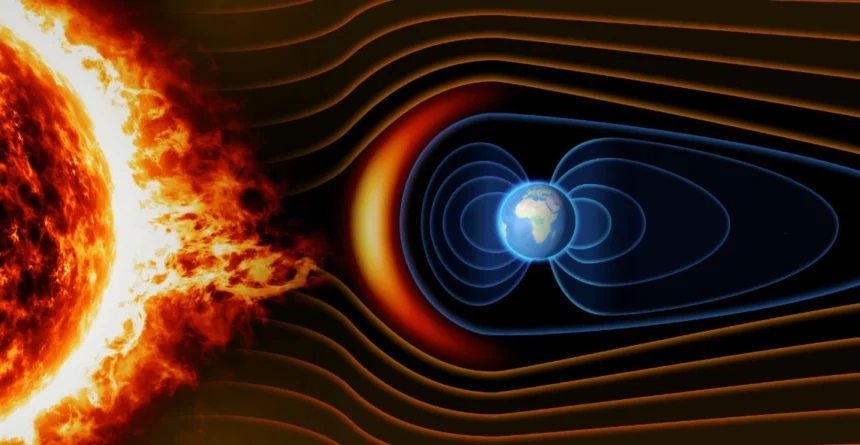
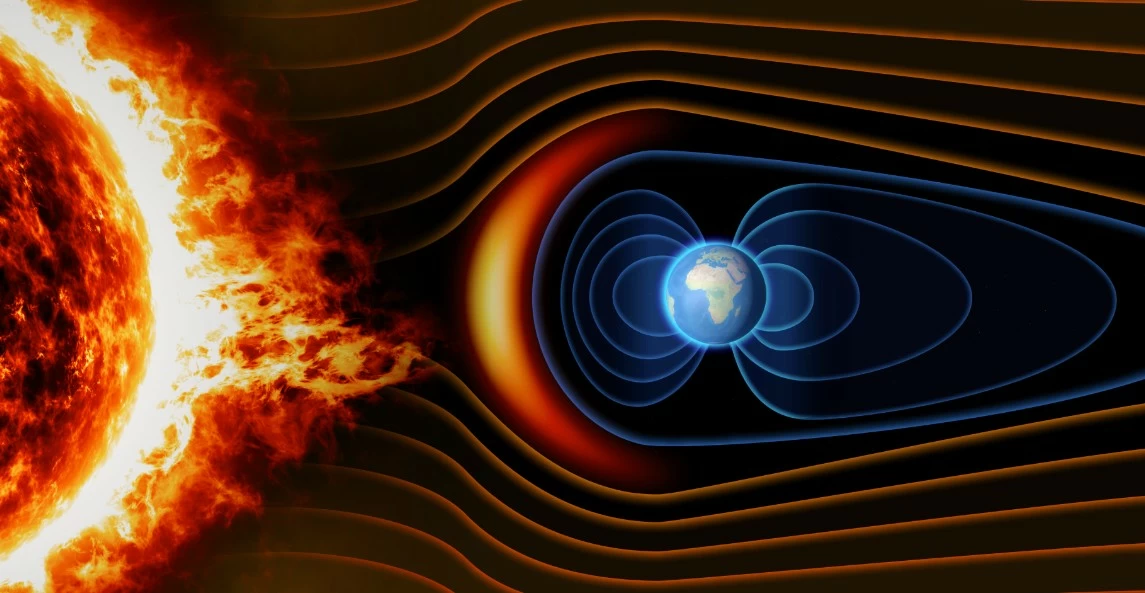
توقّع علماء من مختبر علم الفلك الشمسي التابع لأكاديمية العلوم الروسية، أن الثقب الإكليلي الجديد الذي تشكل على الشمس أخيرًا، قد يؤثر على الأرض ويحدث اضطرابات في مجالها المغناطيسي.
وذكر بيان صادر عن أكاديمية العلوم الروسية أنه قد تتشكل عواصف مغناطيسية تؤثر على الأرض يومي 18 و19 أبريل الجاري، وقد تظهر أضواء الشفق القطبي فوق بعض مناطق كوكب الأرض.
وتتشكل العواصف المغناطيسية على الأرض نتيجة ازدياد النشاط الشمسي، وتتسبب في خلل في أنظمة الطاقة وتؤثر على مسارات هجرة الطيور والحيوانات، ويمكن للعواصف المغناطيسية القوية أن تؤثر على عمل منظومات الاتصالات ومنظومات الملاحة، وتقسم شدة العواصف إلى 5 درجات وفقًا للاضطرابات التي تحدث في المجال المغناطيسي للأرض، ويتم ترميز شدة العاصفة من G1 (ضعيفة) إلى G5 (قوية جدًا).
Scientists from the Solar Astronomy Laboratory of the Russian Academy of Sciences have predicted that the new coronal hole that has formed on the sun may affect the Earth and cause disturbances in its magnetic field.
A statement issued by the Russian Academy of Sciences mentioned that magnetic storms may form that will impact the Earth on April 18 and 19 of this year, and auroras may appear over some areas of the planet.
Magnetic storms on Earth are caused by increased solar activity, leading to disruptions in power systems and affecting the migration patterns of birds and animals. Strong magnetic storms can impact communication systems and navigation systems. The intensity of the storms is classified into 5 levels based on the disturbances occurring in the Earth’s magnetic field, with storm intensity coded from G1 (weak) to G5 (very strong).