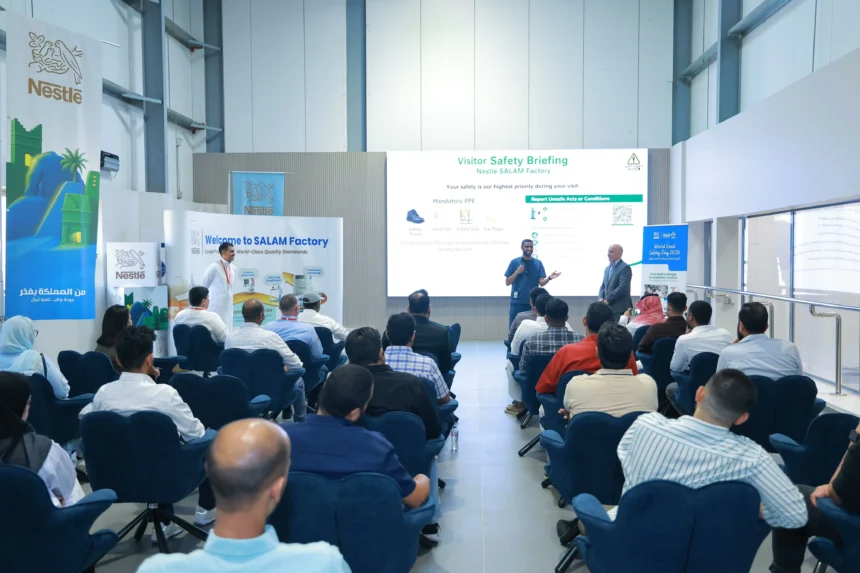
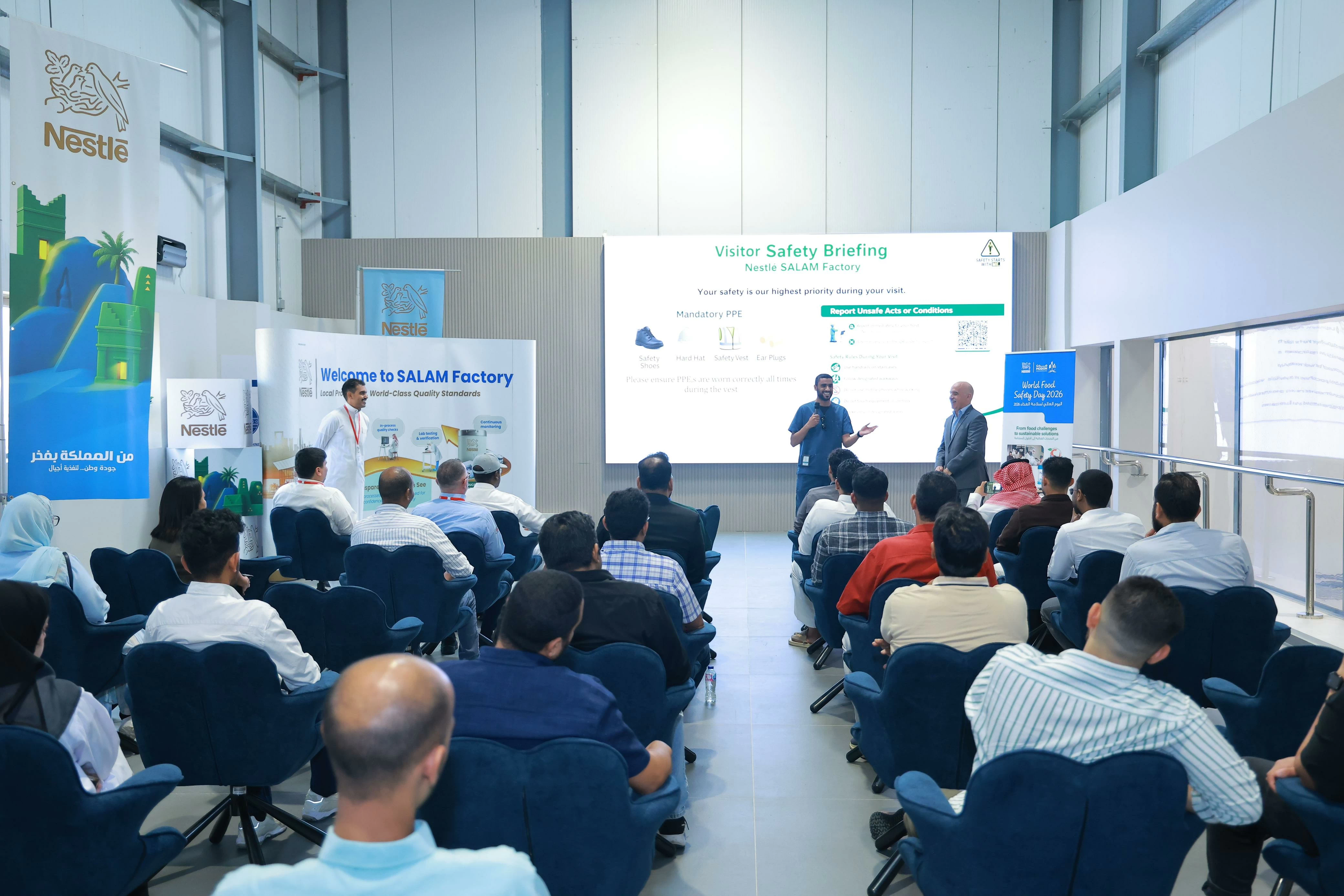
بمناسبة اليوم العالمي لسلامة الغذاء، أطلقت الهيئة السعودية للمدن الصناعية ومناطق التقنية «مدن» مبادرة توعوية بالتعاون مع شركة نستله العربية السعودية، استضافها مصنع الشركة في المدينة الصناعية الثالثة بجدة؛ بهدف تعزيز الوعي بمفاهيم سلامة الغذاء، ورفع مستوى المعرفة بالممارسات التصنيعية الآمنة والمسؤولة بين العاملين في المصانع والمنشآت الإنتاجية.
وشهدت المبادرة حضور أكثر من 80 مشاركاً، من بينهم 25 مشاركاً من منسوبي مصانع متخصصة في قطاع الأغذية، بما يعكس أهمية تبادل المعرفة والخبرات بين منشآت القطاع، ويؤكد دور التعاون بين القطاعين العام والخاص في ترسيخ ثقافة الوقاية والامتثال، بما ينسجم مع مستهدفات رؤية السعودية 2030 في تطوير القطاع الصناعي وتحسين جودة الحياة.
وتجسد هذه المبادرة عمق الالتزام المستمر بتطبيق أعلى معايير الجودة وسلامة الغذاء في مختلف مراحل التصنيع، اعتماداً على تقنيات متقدمة، وبيانات تشغيلية وتصنيعية دقيقة، وأنظمة رقابة صارمة، وإجراءات جودة متكاملة تسهم في ضمان سلامة الغذاء ورفع كفاءة العمليات.
وقال الأستاذ علي أشباب مدير مصنع نستله العربية السعودية: «تمثل سلامة الغذاء ركيزة أساسية في جميع عملياتنا التشغيلية، ونؤمن بأن مشاركة المعرفة والخبرات مع العاملين في القطاع تسهم في ترسيخ ممارسات تصنيعية أكثر وعياً وكفاءة، وتدعم الوصول إلى بيئة صناعية أكثر التزاماً بالسلامة والجودة».
وتضمنت المبادرة محاضرة متخصصة تناولت مخاطر سلامة الغذاء وآثارها المحتملة، وسبل الوقاية منها من خلال تطبيق ممارسات التصنيع الجيد (GMP) ونظام تحليل المخاطر ونقاط التحكم الحرجة (HACCP)، إلى جانب إبراز دور البيانات التصنيعية في دعم الامتثال وتحسين الأداء. كما اختُتمت المبادرة بجولة تعريفية داخل المصنع أتاحت للحضور الاطلاع عملياً على آليات تطبيق معايير الجودة وسلامة الغذاء، والأنظمة والإجراءات المتبعة على خطوط الإنتاج.
ويأتي هذا التعاون ضمن توجه مشترك لتعزيز المبادرات التوعوية المستقبلية، وتوسيع نطاق تبادل الخبرات والممارسات بين المنشآت الصناعية، بما يسهم في بناء بيئة تصنيعية أكثر كفاءة والتزاماً واستدامة.
On the occasion of World Food Safety Day, the Saudi Authority for Industrial Cities and Technology Zones “Modon” launched an awareness initiative in collaboration with Nestlé Saudi Arabia, hosted at the company’s factory in the third industrial city in Jeddah; aimed at enhancing awareness of food safety concepts and raising the level of knowledge about safe and responsible manufacturing practices among workers in factories and production facilities.
The initiative witnessed the attendance of more than 80 participants, including 25 participants from employees of factories specialized in the food sector, reflecting the importance of knowledge and experience exchange between sector establishments, and confirming the role of cooperation between the public and private sectors in establishing a culture of prevention and compliance, in line with the objectives of Saudi Vision 2030 in developing the industrial sector and improving quality of life.
This initiative embodies a deep commitment to applying the highest standards of quality and food safety at various stages of manufacturing, relying on advanced technologies, precise operational and manufacturing data, strict monitoring systems, and comprehensive quality procedures that contribute to ensuring food safety and enhancing operational efficiency.
Mr. Ali Ashbab, Director of Nestlé Saudi Arabia, stated: “Food safety is a fundamental pillar in all our operational processes, and we believe that sharing knowledge and experiences with workers in the sector contributes to establishing more conscious and efficient manufacturing practices, and supports the achievement of a more safety- and quality-compliant industrial environment.”
The initiative included a specialized lecture addressing food safety risks and their potential impacts, and ways to prevent them through the application of Good Manufacturing Practices (GMP) and Hazard Analysis and Critical Control Points (HACCP), in addition to highlighting the role of manufacturing data in supporting compliance and improving performance. The initiative concluded with a guided tour inside the factory, allowing attendees to practically observe the mechanisms for applying quality and food safety standards, as well as the systems and procedures followed on the production lines.
This collaboration comes as part of a shared approach to enhance future awareness initiatives and expand the scope of experience and practice exchange among industrial establishments, contributing to building a more efficient, committed, and sustainable manufacturing environment.