طوّر باحثون من جامعتي تبوك والملك سعود، بمشاركة باحث من جامعة ولاية أريزونا الأمريكية، نظام ذكاء اصطناعي متعدد الوسائط لكشف الأخبار الزائفة والمضللة خلال الحروب والأزمات، محققاً دقة بلغت 98.23% في إحدى قواعد البيانات المرتبطة بأزمة أوكرانيا، وأكثر من 94% في أربع قواعد بيانات دولية.
ونُشرت الدراسة في مجلة «التقارير العلمية» التابعة لـ«سبرنغر نيتشر»، في 16 أكتوبر 2026، وسلّطت الضوء على قصور أنظمة التحقق الآلي التقليدية في التعامل مع التضليل خلال الأزمات، إذ لا يقتصر على نشر معلومات كاذبة صريحة، بل قد يعتمد على الجمع بين نص وصورة وشحنة عاطفية، بحيث يبدو كل عنصر مقبولاً منفرداً، بينما ينشأ التضليل من طريقة تركيبها معاً.
4 قواعد بيانات للاختبار
اعتمد الباحثون على أربع قواعد بيانات معيارية واسعة النطاق، تُستخدم في اختبار تقنيات كشف التضليل، هي «فاكِدِت»، و«أوكرانيا-غيت هب»، و«ويبو»، و«ميديا إيفال»، بما يتيح تقييم أداء النظام عبر بيئات رقمية متنوعة من حيث اللغة والمنصة وطبيعة المحتوى، بدلاً من الاقتصار على قاعدة بيانات واحدة.
وسجّل النظام دقة بلغت 94.66% في قاعدة «فاكِدِت»، و98.23% في «أوكرانيا-غيت هب»، و98.12% في «ويبو»، و97.98% في «ميديا إيفال». وجاءت النتيجة الأعلى في قاعدة البيانات المرتبطة بأوكرانيا، متقدمةً بـ3.57 نقاط مئوية على نتيجة «فاكِدِت».
3 مسارات لتحليل الخبر
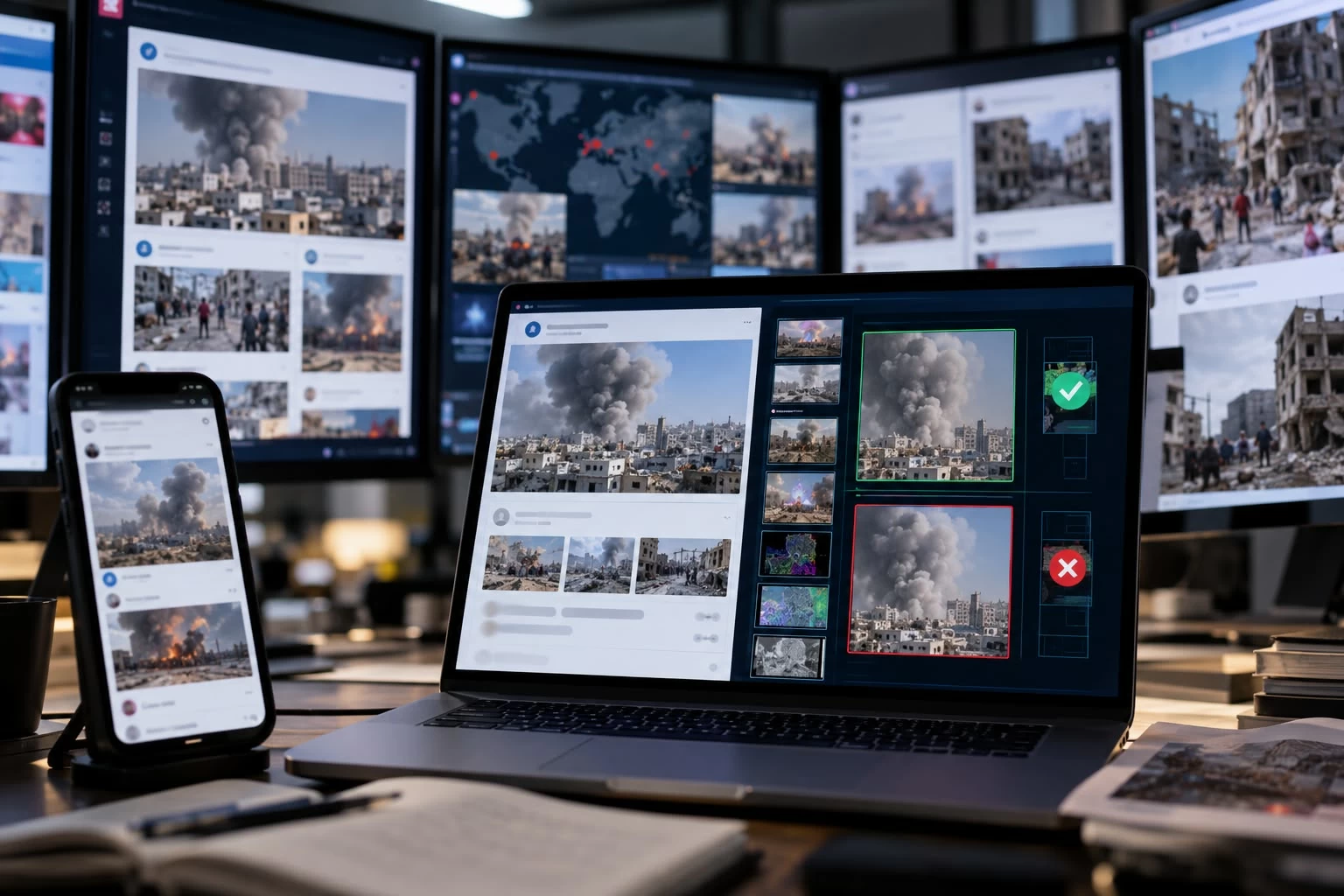
يعتمد النظام على ثلاثة مسارات تحليلية متكاملة، بدلاً من إسناد مهمة التحقق إلى خوارزمية واحدة. ويختص المسار الأول بتحليل النص باستخدام نموذج لغوي متعدد اللغات، لاستخلاص المعنى والسياق والعلاقات بين الجمل، فيما يتولى المسار الثاني فحص الصور باستخدام تقنيات الرؤية الحاسوبية لاستخراج السمات البصرية وفهم محتواها.
أما المسار الثالث، فيحلل المشاعر والنبرة العاطفية من خلال نماذج مدرّبة على رصد الإشارات الانفعالية التي قد تُستغل في صناعة الروايات المضللة، خصوصاً خلال النزاعات، التي يزداد فيها توظيف الخوف والغضب والاستقطاب للتأثير في المتلقين.
وتزداد أهمية هذا النهج في أوقات الحروب والأزمات، التي تتسم بسرعة تداول المحتوى وكثافة المواد البصرية وصعوبة التحقق الفوري منها، فضلاً عن إمكانية توظيف مواد حقيقية ضمن سياقات مضللة. فقد تكون الصورة أصلية، لكن وصفها أو توقيتها أو ربطها بحدث معين غير صحيح، فيما قد تدفع الصياغة العاطفية المتلقي إلى تصديق الرواية قبل التحقق من تفاصيلها.
وأظهرت الاختبارات، أن دمج المسارات الثلاثة حقق أداءً أعلى بصورة منتظمة مقارنة بمجموعة من الأساليب الحديثة التي استخدمها الباحثون للمقارنة. كما أكدت اختبارات استبعاد بعض مكونات النظام أهمية الجمع بين أنواع متعددة من المعلومات، بدلاً من الاعتماد على النص أو الصورة كلٌّ على حدة.
اختبارات إضافية للمحتوى العربي
وخلصت الدراسة إلى أن مواجهة التضليل الرقمي خلال الحروب والأزمات تتطلب أنظمة تحلل الخبر بوصفه منظومة مترابطة من النص والصورة والمشاعر، لا مجرد كلمات منفردة، وأن الجمع بين نماذج متخصصة ودمج نتائجها قد يعزز استقرار الكشف ويحد من الاعتماد على نقاط ضعف نموذج واحد.
وتبرز النتائج الحاجة إلى اختبار النظام على المحتوى العربي واللهجات المحلية، وقياس أدائه على الأخبار المتداولة لحظة وقوع الأحداث، إلى جانب تقييم قدرته على التعامل مع الصور ومقاطع الفيديو المنتجة أو المعدلة باستخدام تقنيات الذكاء الاصطناعي.
Researchers from the universities of Tabuk and King Saud, in collaboration with a researcher from Arizona State University in the United States, have developed a multimedia artificial intelligence system to detect fake and misleading news during wars and crises, achieving an accuracy of 98.23% in one database related to the Ukraine crisis, and over 94% in four international databases.
The study was published in the journal “Scientific Reports” by “Springer Nature” on October 16, 2026, and highlighted the shortcomings of traditional automated verification systems in dealing with misinformation during crises, as it does not only involve the dissemination of explicit false information but may also rely on the combination of text, images, and emotional charge, making each element appear acceptable on its own, while the misinformation arises from the way they are assembled together.
4 Databases for Testing
The researchers relied on four extensive standard databases used to test misinformation detection techniques: “Fakedet,” “Ukraine-GitHub,” “Weibo,” and “MediaEval,” allowing for the evaluation of the system’s performance across diverse digital environments in terms of language, platform, and content nature, rather than being limited to a single database.
The system recorded an accuracy of 94.66% in the “Fakedet” database, 98.23% in “Ukraine-GitHub,” 98.12% in “Weibo,” and 97.98% in “MediaEval.” The highest result came from the database related to Ukraine, exceeding the “Fakedet” result by 3.57 percentage points.
3 Analytical Paths for News Analysis
The system relies on three integrated analytical paths, instead of assigning the verification task to a single algorithm. The first path focuses on text analysis using a multilingual language model to extract meaning, context, and relationships between sentences, while the second path examines images using computer vision techniques to extract visual features and understand their content.
The third path analyzes emotions and emotional tone through models trained to detect emotional signals that may be exploited in creating misleading narratives, especially during conflicts, where fear, anger, and polarization are increasingly employed to influence recipients.
This approach becomes particularly important during times of war and crises, characterized by the rapid circulation of content, the density of visual materials, and the difficulty of immediate verification, in addition to the potential use of real materials within misleading contexts. An image may be original, but its description, timing, or association with a specific event may be incorrect, while emotional phrasing may lead the recipient to believe the narrative before verifying its details.
Tests showed that integrating the three paths consistently achieved higher performance compared to a set of modern methods used by the researchers for comparison. Tests excluding some components of the system also confirmed the importance of combining multiple types of information, rather than relying on text or images separately.
Additional Tests for Arabic Content
The study concluded that addressing digital misinformation during wars and crises requires systems that analyze news as an interconnected system of text, images, and emotions, not just isolated words, and that combining specialized models and integrating their results may enhance detection stability and reduce reliance on the weaknesses of a single model.
The results highlight the need to test the system on Arabic content and local dialects, measure its performance on news circulating at the moment events occur, and evaluate its ability to handle images and videos produced or modified using artificial intelligence techniques.