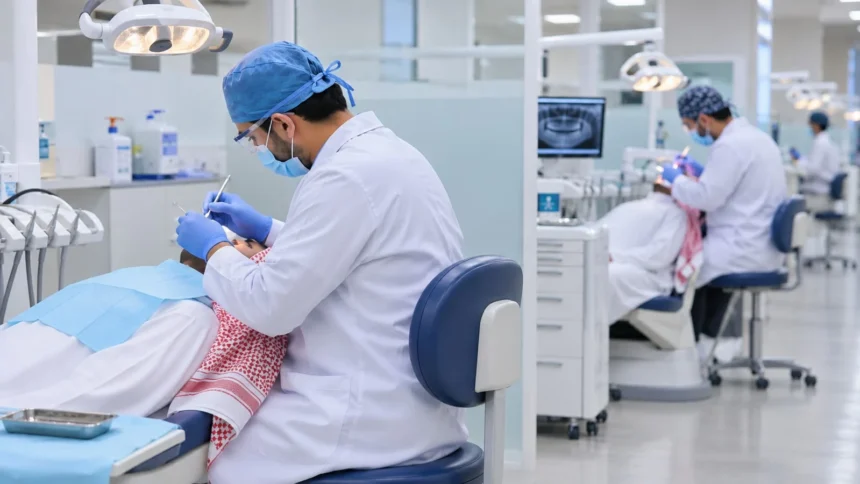
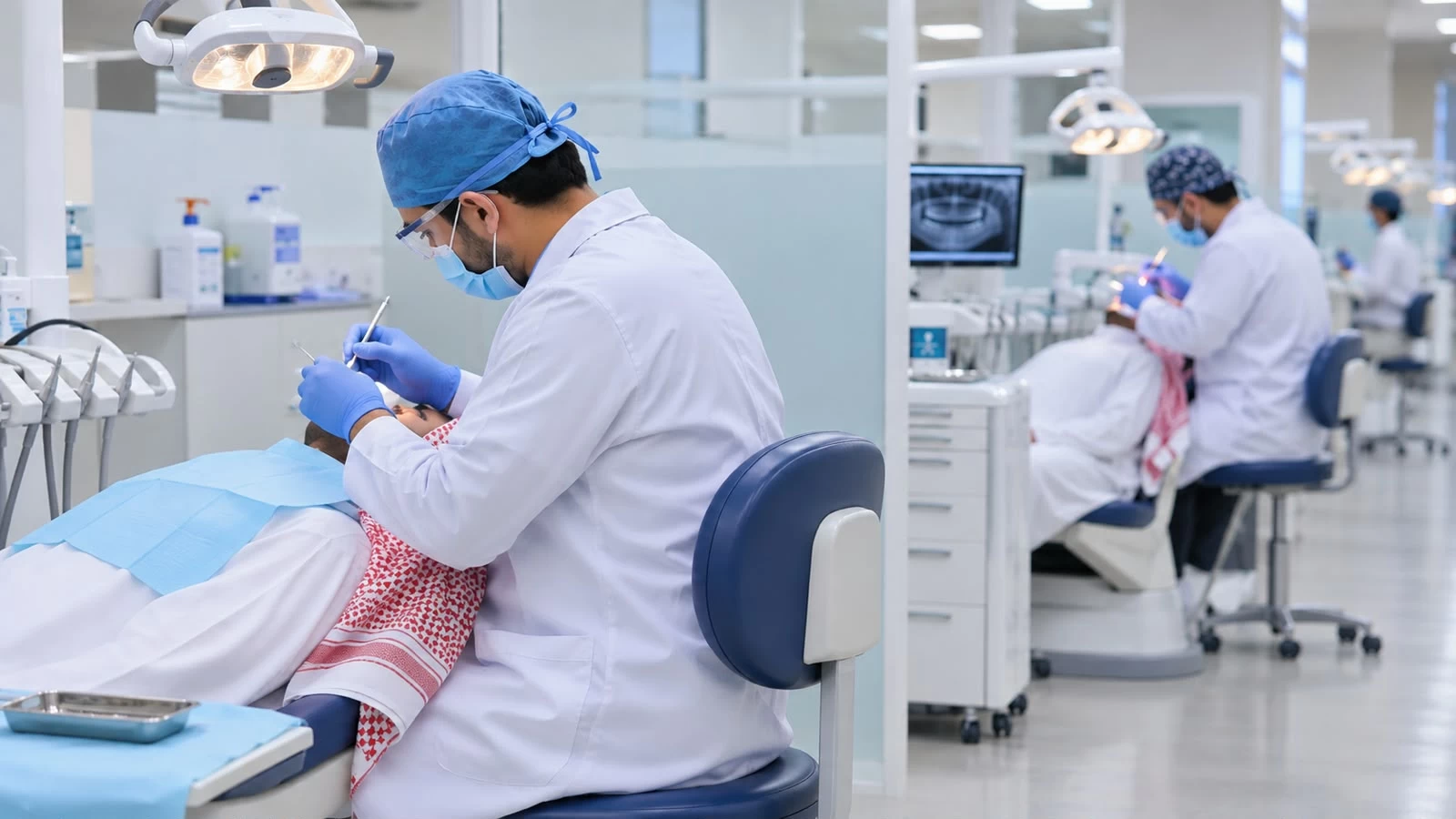
كشفت دراسة علمية حديثة أجرتها جامعة الملك سعود، استناداً إلى البيانات الرسمية للهيئة السعودية للتخصصات الصحية، عن بلوغ نسبة السعوديين بين أخصائيي صحة الأسنان المسجلين في المملكة 95.8%، مقابل تفاوت جغرافي في الكثافة المهنية يتجاوز سبعة أضعاف بين المنطقتين الوسطى والشمالية، في مؤشر يعكس ارتفاع مستويات التوطين، ويثير تساؤلات حول عدالة توزيع الكوادر الصحية الوقائية ومدى توافقها مع الحاجات السكانية.
تباين واضح في توزيع الكوادر
وأظهرت الدراسة، المنشورة في 31 أكتوبر 2026 بمجلة «بي إم سي لصحة الفم» الدولية، أن إجمالي أخصائيي صحة الأسنان المسجلين بلغ 1,458 أخصائياً وأخصائية، وفق بيانات الهيئة المستخرجة في 17 يوليو 2025، بمتوسط وطني يبلغ 4.13 أخصائي لكل 100 ألف نسمة.
وسجلت المنطقة الوسطى أعلى كثافة مهنية بواقع 6.03 أخصائي لكل 100 ألف نسمة، مقابل 0.82 أخصائي في المنطقة الشمالية، بفارق يصل إلى 7.35 أضعاف، ما يكشف تبايناً واضحاً في توزيع الكوادر مقارنة بعدد السكان، رغم ارتفاع نسبة السعوديين العاملين في التخصص على المستوى الوطني.
واستحوذت المنطقة الوسطى على 41.1% من إجمالي الأخصائيين، تلتها المنطقة الغربية بنسبة 25.5%، ثم الشرقية بنسبة 20.6%، فيما بلغت حصة المنطقة الجنوبية الغربية 6%، والشمالية 1%، وفق التقسيمات الجغرافية الكبرى المعتمدة في الدراسة.
61.4% من الكوادر دون 35 عاماً
وعلى مستوى الخصائص السكانية والمهنية، أظهرت الدراسة أن 61.4% من الأخصائيين تتراوح أعمارهم بين 20 و34 عاماً، ما يعكس غلبة الفئات العمرية الشابة على القوى العاملة في التخصص، فيما بلغت نسبة الذكور 53.6% مقابل 46.4% للإناث.
وأوضحت البيانات أن 61.7% من أخصائيي صحة الأسنان يعملون في القطاع الحكومي، مقابل 38.3% في القطاعات الأخرى، فيما يشكل المصنفون ضمن الفئة المهنية الأساسية للممارسين 83.4% من إجمالي الكوادر المسجلة.
تفاوت جغرافي في الخدمات الوقائية
وأكدت الدراسة أن التفاوت الجغرافي في الكثافة المهنية يستدعي تطوير سياسات توزيع القوى العاملة، خصوصاً أن أخصائيي صحة الأسنان يمثلون أحد المكونات الأساسية في منظومة الوقاية من أمراض الفم والأسنان، من خلال التوعية الصحية والإجراءات الوقائية وتعزيز السلوكيات المرتبطة بصحة الفم.
وأظهر التحليل الإحصائي وجود ارتباطات ذات دلالة بين التصنيف المهني وعدد من المتغيرات، شملت العمر والجنسية وقطاع العمل والمنطقة الجغرافية وسنوات الخبرة، فيما لم يظهر ارتباط ذو دلالة إحصائية بين التصنيف المهني والجنس.
وتكتسب هذه النتائج أهميتها لارتباطها بمستهدفات رؤية السعودية 2030 في تطوير الخدمات الصحية وتعزيز الوقاية ورفع كفاءة توزيع الموارد البشرية، إذ تبرز الحاجة إلى قراءة مؤشرات التوطين بالتوازي مع الكثافة المهنية والتوزيع السكاني والحاجات الصحية لكل منطقة.
توصيات بإعادة تخطيط توزيع الكوادر
وخلصت الدراسة إلى أن القوى العاملة في تخصص صحة الأسنان بالمملكة تتميز بارتفاع نسبة التوطين وغلبة الفئات العمرية الشابة، مع استمرار تفاوت جغرافي ملحوظ في توزيع الأخصائيين ومستوياتهم المهنية.
ودعت إلى تعزيز التخطيط الاستراتيجي للقوى العاملة، وتطوير مسارات التدريب والتدرج المهني، وتبني سياسات موجهة لتحسين التوزيع الجغرافي، بما يسهم في تحقيق وصول أكثر توازناً إلى خدمات صحة الفم الوقائية بين مناطق المملكة.
وتبرز النتائج أهمية الانتقال من قياس نجاح توطين التخصصات الصحية بأعداد الممارسين ونسب السعوديين وحدها، إلى تقييم مدى ملاءمة توزيع الكوادر للحاجات السكانية، باعتبار الكثافة المهنية أحد المؤشرات الأساسية في تخطيط الخدمات الصحية.
وبينت الدراسة أنها تناولت أخصائيي صحة الأسنان المسجلين لدى الهيئة السعودية للتخصصات الصحية تحديداً، دون أن تشمل جميع أطباء الأسنان، كما أن بيانات التسجيل والكثافة المهنية تقدم مؤشرات لتخطيط القوى العاملة، لكنها لا تقيس بصورة مباشرة جودة الخدمات أو حجم الطلب الفعلي عليها
A recent scientific study conducted by King Saud University, based on official data from the Saudi Commission for Health Specialties, revealed that the percentage of Saudis among registered dental health specialists in the Kingdom has reached 95.8%. This is contrasted by a geographical disparity in professional density exceeding seven times between the central and northern regions, indicating high levels of localization and raising questions about the fairness of distributing preventive health personnel and their alignment with population needs.
Clear Variation in Workforce Distribution
The study, published on October 31, 2026, in the international journal “BMC Oral Health,” showed that the total number of registered dental health specialists reached 1,458, according to data extracted from the commission on July 17, 2025, with a national average of 4.13 specialists per 100,000 people.
The central region recorded the highest professional density at 6.03 specialists per 100,000 people, compared to 0.82 specialists in the northern region, a difference of up to 7.35 times, revealing a clear disparity in workforce distribution relative to the population, despite the high percentage of Saudis working in the specialty at the national level.
The central region accounted for 41.1% of the total specialists, followed by the western region at 25.5%, then the eastern region at 20.6%, while the southwestern region’s share was 6%, and the northern region’s was 1%, according to the major geographical divisions adopted in the study.
61.4% of the Workforce Under 35 Years Old
In terms of demographic and professional characteristics, the study showed that 61.4% of the specialists are aged between 20 and 34 years, reflecting a predominance of young age groups in the workforce of the specialty, while the percentage of males was 53.6% compared to 46.4% for females.
The data indicated that 61.7% of dental health specialists work in the government sector, compared to 38.3% in other sectors, while those classified within the core professional category of practitioners constitute 83.4% of the total registered workforce.
Geographical Disparity in Preventive Services
The study confirmed that the geographical disparity in professional density necessitates the development of workforce distribution policies, especially since dental health specialists represent one of the essential components in the system for preventing oral and dental diseases, through health awareness, preventive measures, and promoting behaviors related to oral health.
The statistical analysis showed significant correlations between professional classification and several variables, including age, nationality, work sector, geographical area, and years of experience, while no statistically significant correlation was found between professional classification and gender.
These results are significant as they relate to the objectives of Saudi Vision 2030 in developing health services, enhancing prevention, and improving the efficiency of human resource distribution, highlighting the need to analyze localization indicators in parallel with professional density, population distribution, and health needs for each region.
Recommendations for Replanning Workforce Distribution
The study concluded that the workforce in the dental health specialty in the Kingdom is characterized by a high percentage of localization and a predominance of young age groups, while a noticeable geographical disparity in the distribution and professional levels of specialists continues.
It called for enhancing strategic workforce planning, developing training pathways and professional progression, and adopting targeted policies to improve geographical distribution, contributing to achieving a more balanced access to preventive oral health services across the Kingdom’s regions.
The results emphasize the importance of shifting from measuring the success of localization in health specialties solely by the number of practitioners and the percentage of Saudis, to evaluating the suitability of workforce distribution to population needs, considering professional density as one of the fundamental indicators in health services planning.
The study indicated that it specifically addressed dental health specialists registered with the Saudi Commission for Health Specialties, without including all dentists, and that registration data and professional density provide indicators for workforce planning, but do not directly measure the quality of services or the actual demand for them.