


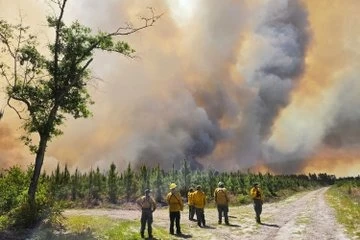
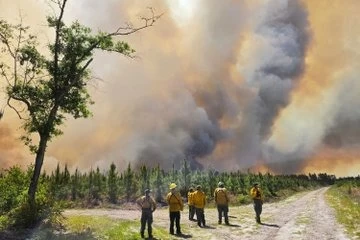
تواجه ولاية جورجيا الأمريكية كارثة حرائق غابات غير مسبوقة، وصفت بأنها الأكثر تدميراً للممتلكات في تاريخ الولاية، حيث أدى حريقان رئيسيان إلى تدمير أكثر من 120 منزلاً ومبنى آخر، وإحراق نحو 40 ألف فدان من الأراضي.
وأعلن حاكم ولاية جورجيا براين كيمب حالة الطوارئ في 91 مقاطعة من أصل 159 لتسريع عمليات الاستجابة، وفرض حظر شامل على إشعال النيران في المناطق المتضررة، مؤكداً أن هذه الحرائق سجلت أكبر عدد من المنازل المدمرة في حدث حريق واحد منذ تأسيس الولاية.
وتتركز الحرائق الرئيسية في جنوب شرق الولاية في حريق الطريق السريع 82 الذي أتى على نحو 87 منزلاً ومبنى، وأحرق أكثر من 7500 فدان، ولا يزال محصوراً بنسبة 15% فقط، وحريق طريق باينلاند الذي أحرق أكثر من 31 ألف فدان ودمر نحو 35 منزلاً، ويُعد الأكبر حالياً بين الحرائق النشطة في الولايات المتحدة.
وصدرت أوامر إخلاء إلزامية لآلاف السكان، ولا يزال نحو 4000 منزل في مناطق الخطر، ولم تسجل السلطات حتى الآن أي ضحايا بشريين، لكن الخسائر المادية وصفت بأنها «تاريخية».
وتشير التحقيقات الأولية إلى أن حريق الطريق السريع 82 اندلع بعد سقوط بالون معدني من حفل أطفال على خط كهرباء، في حين بدأت شراراة حريق باينلاند بسبب أعمال لحام على بوابة.
ووفقاً للسلطات ساهمت عدة عوامل في تحويل هذه الحرائق إلى «وحش» يصعب السيطرة عليه من بينها: الجفاف الحاد حيث تعاني منطقة جنوب شرق الولايات المتحدة من أسوأ موجة جفاف ربيعية منذ عقد كامل، ما جفف الغطاء النباتي وجعله وقوداً سهل الاشتعال.
كما ساهمت في اشتعال الحرائق مخلفات إعصار هيلين الذي ضرب المنطقة في سبتمبر 2024، والذي ترك كميات هائلة من الأشجار الميتة والحطام الخشبي، الذي يعمل الآن كوقود إضافي يسرع انتشار النيران، إضافة إلى الرياح القوية وانخفاض الرطوبة التي ساهمت في دفع ألسنة اللهب بسرعة كبيرة، ما صعب على فرق الإطفاء بناء خطوط الاحتواء.
ويصف المسؤولون في لجنة الغابات الجورجية الظروف الحالية بأنها «الأسوأ الممكنة» لمكافحة الحرائق. وأدى الدخان الناتج إلى تأثيرات وصلت إلى مناطق بعيدة مثل أتلانتا.
The state of Georgia in the United States is facing an unprecedented wildfire disaster, described as the most destructive to property in the state’s history, as two major fires have destroyed more than 120 homes and other buildings, and burned approximately 40,000 acres of land.
Governor Brian Kemp of Georgia declared a state of emergency in 91 out of 159 counties to expedite response efforts and imposed a total ban on igniting fires in the affected areas, emphasizing that these fires have recorded the highest number of destroyed homes in a single fire event since the state’s establishment.
The main fires are concentrated in the southeast of the state, particularly the Highway 82 fire, which has consumed about 87 homes and buildings and burned over 7,500 acres, and is only 15% contained, and the Pineland fire, which has burned more than 31,000 acres and destroyed about 35 homes, currently the largest among active fires in the United States.
Mandatory evacuation orders have been issued for thousands of residents, and about 4,000 homes remain in danger zones. Authorities have not yet reported any human casualties, but the material losses have been described as “historic.”
Preliminary investigations indicate that the Highway 82 fire ignited after a metallic balloon from a children’s party fell onto a power line, while the Pineland fire was sparked by welding work on a gate.
According to authorities, several factors contributed to turning these fires into a “monster” that is difficult to control, including severe drought, as the southeastern United States is experiencing the worst spring drought in a decade, which has dried out vegetation and made it easily flammable.
Additionally, debris from Hurricane Helen, which struck the area in September 2024, contributed to the ignition of the fires, leaving vast amounts of dead trees and wooden debris that now act as additional fuel accelerating the spread of flames, along with strong winds and low humidity that have helped push the flames rapidly, making it difficult for firefighting teams to establish containment lines.
Officials from the Georgia Forestry Commission describe the current conditions as “the worst possible” for firefighting. The resulting smoke has had effects reaching as far as Atlanta.