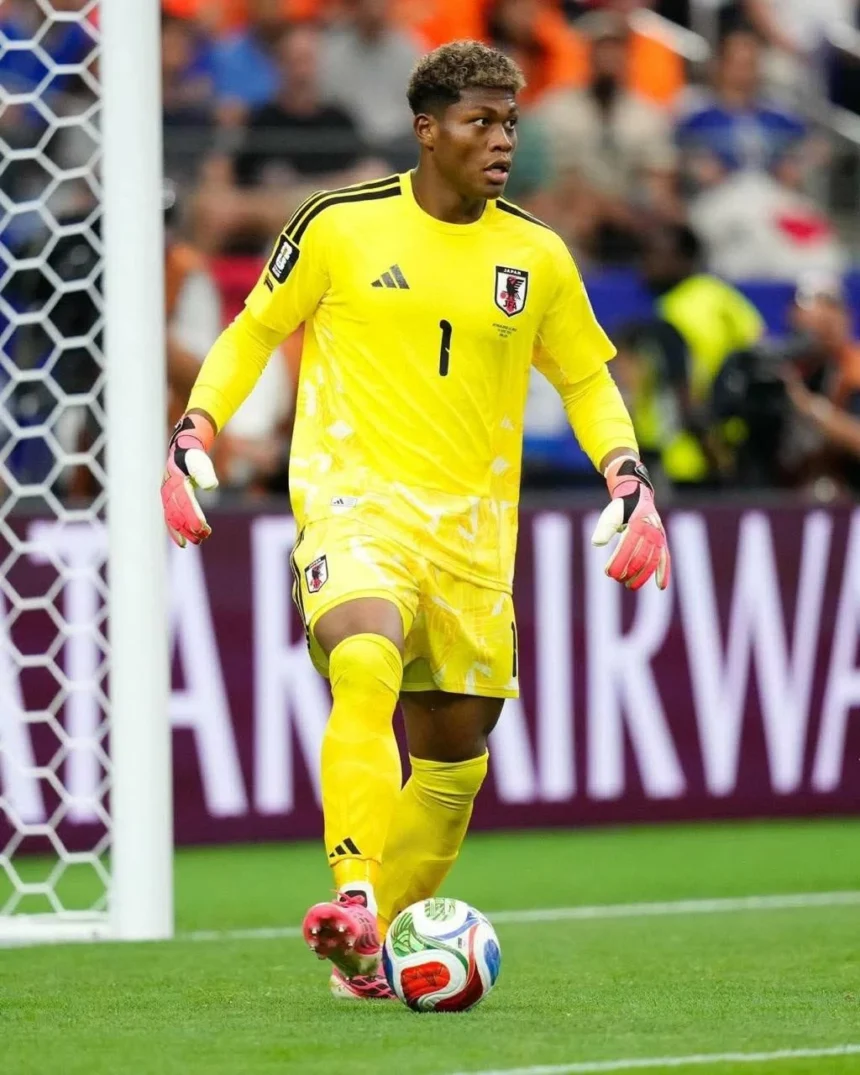
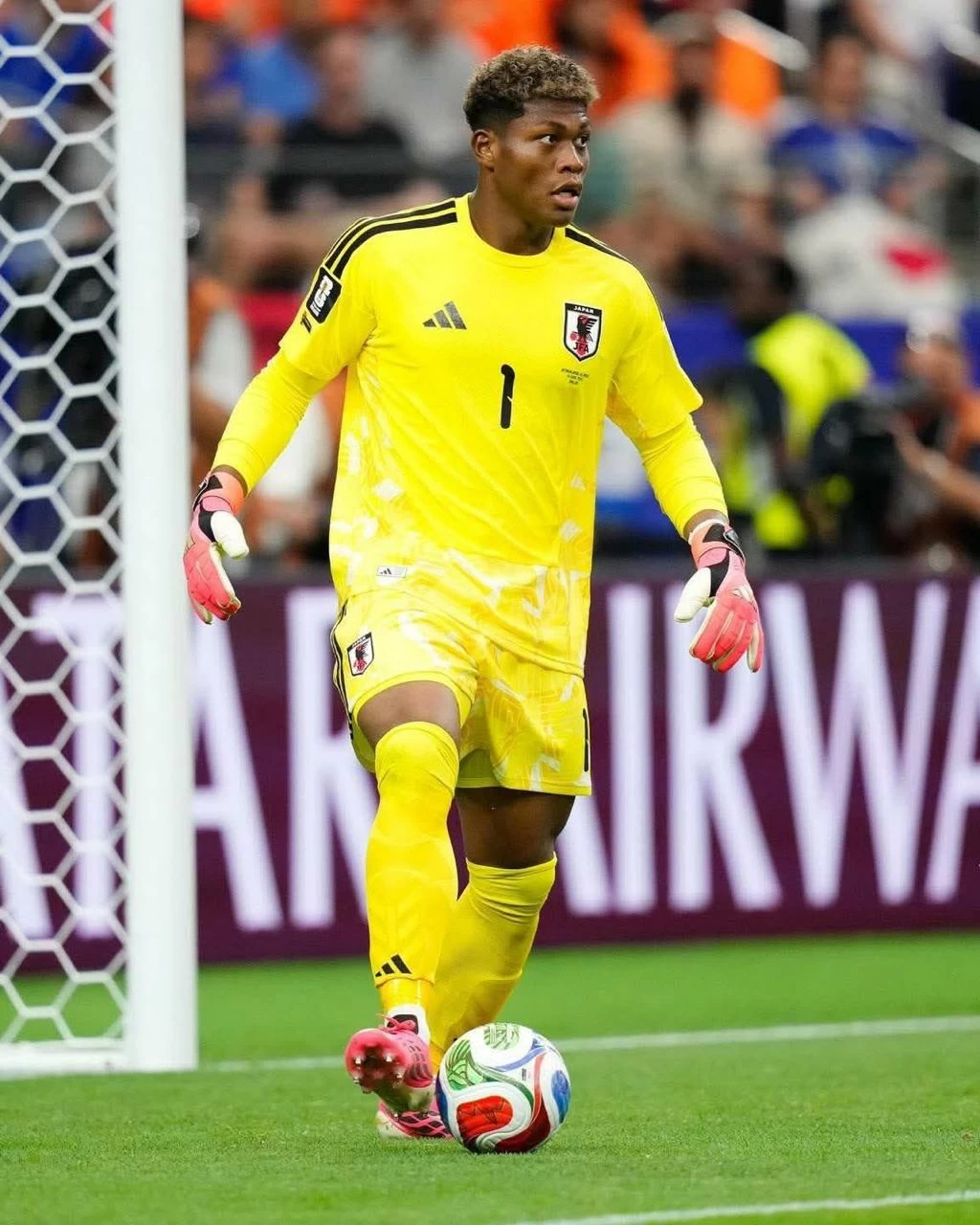
وقف سوزوكي الحارس الأمريكي-الغاني-الياباني ليقول للعالم: اليابان تغيّرت، والساموراي صار له ألف لون.
ينتمي حارس مرمى بارما الإيطالي المولود في نيو جيرسي الأمريكية لأب غاني وأم يابانية، ويحمل في هويته 3 جنسيات، هي: (اليابانية نسبة لأمه، الغانية نسبة لأبيه، والأمريكية نسبة لمكان ميلاده)، لكنه اختار قميص «الساموراي الأزرق».
وسوزوكي ليس مجرد حارس موهوب يبلغ طوله 1.90م، بل هو وجه جديد لليابان متعددة الثقافات في كأس العالم 2026. ظهوره مع المنتخب الأول يؤكد أن هوية اليابان الكروية توسعت، وصارت تحتضن كل من يحمل شعارها بغض النظر عن لون البشرة أو أصوله.
والحقيقة أنه ليس الأول من أصحاب البشرة السمراء الذي يرتدي شعار اليابان. سبقه أسماء كتبت تاريخاً مبكراً: أدو أونايو مهاجم من أب نيجيري، أول لاعب من أصول أفريقية يمثل اليابان، وموساشي سوزوكي مهاجم من أب جامايكي، ترك بصمة مع المنتخب الأول، وكذلك جويل شينشي فوجيتا لاعب وسط من أصول نيجيرية، أحد نجوم الجيل الجديد.
Suzuki, the American-Ghanaian-Japanese goalkeeper, stands to tell the world: Japan has changed, and the samurai has taken on a thousand colors.
The Parma goalkeeper, born in New Jersey to a Ghanaian father and a Japanese mother, holds three nationalities in his identity: (Japanese from his mother, Ghanaian from his father, and American from his place of birth), but he chose to wear the “Blue Samurai” jersey.
Suzuki is not just a talented goalkeeper standing at 1.90m tall; he is a new face of multicultural Japan in the 2026 World Cup. His appearance with the national team confirms that Japan’s football identity has expanded, embracing anyone who carries its emblem regardless of skin color or origins.
In fact, he is not the first person of color to wear Japan’s emblem. He is preceded by names that made early history: Ado Onaiwu, a forward with a Nigerian father, the first player of African descent to represent Japan, and Musashi Suzuki, a forward with a Jamaican father, who left his mark with the national team, as well as Joel Shinji Fujita, a midfielder of Nigerian descent, one of the stars of the new generation.