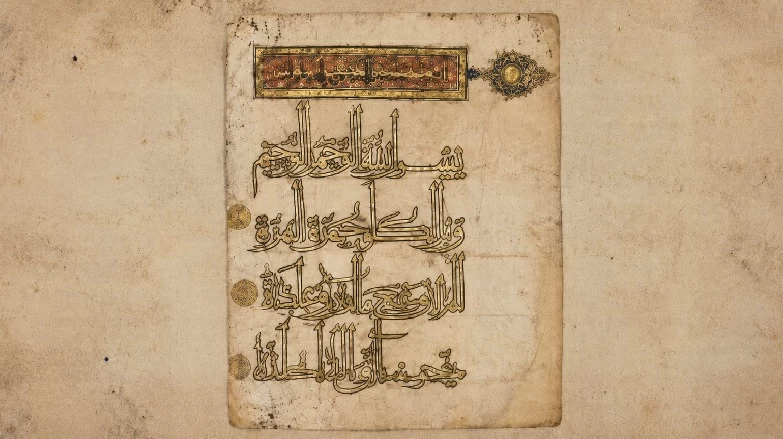
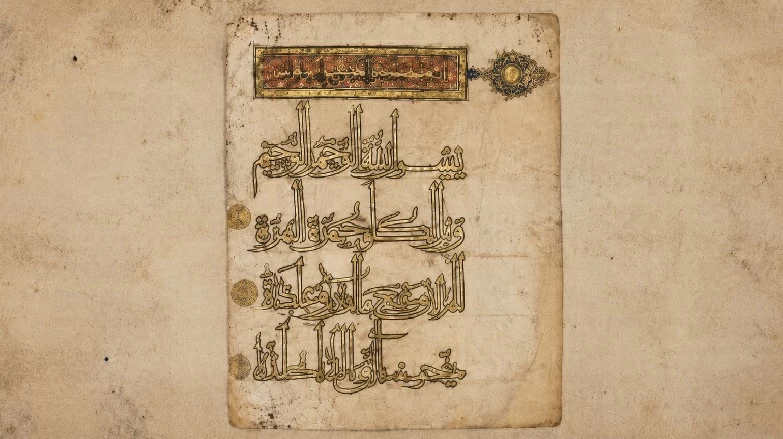
تستعد صفحة نادرة من مصحف تاريخي يعود إلى أكثر من سبعة قرون لخوض مزاد مرتقب في العاصمة البريطانية لندن، حيث تتوقع دار (كريستيز) أن يتراوح سعرها بين 50 ألفاً و70 ألف جنيه إسترليني؛ نظراً لقيمتها الفنية والتاريخية الاستثنائية.
ومن المقرر عرض الصفحة ضمن مزاد (فن العالم الإسلامي والهندي) الذي تنظمه الدار في 12 نوفمبر، ويضم أكثر من 230 قطعة من المخطوطات والأعمال الفنية والتحف التاريخية المتنوعة.
وتشير التقديرات إلى أن الصفحة تعود إلى نحو عام 1310م، وأنها كانت جزءاً من مصحف أُنتج في بغداد قبل أكثر من 700 عام، وتمتاز بزخارف مذهبة وألوان متعددة وتفاصيل فنية دقيقة تعكس مستوى الإبداع في فنون الكتاب الإسلامي آنذاك. وتحمل الصفحة آيات من سورة الهمزة، كُتبت بالخط المحقق على ورق فاخر، مع استخدام الذهب والفضة والحبر الأسود في تزيين الحروف والعلامات والزخارف النباتية والهندسية المحيطة بالنص. كما تضم عنوان السورة مكتوباً بخط كوفي أسود داخل إطار زخرفي مذهب متعدد الألوان، فيما تبلغ أبعادها نحو 57.7 سنتيمتراً طولاً و42.6 سنتيمتراً عرضاً.
وتُنسب أعمال التذهيب في هذه المخطوطة إلى الفنان محمد بن أيبك بن عبدالله، الذي يُعد من أبرز فناني التذهيب في مطلع القرن الرابع عشر الميلادي، واشتهر بمشاركته في تزيين مصاحف كبيرة أُنتجت في بغداد خلال تلك الفترة.
ويشير مختصون إلى أن أعمال هذه المدرسة الفنية تميزت بالألوان الزاهية والتفاصيل الدقيقة والتأثر ببعض العناصر الزخرفية الشرقية، إلى جانب استخدام أنواع عالية الجودة من الورق المصقول، ما منح المخطوطات قيمة فنية استثنائية حافظت عليها عبر القرون.
A rare page from a historic Quran, dating back more than seven centuries, is set to go up for auction in the British capital, London. Christie’s expects its price to range between £50,000 and £70,000, due to its exceptional artistic and historical value.
The page is scheduled to be featured in the auction of (Islamic and Indian Art) organized by the house on November 12, which includes more than 230 pieces of manuscripts, artworks, and various historical artifacts.
Estimates suggest that the page dates back to around 1310 AD and was part of a Quran produced in Baghdad over 700 years ago. It is distinguished by its gilded decorations, multiple colors, and intricate artistic details that reflect the level of creativity in Islamic book arts at that time. The page contains verses from Surah Al-Humazah, written in Muhaqqaq script on luxurious paper, with the use of gold, silver, and black ink to adorn the letters, signs, and the surrounding floral and geometric decorations. It also features the title of the surah written in black Kufic script within a multi-colored gilded decorative frame, with dimensions of approximately 57.7 centimeters in length and 42.6 centimeters in width.
The gilding work in this manuscript is attributed to the artist Muhammad ibn Ayyub ibn Abdullah, who is considered one of the most prominent gilding artists at the beginning of the 14th century AD and was known for his participation in decorating large Qurans produced in Baghdad during that period.
Experts indicate that the works of this artistic school are characterized by vibrant colors, intricate details, and the influence of some Eastern decorative elements, along with the use of high-quality polished paper, which has given the manuscripts exceptional artistic value that has been preserved over the centuries.