



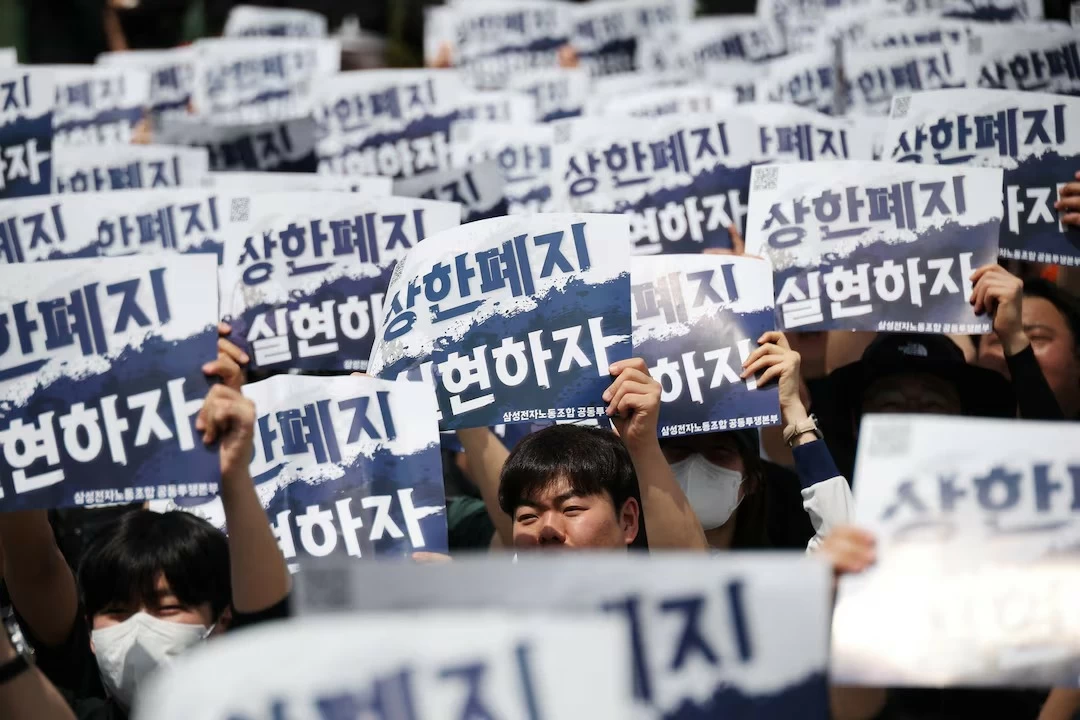
تواجه شركة سامسونغ للإلكترونيات واحدة من أكبر الأزمات العمالية في تاريخها، بعدما أعلن نحو 48 ألف موظف عزمهم تنفيذ إضراب يبدأ غداً (الخميس)، ويستمر 18 يوماً، عقب فشل المفاوضات مع الإدارة بشأن المكافآت والحوافز المالية.
دور محوري
ويثير الإضراب مخاوف واسعة في كوريا الجنوبية، نظراً إلى الدور المحوري الذي تلعبه سامسونغ في الاقتصاد الكوري وسوق أشباه الموصلات العالمية، خصوصاً مع تزايد الطلب على الرقائق المستخدمة في تقنيات الذكاء الاصطناعي.
مفاوضات متعثرة
ورغم انهيار جولة المفاوضات الرئيسية، استؤنفت المحادثات مساء الأربعاء بوساطة وزير العمل الكوري الجنوبي كيم يونغ هون، في محاولة أخيرة لتجنب التصعيد.
وقال زعيم النقابة تشوي سيونغ هو إن العمال وافقوا على المقترح النهائي الذي قدمته لجنة علاقات العمل الوطنية، لكن الخلاف استمر حول نقطة جوهرية تتعلق بحجم المكافآت، ما دفع النقابة إلى المضي قدماً في الإضراب.
وأضاف، متأثراً خلال مؤتمر صحفي: «أعتذر للجمهور لأننا لم نتمكن من الوصول إلى نتيجة جيدة رغم كل التنازلات التي قدمناها»، مؤكداً استمرار جهود التوصل إلى اتفاق حتى أثناء الإضراب.
مطالب غير مقبولة
من جانبها، اعتبرت سامسونغ مطالب النقابة مبالغ فيها وغير مقبولة، مشيرة إلى أن الاستجابة لها قد تؤثر على أسس إدارة الشركة واستقرارها المالي.
وتطالب النقابة بإلغاء سقف المكافآت الحالي البالغ 50% من الراتب السنوي، وتخصيص 15% من الأرباح التشغيلية السنوية كمكافآت للعاملين، مع تثبيت هذه الامتيازات بشكل دائم وليس لعام واحد فقط.
ويتركز الخلاف كذلك على طريقة توزيع المكافآت بين قطاع رقائق الذاكرة المربح وقطاع الرقائق المنطقية الذي يحقق خسائر.
وتعد سامسونغ أكبر منتج لرقائق الذاكرة في العالم، كما تمثل نحو ربع صادرات كوريا الجنوبية، ما يجعل أي تعطيل في إنتاجها مصدر قلق للأسواق العالمية.
ويخشى خبراء أن يؤدي الإضراب إلى زيادة الضغوط على سلاسل الإمداد العالمية، خصوصاً مع الارتفاع الكبير في الطلب على الرقائق المرتبطة بتطبيقات الذكاء الاصطناعي.
وأشار مسؤول في البنك المركزي الكوري الجنوبي إلى أن الإضراب، في أسوأ السيناريوهات، قد يخفض معدل النمو الاقتصادي المتوقع للبلاد هذا العام من 2% إلى 1.5%.
تحكيم طارئ
وتتابع حكومة كوريا الجنوبية الأزمة عن كثب، وسط حديث عن إمكانية اللجوء إلى التحكيم الطارئ، وهو إجراء نادر يسمح بتجميد الإضراب لمدة 30 يوماً لإتاحة الفرصة أمام الوساطة الحكومية.
لكن مسؤولاً حكومياً أوضح أن الحديث عن هذا الخيار لا يزال مبكراً، مؤكداً أن المجال ما زال مفتوحاً للحوار.
فجوة الرواتب
ويقول العاملون في سامسونغ إن الفجوة الكبيرة في المكافآت مقارنة بمنافستها المحلية SK Hynix كانت من أبرز أسباب الغضب داخل الشركة.
وتؤكد النقابة أن موظفي SK Hynix حصلوا العام الماضي على مكافآت تزيد بأكثر من ثلاثة أضعاف ما حصل عليه موظفو سامسونغ، خصوصاً بعد نجاح الشركة المنافسة في تعزيز تعاونها مع Nvidia في مجال رقائق الذكاء الاصطناعي.
وأدى ذلك، بحسب النقابة، إلى انتقال عدد من موظفي سامسونغ إلى الشركة المنافسة وارتفاع العضوية النقابية داخل عملاق التكنولوجيا الكوري.
ويرى محللون أن التأثير المباشر على الإنتاج قد يظل محدوداً إذا انتهى الإضراب خلال الفترة المعلنة، لكنهم يحذرون من تداعيات طويلة المدى على تكاليف الصناعة وأسعار الرقائق عالمياً.
وفي محاولة لتقليل الأضرار، حصلت سامسونغ على حكم قضائي يلزم بتشغيل حد أدنى من العمال داخل بعض المصانع الحيوية لمنع تعطل المعدات أو تلف خطوط الإنتاج، ما يعني أن أكثر من 7 آلاف موظف سيواصلون العمل رغم الإضراب.
Samsung Electronics is facing one of the largest labor crises in its history, as approximately 48,000 employees announced their intention to strike starting tomorrow (Thursday), lasting for 18 days, following failed negotiations with management regarding bonuses and financial incentives.
Central Role
The strike raises widespread concerns in South Korea, given the central role that Samsung plays in the Korean economy and the global semiconductor market, especially with the increasing demand for chips used in artificial intelligence technologies.
Stalled Negotiations
Despite the collapse of the main round of negotiations, talks resumed on Wednesday evening, mediated by South Korean Labor Minister Kim Young-hoon, in a final attempt to avoid escalation.
Union leader Choi Seung-ho stated that workers agreed to the final proposal presented by the National Labor Relations Committee, but disagreements persisted over a key point regarding the size of bonuses, prompting the union to proceed with the strike.
He added, visibly affected during a press conference: “I apologize to the public because we could not reach a good outcome despite all the concessions we made,” affirming that efforts to reach an agreement would continue even during the strike.
Unacceptable Demands
For its part, Samsung deemed the union’s demands excessive and unacceptable, pointing out that meeting them could affect the foundations of the company’s management and its financial stability.
The union is demanding the elimination of the current bonus cap of 50% of the annual salary and the allocation of 15% of annual operating profits as bonuses for employees, with these benefits being made permanent rather than for just one year.
The dispute also centers on the method of distributing bonuses between the profitable memory chip sector and the loss-making logic chip sector.
Samsung is the largest producer of memory chips in the world and accounts for about a quarter of South Korea’s exports, making any disruption in its production a source of concern for global markets.
Experts fear that the strike could increase pressures on global supply chains, especially with the significant rise in demand for chips related to artificial intelligence applications.
A South Korean central bank official indicated that, in the worst-case scenario, the strike could reduce the country’s expected economic growth rate this year from 2% to 1.5%.
Emergency Arbitration
The South Korean government is closely monitoring the crisis, amid discussions about the possibility of resorting to emergency arbitration, a rare procedure that allows for freezing the strike for 30 days to provide an opportunity for government mediation.
However, a government official clarified that discussions about this option are still premature, emphasizing that there is still room for dialogue.
Wage Gap
Employees at Samsung say that the significant gap in bonuses compared to its local competitor SK Hynix has been one of the main reasons for the anger within the company.
The union asserts that SK Hynix employees received bonuses last year that were more than three times what Samsung employees received, especially after the competing company succeeded in enhancing its collaboration with Nvidia in the field of artificial intelligence chips.
This, according to the union, led to a number of Samsung employees transferring to the competing company and an increase in union membership within the Korean tech giant.
Analysts believe that the direct impact on production may remain limited if the strike ends within the announced period, but they warn of long-term repercussions on industry costs and chip prices globally.
In an attempt to mitigate the damage, Samsung obtained a court ruling requiring a minimum number of workers to operate within some vital factories to prevent equipment breakdowns or damage to production lines, meaning that more than 7,000 employees will continue to work despite the strike.


