
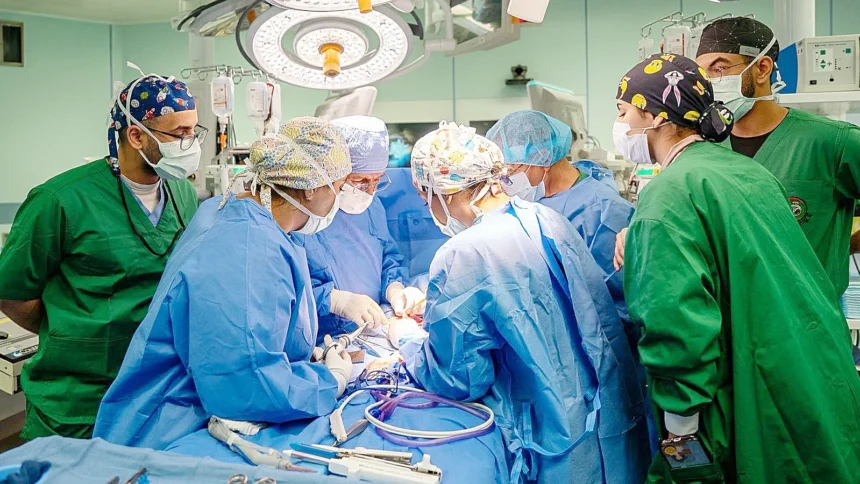
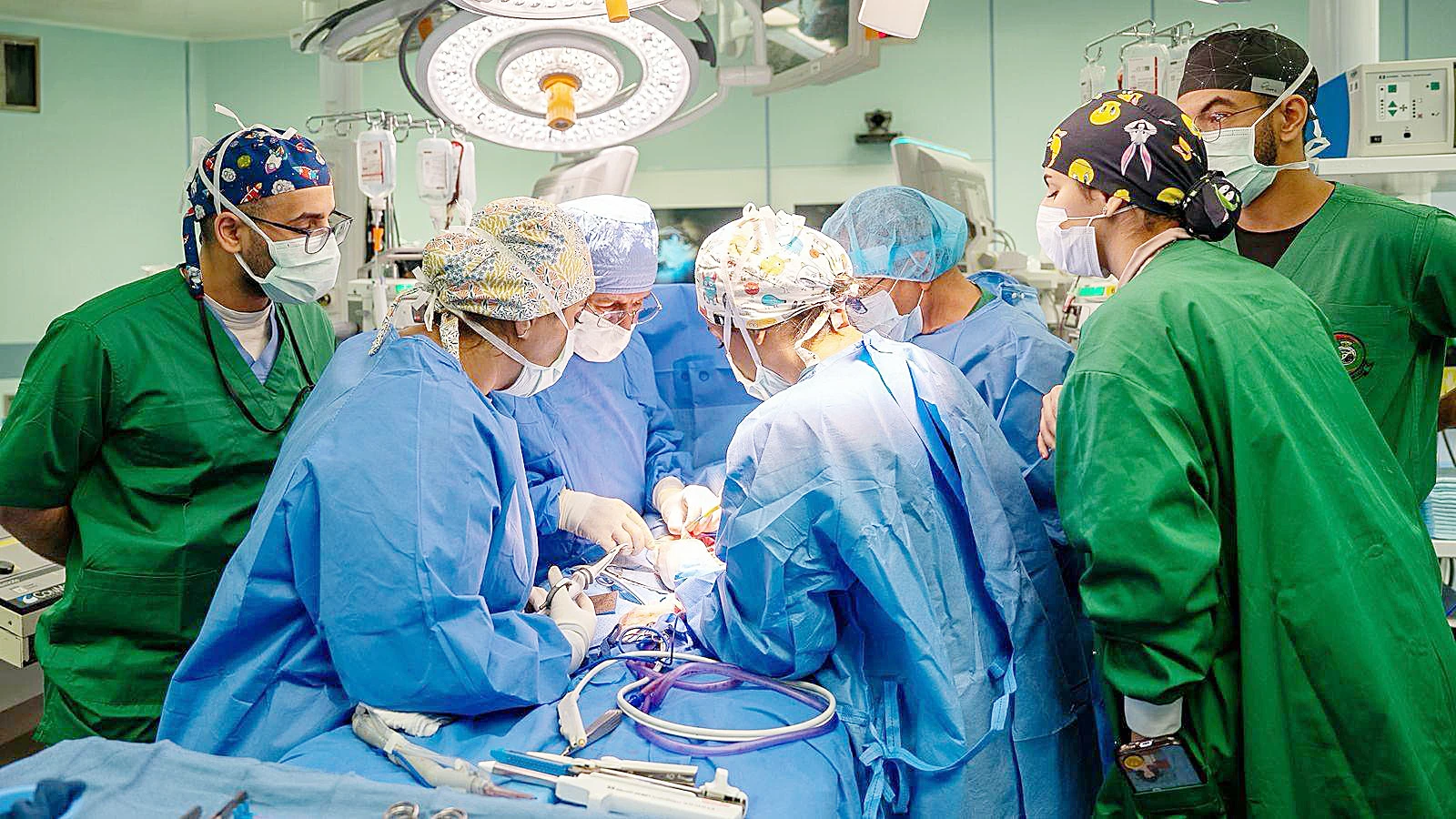
نجح الفريق الطبي والجراحي في البرنامج السعودي للتوائم الملتصقة، أمس، في إجراء عملية جراحية عاجلة لفصل توأمتين سعوديتين تبلغان من العمر نحو 20 يوماً، بعد أن وُلدتا ملتصقتين في منطقة أسفل الصدر والبطن، مع اكتمال الأطراف العلوية والسفلية لكل منهما. وأُجريت العملية في مستشفى الملك عبدالله التخصصي للأطفال بمدينة الملك عبدالعزيز الطبية التابعة لوزارة الحرس الوطني في الرياض، عبر 6 مراحل دقيقة استغرقت 6 ساعات ونصف الساعة، بمشاركة 23 من الاستشاريين والأخصائيين والكوادر الفنية والتمريضية.
وأوضح المستشار بالديوان الملكي المشرف العام على مركز الملك سلمان للإغاثة والأعمال الإنسانية رئيس الفريق الطبي والجراحي للبرنامج الدكتور عبدالله الربيعة، أن الفحوصات الطبية أظهرت أن وزن التوأم معاً يبلغ نحو 5 كيلوغرامات، وأنهما تشتركان في الكبد والمعدة والأمعاء، إضافة إلى وجود كيس خارجي في جدار البطن ناتج عن عيب خلقي يضغط على المعدة ويعيق عملية التغذية، مشيراً إلى أن نسبة الخطورة في العملية بلغت 40% نظراً لتعقيد الالتصاق وحساسية الأعضاء المشتركة.
وبيّن الدكتور الربيعة أن هذه العملية تُعد رقم 69 ضمن البرنامج السعودي للتوائم الملتصقة، الذي نجح منذ انطلاقه عام 1990 في رعاية 157 توأماً من 28 دولة في 5 قارات، مؤكداً أن هذا الإنجاز يعكس الدور الريادي للمملكة في العمل الإنساني والطبي على مستوى العالم، وقدرتها على تقديم خدمات طبية متقدّمة تُسهم في إنقاذ الأرواح وتعزيز حضورها الدولي في هذا المجال.
The medical and surgical team in the Saudi program for conjoined twins successfully performed an urgent surgery yesterday to separate two Saudi twin girls who are about 20 days old, after they were born conjoined at the lower chest and abdomen, with fully developed upper and lower limbs for each. The surgery was conducted at King Abdullah Specialist Children’s Hospital in King Abdulaziz Medical City, which is affiliated with the Ministry of National Guard in Riyadh, through 6 precise stages that lasted 6 and a half hours, with the participation of 23 consultants, specialists, and technical and nursing staff.
Dr. Abdullah Al-Rabeeah, the advisor at the Royal Court and the general supervisor of the King Salman Center for Relief and Humanitarian Works, as well as the head of the medical and surgical team for the program, explained that medical examinations showed that the combined weight of the twins is about 5 kilograms, and that they share the liver, stomach, and intestines, in addition to having an external sac in the abdominal wall resulting from a congenital defect that puts pressure on the stomach and hinders the feeding process, noting that the risk percentage in the surgery was 40% due to the complexity of the attachment and the sensitivity of the shared organs.
Dr. Al-Rabeeah indicated that this surgery is the 69th within the Saudi program for conjoined twins, which has successfully cared for 157 twins from 28 countries across 5 continents since its inception in 1990, emphasizing that this achievement reflects the Kingdom’s pioneering role in humanitarian and medical work at the global level, and its ability to provide advanced medical services that contribute to saving lives and enhancing its international presence in this field.