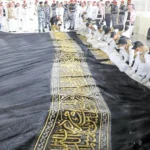
تزامناً مع مراسم تغيير كسوة الكعبة المشرفة مطلع العام الهجري 1448هـ، استعرض المعهد الملكي للفنون التقليدية «وِرث» الجوانب الفنية والحرفية التي تقف خلف صناعة الكسوة، مستعرضاً إرثاً من المهارات المتوارثة التي أسهمت في تشكيل أحد أبرز الرموز الإسلامية عبر التاريخ.
وسلط المعهد الضوء على فن التطريز اليدوي الذي تُنفذ به الآيات القرآنية والزخارف بخيوط الذهب والفضة، إلى جانب الخط العربي، لا سيما خط الثلث، الذي يُعد من أهم العناصر البصرية في الكسوة لما يتميز به من جمال ودقة وقدرة على إبراز النصوص القرآنية في صورة مهيبة.
وأوضح المعهد، أن الكسوة تمثّل أكثر من مجرد غطاء للكعبة المشرفة، إذ تجسد عملاً فنياً متكاملاً تتداخل فيه الحرفة والمعرفة والجمال، وتعكس مكانة الفنون التقليدية بوصفها جزءاً أصيلاً من الهوية الثقافية السعودية.
كما استعرضت المواد الإثرائية تفاصيل الفنون ودورها في إبراز العناصر الكتابية والزخرفية للكسوة، وما تحمله من قيم جمالية وحرفية حافظت على حضورها عبر الأجيال.
Coinciding with the ceremony of changing the covering of the Holy Kaaba at the beginning of the Hijri year 1448 AH, the Royal Institute for Traditional Arts “Wirth” showcased the artistic and craft aspects behind the production of the covering, highlighting a legacy of inherited skills that have contributed to shaping one of the most prominent Islamic symbols throughout history.
The institute shed light on the art of hand embroidery, which is used to execute Quranic verses and decorations with threads of gold and silver, alongside Arabic calligraphy, particularly the Thuluth script, which is considered one of the most important visual elements of the covering due to its beauty, precision, and ability to highlight Quranic texts in a majestic form.
The institute clarified that the covering represents more than just a cover for the Holy Kaaba; it embodies a complete artistic work where craftsmanship, knowledge, and beauty intertwine, reflecting the status of traditional arts as an integral part of Saudi cultural identity.
Additionally, the supplementary materials reviewed the details of the arts and their role in highlighting the written and decorative elements of the covering, as well as the aesthetic and craft values they carry, which have maintained their presence through generations.