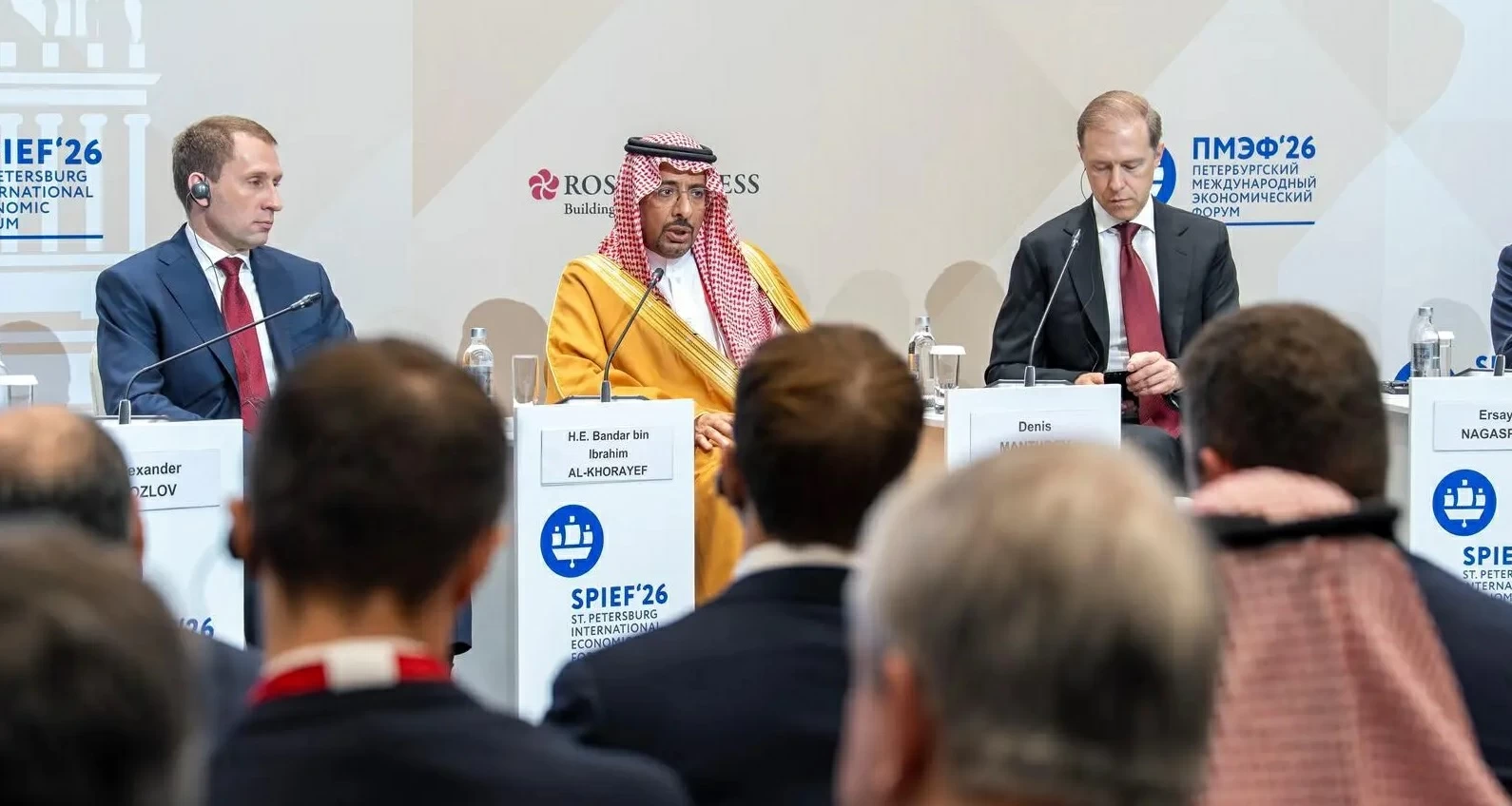
أكد وزير الصناعة والثروة المعدنية بندر بن إبراهيم الخريّف أن المملكة تسعى إلى أداء دور محوري في قطاع التعدين والمعادن، مماثل لدورها التاريخي في تعزيز استقرار إمدادات الطاقة العالمية، وذلك من خلال بناء الشراكات الدولية، وتطوير منظومة متكاملة تدعم نمو القطاع وتسهم في تعزيز أمن إمدادات المعادن عالمياً.
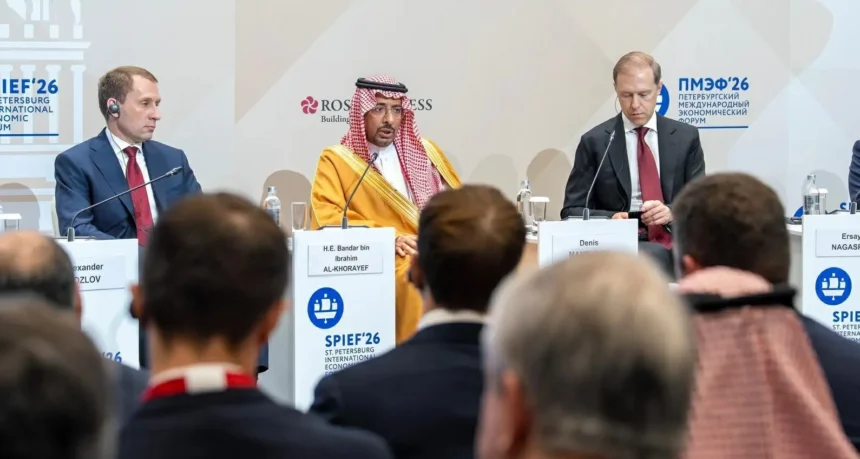
جاء ذلك خلال مشاركته في جلسة حوارية بعنوان: «العناصر الأرضية النادرة والإستراتيجية: السيادة والتعاون الدولي في مجال العناصر الأرضية النادرة والمعادن الحرجة»، عُقدت ضمن أعمال منتدى سانت بطرسبرغ الاقتصادي الدولي بروسيا الاتحادية، بمشاركة عددٍ من الوزراء وصنّاع القرار وقادة قطاع التعدين والمعادن من مختلف دول العالم.
وأوضح الخريّف أن المملكة أطلقت مؤتمر التعدين الدولي ليكون منصة عالمية تجمع الحكومات وشركات التعدين والمؤسسات المالية والجهات الأكاديمية والتقنية؛ بهدف تعزيز التعاون الدولي وتطوير الشراكات اللازمة لمعالجة التحديات التي تواجه القطاع.
وأشار إلى أن المؤتمر رسّخ مكانته كإحدى أبرز المنصات العالمية المتخصصة، إذ شهدت نسخته الأخيرة مشاركة 100 دولة، إلى جانب كبرى شركات التعدين والمؤسسات المالية والجهات الأكاديمية والتقنية.
وبيّن أن قطاع التعدين يمثل إحدى الركائز الرئيسة لتحقيق مستهدفات رؤية المملكة 2030 وتنويع الاقتصاد الوطني، موضحاً أن المملكة كثّفت خلال السنوات الماضية أعمال المسح الجيولوجي والاستكشاف، ما أسهم في رفع تقديرات الثروة المعدنية إلى نحو 2.5 تريليون دولار أمريكي، بزيادة بلغت نحو 90% مقارنة بالتقديرات المعلنة في عام 2018، بما يعكس حجم الفرص الواعدة التي يمتلكها القطاع.
ولفت الخريّف الانتباه إلى أن المملكة تنظر إلى التعدين بوصفه الركيزة الثالثة في الصناعات الوطنية، لما يوفره من فرص لتطوير الصناعات التحويلية وسلاسل القيمة المضافة، ودعم نمو الاقتصاد غير النفطي، إلى جانب مساهمته في تعزيز الأمن الغذائي العالمي من خلال الصناعات المرتبطة بالأسمدة الفوسفاتية، مبيناً أن الصادرات غير النفطية للمملكة سجلت مستويات قياسية خلال العام الماضي بلغت نحو 620 مليار ريال، شكّلت المنتجات التعدينية والأسمدة والألومنيوم جزءاً مهماً منها.
وأكد وزير الصناعة والثروة المعدنية أن مستقبل قطاع التعدين يعتمد على التعاون الدولي وتكامل سلاسل القيمة، موضحاً أن تطوير القطاع لا يرتبط بتوافر الموارد المعدنية فقط، بل يتطلب بناء منظومة متكاملة تشمل البنية التحتية، والتقنيات المتقدمة، والتمويل، والقدرات البشرية، بما يسهم في تعزيز استدامة سلاسل الإمداد العالمية.
وأشار الخريّف أن مناطق أفريقيا والشرق الأوسط وآسيا الوسطى تمتلك نحو 33% من الاحتياطيات التعدينية العالمية، لكنها تسهم بنحو 6% فقط من الإمدادات العالمية، ما يبرز أهمية تعزيز التعاون الدولي والاستثمار في تطوير البنية التحتية وسلاسل القيمة؛ لتمكين هذه المناطق من الاستفادة من مواردها الطبيعية والإسهام بصورة أكبر في تلبية الطلب العالمي المتزايد على المعادن.
ونوّه بأهمية الشراكة بين المملكة وروسيا في قطاع التعدين والمعادن، مشيداً بمستوى التعاون القائم بين البلدين، ومؤكداً تطلع المملكة إلى توسيع آفاق التعاون والاستثمار المشترك في قطاع المعادن النادرة والمعادن الحرجة، بما يدعم المصالح المشتركة للبلدين ويسهم في بناء سلاسل إمداد أكثر مرونة واستدامة على المستوى العالمي.
يُذكر أن منتدى سانت بطرسبرغ الاقتصادي الدولي يعد من أبرز الفعاليات الاقتصادية العالمية، إذ يجمع قادة الحكومات وكبار المسؤولين والمستثمرين ورجال الأعمال لمناقشة القضايا الاقتصادية الدولية واستشراف فرص التعاون والاستثمار في القطاعات الإستراتيجية.
Minister of Industry and Mineral Resources Bandar bin Ibrahim Al-Khorayef confirmed that the Kingdom seeks to play a pivotal role in the mining and minerals sector, similar to its historical role in enhancing the stability of global energy supplies, through building international partnerships and developing an integrated system that supports the growth of the sector and contributes to enhancing global mineral supply security.
This came during his participation in a panel session titled: “Rare Earth Elements and Strategy: Sovereignty and International Cooperation in the Field of Rare Earth Elements and Critical Minerals,” held as part of the St. Petersburg International Economic Forum in the Russian Federation, with the participation of several ministers, decision-makers, and leaders in the mining and minerals sector from various countries around the world.
Al-Khorayef explained that the Kingdom launched the International Mining Conference to be a global platform that brings together governments, mining companies, financial institutions, and academic and technical entities; with the aim of enhancing international cooperation and developing the necessary partnerships to address the challenges facing the sector.
He pointed out that the conference has established its position as one of the most prominent global specialized platforms, as its latest edition witnessed participation from 100 countries, alongside major mining companies, financial institutions, and academic and technical entities.
He indicated that the mining sector represents one of the main pillars for achieving the goals of the Kingdom’s Vision 2030 and diversifying the national economy, explaining that the Kingdom has intensified geological surveys and exploration activities in recent years, which contributed to raising mineral wealth estimates to about 2.5 trillion US dollars, an increase of about 90% compared to the estimates announced in 2018, reflecting the promising opportunities that the sector possesses.
Al-Khorayef drew attention to the fact that the Kingdom views mining as the third pillar in national industries, due to the opportunities it provides for developing manufacturing industries and value-added supply chains, supporting the growth of the non-oil economy, in addition to its contribution to enhancing global food security through industries related to phosphate fertilizers, noting that the Kingdom’s non-oil exports reached record levels last year, amounting to about 620 billion riyals, with mining products, fertilizers, and aluminum forming an important part of it.
The Minister of Industry and Mineral Resources affirmed that the future of the mining sector depends on international cooperation and the integration of value chains, explaining that developing the sector is not only related to the availability of mineral resources but also requires building an integrated system that includes infrastructure, advanced technologies, financing, and human capabilities, which contributes to enhancing the sustainability of global supply chains.
Al-Khorayef indicated that the regions of Africa, the Middle East, and Central Asia possess about 33% of global mining reserves, but they contribute only about 6% of global supplies, highlighting the importance of enhancing international cooperation and investment in developing infrastructure and value chains; to enable these regions to benefit from their natural resources and contribute more significantly to meeting the growing global demand for minerals.
He emphasized the importance of the partnership between the Kingdom and Russia in the mining and minerals sector, praising the level of cooperation between the two countries, and confirming the Kingdom’s aspiration to expand the horizons of cooperation and joint investment in the field of rare and critical minerals, which supports the common interests of both countries and contributes to building more resilient and sustainable supply chains at the global level.
It is worth noting that the St. Petersburg International Economic Forum is one of the most prominent global economic events, gathering government leaders, senior officials, investors, and businesspeople to discuss international economic issues and explore opportunities for cooperation and investment in strategic sectors.