



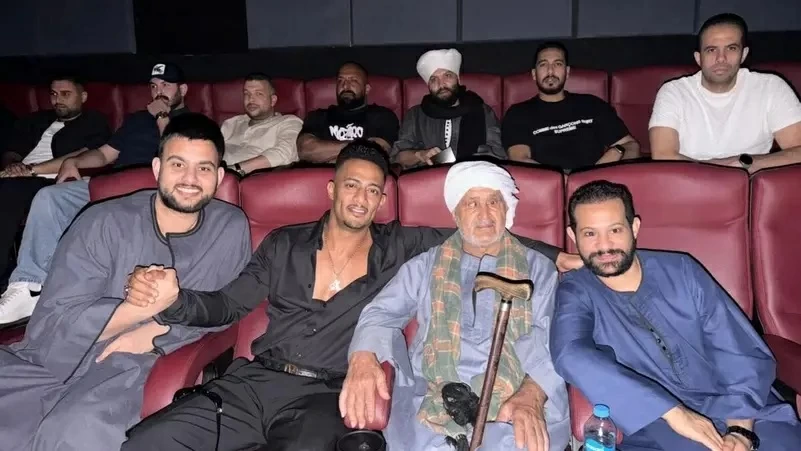
في مشهد درامي قلب موازين منصات التواصل الاجتماعي، تحولت واقعة «الجلباب الصعيدي» من أزمة تمييز عنصري فجّرت غضب المصريين، إلى ملحمة انتصار وتضامن قادها النجم محمد رمضان من داخل إحدى سينمات القاهرة الفاخرة، ليعيد الاعتبار علناً لأصحاب الواقعة ويوجه صفعة قوية لثقافة «الإقصاء الطبقي».
الصورة التي وثقها رمضان وهو يجلس متبسماً بكبرياء وإلى جواره أبطال الأزمة مرتدين زيهم التراثي خلال عرض فيلمه التاريخي الجديد «أسد»، لم تكن لقطة عادية، بل اعتُبرت رداً رسمياً وشعبياً زلزل الأوساط الفنية والمجتمعية.
كواليس ليلة المنع المهينة
شرارة الأزمة انطلقت برواية صانع المحتوى محمد المطعني، الذي كشف في فيديو مؤثر تعرضه وفريقه (وبينهم رجل مسن يُدعى «عم خريبش») لإهانة بالغة من قِبل أمن دار عرض سينمائي داخل فندق شهير بوسط القاهرة:
- حجة المنع: منع الأمن دخولهم بحجة أن «الجلباب الصعيدي» غير مسموح به في هذا المكان الفاخر!
- عاصفة الغضب: خلال دقائق، تحول المنع إلى موجة غضب عارمة على منصات التواصل، اعتبرت التصرف إهانة لرمز من رموز الهوية المصرية الأصيلة، ليتصدر الموقف التريند تحت وسم «الجلباب الصعيدي شرف».
أمام هذا التميز الفج، لم يقف محمد رمضان صامتاً، بل دخل على خط الأزمة بقوة ممتصاً الغضب الشعبي، وموجهاً رسالة مباشرة إلى وزيرة الثقافة المصرية طالبها فيها بضرورة تقديم اعتذار رسمي لأهل الصعيد، مؤكداً أن ما حدث يسيء لكل مصري.
ولم يكتفِ «نمبر ون» بالكلمات، بل أطلق دعوة عامة لجمهوره بضرورة ارتداء الجلباب الصعيدي في السينمات كـ«تحدٍّ رمزي»، قبل أن يباغت الجميع بالمفاجأة الكبرى ويصطحب فريق المطعني و«عم خريبش» في عرض خاص لفيلم «أسد» ليجلسوا في الصفوف الأولى للسينما التي منعتهم بالأمس.
ولم تقتصر الأزمة على التمثيل بل امتدت للإخراج، إذ تضامن مخرج الفيلم العالمي محمد دياب مع الواقعة، واصفاً ما جرى بأنه «جريمة وتمييز مرفوض ضد زي مصري أصيل».
وتأتي هذه الملحمة الإنسانية بالتزامن مع الانفجار الرقمي لفيلم «أسد» في شباك التذاكر، وتصدره لسباق الإيرادات بـ 34 مليوناً جناها في 9 أيام فقط، إذ يدمج الفيلم في قصته بين الصراع التاريخي والتحرر من الظلم، ليتطابق واقع الأزمة مع شاشة السينما، ويخرج «الجلباب الصعيدي» فائزاً بالاحترام والتاج الفني.
In a dramatic scene that turned the scales of social media, the incident of the “Upper Egyptian galabeya” transformed from a crisis of blatant racial discrimination that ignited the anger of Egyptians, into a saga of victory and solidarity led by star Mohamed Ramadan from inside one of Cairo’s luxurious cinemas, publicly restoring dignity to the individuals involved and delivering a strong slap to the culture of “class exclusion”.
The image captured by Ramadan, as he sat proudly smiling next to the heroes of the crisis wearing their traditional attire during the screening of his new historical film “Lion”, was not an ordinary snapshot; it was considered an official and popular response that shook the artistic and societal circles.
The Backstage of the Humiliating Ban Night
The spark of the crisis was ignited by content creator Mohamed Al-Mat’ani, who revealed in an emotional video that he and his team (including an elderly man named “Uncle Kharbish”) were subjected to severe humiliation by the security at a cinema inside a famous hotel in downtown Cairo:
- Reason for the ban: Security prevented them from entering on the grounds that the “Upper Egyptian galabeya” was not allowed in this luxurious place!
- Storm of anger: Within minutes, the ban turned into a wave of intense anger on social media, considering the action an insult to a symbol of authentic Egyptian identity, causing the situation to trend under the hashtag “The Upper Egyptian Galabeya is Honor”.
Faced with this blatant discrimination, Mohamed Ramadan did not remain silent; he strongly entered the fray, absorbing the public anger and sending a direct message to the Egyptian Minister of Culture, demanding a formal apology to the people of Upper Egypt, affirming that what happened is an offense to every Egyptian.
Ramadan, known as “Number One”, did not stop at words; he launched a public call to his audience to wear the Upper Egyptian galabeya in cinemas as a “symbolic challenge”, before surprising everyone with the grand reveal of bringing Al-Mat’ani’s team and “Uncle Kharbish” to a special screening of the film “Lion”, seating them in the front rows of the cinema that had banned them the day before.
The crisis did not only extend to acting but also to directing, as the film’s international director Mohamed Diab expressed solidarity with the incident, describing what happened as “a crime and unacceptable discrimination against an authentic Egyptian attire”.
This humanitarian saga coincides with the digital explosion of the film “Lion” at the box office, leading the revenue race with 34 million Egyptian pounds in just 9 days, as the film’s story intertwines historical conflict and liberation from oppression, aligning the reality of the crisis with the cinema screen, and emerging the “Upper Egyptian galabeya” victorious with respect and artistic crown.