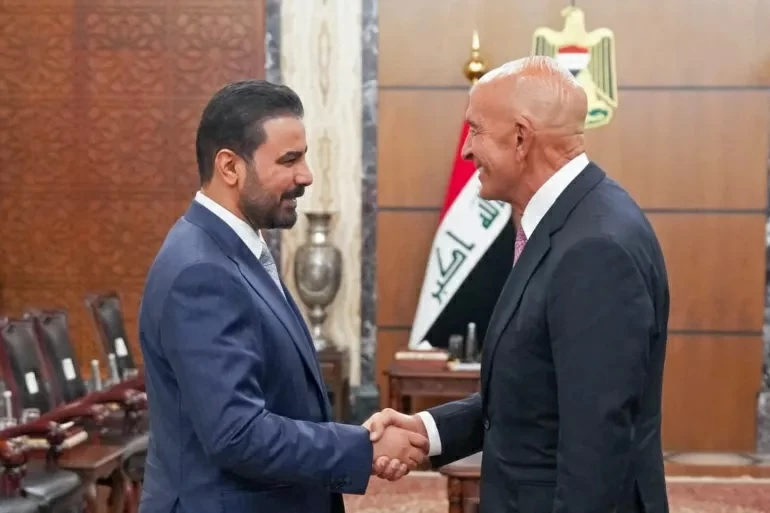
أعلنت الحكومة العراقية والسفارة الأمريكية في بيان مشترك، اليوم الثلاثاء، أن المبعوث الرئاسي الأمريكي الخاص إلى سورية والعراق توم برّاك نقل إلى رئيس الوزراء العراقي علي الزيدي دعوة من الرئيس دونالد ترمب لزيارة البيت الأبيض في منتصف يوليو القادم؛ لبحث مستقبل العلاقات الثنائية بين البلدين.
سبل تعزيز الشراكة الثنائية
وتكتسب الزيارة المرتقبة أهمية خاصة، إذ ستكون الأولى خارجياً للزيدي منذ توليه منصبه في منتصف مايو، وسط ضغوط أمريكية لحصر السلاح بيد الدولة العراقية وإنهاء نفوذ الفصائل المسلحة.
وبحسب البيان المشترك، تناول اللقاء، الذي جمع الزيدي وبرّاك في بغداد أمس الإثنين، سبل تعزيز الشراكة الثنائية، إلى جانب بحث تنفيذ الخطط العراقية الرامية إلى النزع الكامل للسلاح وحلّ جميع الجماعات والتشكيلات المسلحة العاملة خارج سلطة الدولة التي تصنفها واشنطن منظمات إرهابية، مع تأكيد فرض سيادة الدولة الكاملة.
وشدد الجانبان على الحاجة الملحة إلى إتمام هذه الإجراءات، بوصفها شرطاً أساسياً لإبعاد العراق عن ساحات الصراع الإقليمي ومنع استخدام أراضيه لتهديد الأمن والاستقرار.
من جانيه، أفاد متحدث الحكومة العراقية بأن زيارة الزيدي المرتقبة لواشنطن ستتناول ملفات متعددة، يتصدرها الجانب الاقتصادي، في وقت يسعى فيه العراق، الذي لا يزال يتعافى من آثار الحروب، إلى جذب استثمارات كبرى في قطاعي النفط والبنية التحتية.
حصر السلاح بيد الدولة
ويأتي هذا الحراك الدبلوماسي مع تطورات متسارعة على صعيد ملف الفصائل المسلحة، إذ أعلنت جماعات مثل «عصائب أهل الحق» و«كتائب الإمام علي» تسليم إدارة ألوية تابعة لها إلى الدولة ضمن هيئة الحشد الشعبي، في حين لا تزال فصائل أخرى بارزة من بينها «كتائب حزب الله العراق» و«كتائب سيد الشهداء» و«حركة النجباء» متمسكة بسلاحها، مشترطة انسحاب التحالف الدولي بقيادة الولايات المتحدة من شمال العراق بحلول سبتمبر.
ويُعَد ملف السلاح خارج إطار الدولة أحد أبرز التحديات أمام الحكومة العراقية؛ بسبب تشابك البعدين الأمني والسياسي، وتداخل نفوذ الفصائل المسلحة ضمن بنية هيئة الحشد الشعبي، التي أنشئت عام 2014 لمواجهة التنظيمات المتطرفة، ثم تحولت إلى جزء من المنظومة العسكرية الرسمية، مع احتفاظ بعض تشكيلاتها بهامش تحرك مستقل.
وأطلقت بغداد في 3 يونيو الجاري لجنة مختصة لحصر السلاح بيد الدولة، مكلفة بوضع آليات دمج التشكيلات المسلحة، وتسليم الأسلحة والمعسكرات إلى الأجهزة الأمنية، وسط مطالب داخلية متزايدة بفرض احتكار الدولة لاستخدام القوة.
خطوات عراقية لتعزيز بيئة الاستثمار
وأشاد الزيدي وبرّاك بخطوات عراقية لتعزيز البيئة الاستثمارية، من بينها استكمال منح الترخيص التشغيلي لشركة «ستارلينك»، وإطلاق مفاوضات مع «شيفرون» لتطوير حقلي غرب القرنة-2 والناصرية، إضافة إلى المضي قدماً في مشروع إعادة تأهيل خط أنابيب كركوك بانياس.
وتزامنت هذه التطورات مع توتر في العلاقات الأمنية بين بغداد وواشنطن، التي علّقت على خلفية هجمات طالت مصالحها خلال الحرب الأخيرة في المنطقة، المدفوعات النقدية لعائدات النفط العراقي، فضلاً عن وقف بعض المساعدات الأمنية، مطالبة بخطوات ملموسة لتقليص نفوذ الفصائل المسلحة داخل مؤسسات الدولة.
The Iraqi government and the American embassy announced in a joint statement today, Tuesday, that the U.S. presidential envoy to Syria and Iraq, Tom Barrack, conveyed an invitation from President Donald Trump to Iraqi Prime Minister Ali Al-Zaydi to visit the White House in mid-July; to discuss the future of bilateral relations between the two countries.
Ways to Enhance the Bilateral Partnership
The anticipated visit is particularly significant, as it will be Al-Zaydi’s first foreign visit since taking office in mid-May, amid U.S. pressures to confine weapons to the Iraqi state and end the influence of armed factions.
According to the joint statement, the meeting, which brought together Al-Zaydi and Barrack in Baghdad yesterday, Monday, addressed ways to enhance the bilateral partnership, in addition to discussing the implementation of Iraqi plans aimed at the complete disarmament and dissolution of all groups and armed formations operating outside the authority of the state, which Washington classifies as terrorist organizations, while emphasizing the enforcement of full state sovereignty.
Both sides stressed the urgent need to complete these measures, as they are a fundamental condition for keeping Iraq away from regional conflict zones and preventing the use of its territory to threaten security and stability.
For his part, an Iraqi government spokesperson stated that Al-Zaydi’s upcoming visit to Washington will cover multiple files, with the economic aspect being a priority, at a time when Iraq, which is still recovering from the effects of wars, seeks to attract major investments in the oil and infrastructure sectors.
Confining Weapons to the State
This diplomatic movement comes amid rapid developments regarding the armed factions, as groups such as “Asa’ib Ahl al-Haq” and “Kata’ib Imam Ali” announced the handover of their affiliated brigades to the state within the Popular Mobilization Forces, while other prominent factions, including “Kata’ib Hezbollah Iraq,” “Kata’ib Sayyid al-Shuhada,” and “Harakat al-Nujaba,” remain committed to their weapons, conditioning the withdrawal of the U.S.-led international coalition from northern Iraq by September.
The issue of weapons outside the framework of the state is one of the most significant challenges facing the Iraqi government, due to the intertwining of security and political dimensions, and the overlapping influence of armed factions within the structure of the Popular Mobilization Forces, which was established in 2014 to confront extremist organizations and later became part of the official military system, while some of its formations retained a margin of independent movement.
Baghdad launched a specialized committee on June 3 to confine weapons to the state, tasked with establishing mechanisms for integrating armed formations and handing over weapons and camps to security agencies, amid increasing internal demands for the state to monopolize the use of force.
Iraqi Steps to Enhance the Investment Environment
Al-Zaydi and Barrack praised Iraqi steps to enhance the investment environment, including the completion of operational licensing for “Starlink,” and the initiation of negotiations with “Chevron” to develop the West Qurna-2 and Al-Nasiriya fields, in addition to moving forward with the rehabilitation project of the Kirkuk-Baniyas pipeline.
These developments coincided with tensions in security relations between Baghdad and Washington, which suspended cash payments for Iraqi oil revenues in the wake of attacks on its interests during the recent war in the region, as well as halting some security assistance, demanding tangible steps to reduce the influence of armed factions within state institutions.