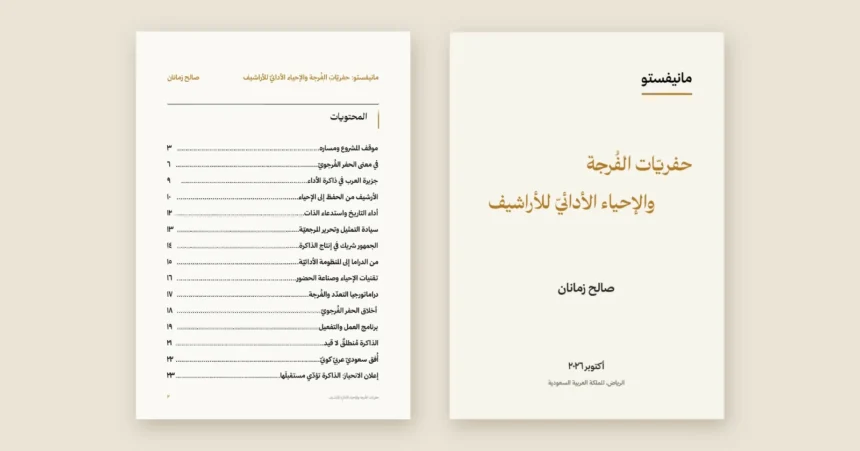
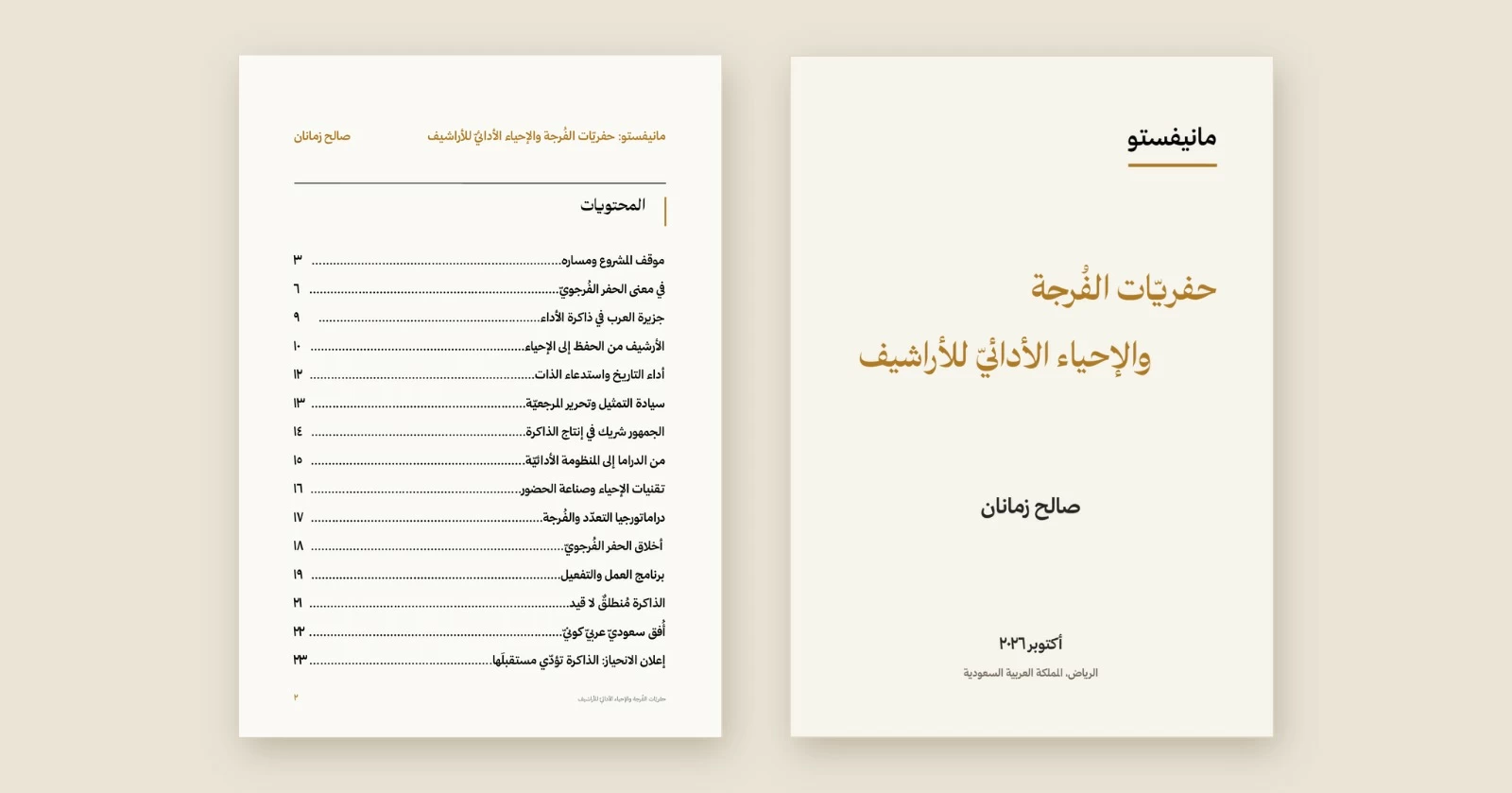
أطلق الشاعر والكاتب المسرحي السعودي صالح زمانان، اليوم، بيانًا مسرحيًّا أو مانيفستو للمسرح السعودي بعنوان: «حفريّات الفُرجة والإحياء الأدائيّ للأراشيف»، ليكون إعلانًا معرفيًّا وجماليًّا يقترح مسارًا مخصوصًا داخل تعدّد المسرح السعودي والعربي، وينطلق من أراشيف المملكة وجزيرة العرب ليعيد وصل الذاكرة بالممارسة المسرحيّة المعاصرة.
ويأتي هذا المانيفستو حصيلة مسار امتزجت فيه الكتابة والبحث وصناعة العروض، وتراكمت عبره تجارب زمانان وحفريّاته في المسرح الغنائي والأوبرا والعروض الغامرة والعروض واسعة النطاق، إضافة لعروض العُلبة والمسرح الاعتيادي.
والمقصود بمصطلح «المانيفستو» هو ذلك البيان أو النصّ الذي يعلن فيه مبدع صاحب تجربة وأسئلة معرفية رؤيته الواضحة وموقفه المحدّد تجاه مجالٍ فني ما، ويعرض فيه المبادئ التي ينطلق منها والاتجاه الذي يدعو إليه.
ويُعدّ المانيفستو من الأعراف الفنية -في مجال المسرح والسينما خصوصًا-، ويظهر في الدول والأوساط الثقافية والفنية بين الحين والآخر، وهو ليس بحثًا أكاديميًّا محضًا ولا بيانًا صحفيًّا عابرًا، إنما صيغة تجمع بين إعلان الفكرة والدفاع عنها واقتراح مسار للعمل.
ومن هنا يأتي مانيفستو زمانان كإعلان عن تصوّره لاتجاه مسرحي يستلهم الذاكرة السعوديّة وأراشيفها المادية والوجدانية والرمزية، ويحوّلها عبر البحث والتأويل إلى مادة حيّة للابتكار والتكوين وصناعة العروض المسرحية والأدائية المعاصرة.
ويقدّم هذا المانيفستو مفهوم «حفريّات الفُرجة» على أنه نظام بحثيّ ينقّب في التاريخ والوثائق والنصوص واللغات والأمكنة، وكذلك في الأجساد والأصوات والإيقاعات والطقوس والعادات والمخيال الجمعي.
ويقابله «الإحياء الأدائيّ» بوصفه نظامًا تأويليًّا وتكوينيًّا يصنع تركيب وتأليف وتصميم ما تكشفه الحفريّات داخل الدراما والجسد والصوت والفضاء والزمن والتقنية، من دون استنساخ الماضي أو اختزاله في صور تراثيّة جاهزة.
وعبر ثلاثة عشر محورًا تأسيسيًّا، يناقش البيان انتقال الأرشيف من الحفظ إلى الإحياء، وأداء التاريخ واستدعاء الذات، وتحرير المرجعيّة والسيادة الإبداعية، ودور الجمهور في إنتاج الذاكرة، والتقنيات الحديثة، ودراماتورجيا التعدّد، وأخلاق التعامل مع المصادر وحَمَلة الموروث.
كما يقترح برنامج عمل يصل البحث والتأليف والدراماتورجيا والبروفة والعرض والتلقّي والتوثيق في دورة متبادلة، يصبح فيها الأداء منتجًا للمعرفة، ويضيف إلى الأرشيف طبقة حيّة قابلة للتحوّل مع كل إعادة تقديم.
ويربط زمانان هذا التصوّر بتجاربه النوعية التي امتدّت في آخر 15 عامًا من «ملحمة الأخدود» و«ملوك الشعر والدماء: عبديغوث الحارثي» و«ملحمة سُراة الشعر والكهولة: لبيد بن ربيعة»، إلى «ملحمة صهيل» و«رُسُوم وطَلَل» و«نقش» و«معلقاتنا.. امتداد أمجاد» و«دانة يا نهّام»، وصولًا إلى أوبرا «زرقاء اليمامة» و«أثر» و«ترحال2» و«عصيّة القلاع»، وغيرها.
ويكشف هذا الامتداد عن مشروع تشكّل في الممارسة بقدر ما تبلور في البحث الأكاديمي ودراسة الماجستير وأطروحة الدكتوراه التي صاغها في كتابه المرجعي «أداء التاريخ واستدعاء الذات».
ويؤكد المانيفستو أن الذاكرة منطلق للابتكار وليست قيدًا على حرية الفنان، وأن الخصوصيّة الثقافيّة تكتسب قيمتها حين تتحول إلى قدرة على الحوار والتجريب والتناسج مع فنون العالم.
ومن هذا الموقع، ينفتح المشروع على التحول الثقافي السعودي الراهن، وعلى فرص تحويل الأرشيف إلى مورد للبحث والتعليم والسياحة الثقافيّة والتصميم والألعاب والسينما والمسرح والتجارب الرقميّة، مع صون الحقوق وضمان عدالة المشاركة والنسبة.
ويختتم زمانان بيانه بإعلان الانحياز إلى مسرح يصغي إلى الأثر ويختبر تحوّله، وإلى فنان حرّ يعيد تكوين الذاكرة بمسؤوليّة، وإلى شراكة تجمع الكتّاب والمخرجين والدراماتورجيين والمؤدين والنقاد والباحثين والمؤسسات وحَمَلة الموروث.
ويطرح المانيفستو بذلك دعوة مفتوحة إلى بناء حضور مسرحي سعودي يستمد قوته من عمقه الثقافي، ويخاطب مجاله العربي والإنساني بلغة معاصرة.
لقراءة المانيفستو وتحميله:
Today, Saudi poet and playwright Saleh Zamanan launched a theatrical statement or manifesto for Saudi theater titled: “Excavations of Spectacle and Performance Revival of Archives,” serving as a cognitive and aesthetic declaration that proposes a specific path within the multiplicity of Saudi and Arab theater, starting from the archives of the Kingdom and the Arabian Peninsula to reconnect memory with contemporary theatrical practice.
This manifesto is the result of a journey where writing, research, and performance creation have intertwined, accumulating Zamanan’s experiences and excavations in musical theater, opera, immersive performances, and large-scale shows, in addition to box theater and conventional theater.
The term “manifesto” refers to that statement or text in which a creative individual with experience and cognitive questions declares their clear vision and specific stance towards a particular artistic field, presenting the principles from which they start and the direction they advocate.
The manifesto is considered one of the artistic conventions—especially in the fields of theater and cinema—and appears in countries and cultural and artistic circles from time to time. It is neither a purely academic research nor a fleeting press statement, but rather a format that combines the announcement of an idea, its defense, and the proposal of a course of action.
Thus, Zamanan’s manifesto comes as a declaration of his vision for a theatrical direction that draws inspiration from Saudi memory and its material, emotional, and symbolic archives, transforming them through research and interpretation into living material for innovation, formation, and the creation of contemporary theatrical and performance works.
This manifesto presents the concept of “Excavations of Spectacle” as a research system that digs into history, documents, texts, languages, and places, as well as into bodies, voices, rhythms, rituals, customs, and the collective imagination.
It is complemented by “Performance Revival” as an interpretive and formative system that creates composition, assembly, and design from what the excavations reveal within drama, body, sound, space, time, and technology, without replicating the past or reducing it to ready-made heritage images.
Through thirteen foundational axes, the statement discusses the transition of the archive from preservation to revival, the performance of history and the invocation of self, the liberation of reference and creative sovereignty, the role of the audience in producing memory, modern technologies, the dramaturgy of multiplicity, and the ethics of dealing with sources and bearers of heritage.
It also proposes a work program that connects research, composition, dramaturgy, rehearsal, performance, reception, and documentation in a reciprocal cycle, where performance becomes a product of knowledge, adding a living layer to the archive that can transform with each re-presentation.
Zamanan links this vision to his qualitative experiences that have extended over the last 15 years, from “The Epic of Al-Akhdoood” and “Kings of Poetry and Blood: Abdiqoth Al-Harithi” and “The Epic of the Poets and Maturity: Labid Ibn Rabee’a,” to “The Epic of Sihal,” “Drawings and Remnants,” “Engraving,” “Our Mu’allaqat: Extension of Glory,” “Dana Ya Nahham,” reaching the opera “Zarqa Al-Yamama,” “Athar,” “Travel 2,” “The Castle’s Staff,” and others.
This extension reveals a project that has formed in practice as much as it has crystallized in academic research and the master’s study and doctoral thesis that he shaped in his reference book “Performance of History and Invocation of Self.”
The manifesto emphasizes that memory is a starting point for innovation and not a constraint on the artist’s freedom, and that cultural specificity gains its value when it transforms into the ability to engage in dialogue, experimentation, and integration with the arts of the world.
From this standpoint, the project opens up to the current cultural transformation in Saudi Arabia and the opportunities to turn the archive into a resource for research, education, cultural tourism, design, games, cinema, theater, and digital experiences, while preserving rights and ensuring fairness in participation and attribution.
Zamanan concludes his statement by declaring allegiance to a theater that listens to the impact and tests its transformation, to a free artist who responsibly reconstructs memory, and to a partnership that brings together writers, directors, dramaturgs, performers, critics, researchers, institutions, and bearers of heritage.
Thus, the manifesto presents an open invitation to build a Saudi theatrical presence that draws its strength from its cultural depth and addresses its Arab and human domain in a contemporary language.
To read and download the manifesto: