



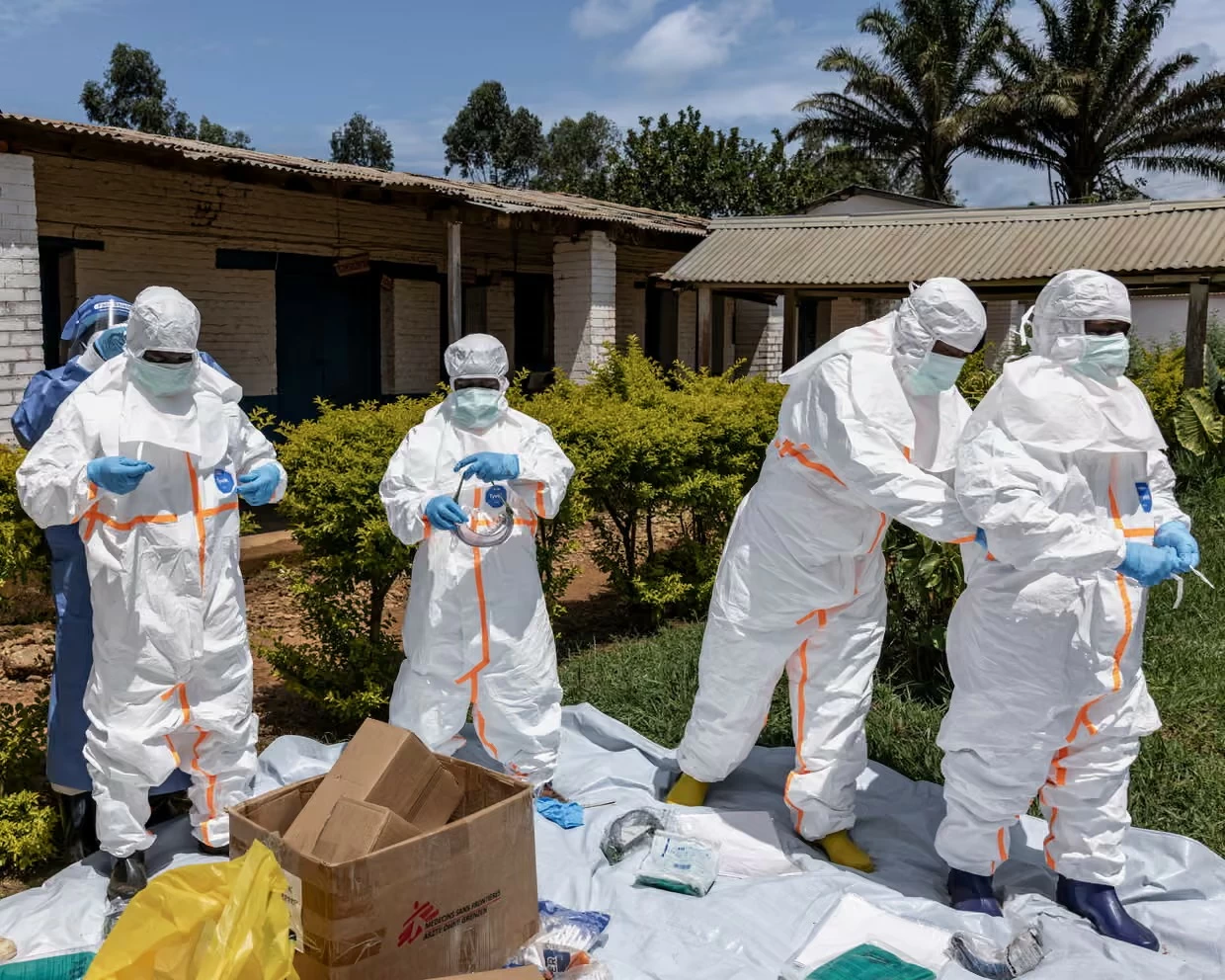
فرضت السلطات في شرق جمهورية الكونغو الديمقراطية إجراءات مشددة للحد من انتشار فايروس إيبولا، بعدما شهدت إحدى المناطق اشتباكات بين السكان وقوات الشرطة أثناء محاولة أسرة أحد الضحايا استعادة جثمانه ورفض دفنه وفق الإجراءات الصحية المعتمدة.
وأعلنت حكومة مقاطعة إيتوري، وهي الأكثر تضرراً من تفشي المرض، حظر إقامة مراسم العزاء والتجمعات المرتبطة بالجنائز، في خطوة تعكس تصاعد المخاوف من انتشار العدوى، خصوصاً مع تمسك بعض الأهالي بالعادات التقليدية المتعلقة بالدفن.
اشتباكات مع قوات الأمن
وجاءت هذه التطورات بعد حادثة وقعت في بلدة روامبارا، حين رفضت أسرة لاعب كرة القدم إيلي مونونجو وانجو تنفيذ ما يعرف بـ«الدفن الآمن»، مشككة في أن الوفاة نتجت عن الإصابة بإيبولا، ما أدى إلى توتر واشتباكات مع قوات الأمن.
وأكدت منظمة الصحة العالمية أن التفشي الحالي يعود إلى سلالة «بونديبوجيو» النادرة من فايروس إيبولا، معلنة أن الوضع يمثل حالة طوارئ صحية تثير قلقاً دولياً، في ظل صعوبة احتواء الوباء بسبب العنف المسلح، وضعف الخدمات الصحية، والتنقل المستمر للسكان.
177 حالة وفاة بإيبولا
وقال المدير العام للمنظمة تيدروس أدهانوم غيبريسوس، إن عدد الإصابات المشتبه بها في شرق الكونغو اقترب من 750 حالة، فيما تم تسجيل 177 وفاة محتملة، إضافة إلى حالتين مؤكدتين في أوغندا المجاورة.
وأشار إلى أن أعمال العنف وانعدام الأمن تعرقل جهود الاستجابة، رغم تحسن عمليات الرصد والفحوصات المخبرية.
ورفعت منظمة الصحة العالمية تقييمها لمستوى الخطر داخل الكونغو من مرتفع إلى مرتفع جداً، مع الإبقاء على مستوى الخطر الإقليمي عند مرتفع، بينما اعتبرت الخطر العالمي منخفضاً.
وتواجه السلطات تحديات كبيرة في السيطرة على الوباء بسبب نشاط عشرات الجماعات المسلحة في شرق البلاد، من بينها حركة إم 23 المدعومة من رواندا، التي تسيطر على مناطق واسعة شهد بعضها تسجيل إصابات بالفايروس.
تعليق دوري كرة القدم المحلي
وفي إطار الإجراءات الاحترازية، قررت سلطات إيتوري أن تتولى فرق متخصصة فقط عمليات دفن المتوفين، مع حظر نقل الجثامين بواسطة سيارات غير طبية، كما تم تقليص التجمعات العامة إلى 50 شخصاً وتعليق دوري كرة القدم المحلي.
ويُعرف فايروس إيبولا بأنه من الأمراض شديدة الخطورة، إذ ينتقل عبر ملامسة سوائل جسم المصاب، فيما تشكل الجثامين مصدراً خطيراً للعدوى بعد الوفاة، خاصة خلال مراسم الغسل والدفن التقليدية.
من جانبها، أوضحت المسؤولة بالاتحاد الدولي لجمعيات الصليب الأحمر والهلال الأحمر لورا آرتشر، أن أي شخص يشارك في حمل الجثمان أو غسله أو تكفينه دون معدات وقاية يكون عرضة بدرجة كبيرة للإصابة بالفايروس.
وكانت أول حالة معروفة في التفشي الحالي قد سُجلت بمدينة بونيا عاصمة إيتوري في 24 أبريل الماضي، قبل أن ينتشر الفايروس خلال جنازة أُقيمت في بلدة مجاورة بعدما لمس المشيعون جثمان المتوفى.
وتستعيد هذه الأحداث ذكريات تفشي إيبولا بين عامي 2018 و2020، الذي يعد ثاني أخطر تفشٍّ في تاريخ المرض وأسفر عن وفاة نحو 2,300 شخص، وسط هجمات متكررة استهدفت المراكز الصحية والعاملين في المجال الإنساني.
وفي محاولة للحد من الشائعات والمعلومات المضللة، بدأت فرق من المتطوعين حملات توعية ميدانية من منزل إلى آخر لشرح طرق الوقاية ومخاطر المرض.
رواندا تمنع دخول زوار الكونغو
وعلى الصعيد الإقليمي، أعلنت رواندا منع دخول الأجانب الذين زاروا الكونغو خلال الأيام الـ30 الماضية، مع فرض الحجر الصحي على مواطنيها والمقيمين العائدين من هناك.
في المقابل، دعت منظمة الصحة العالمية الدول إلى إبقاء الحدود مفتوحة، محذرة من أن إغلاقها قد يدفع السكان إلى استخدام معابر غير رسمية ويعطل وصول المساعدات الإنسانية.
كما أعلنت الأمم المتحدة تخصيص نحو 60 مليون دولار من صندوق الطوارئ لدعم جهود مكافحة الوباء، في وقت أكد فيه منسق الشؤون الإنسانية بالأمم المتحدة توم فليتشر، ضرورة التحرك السريع للسيطرة على التفشي قبل خروجه عن السيطرة.
The authorities in eastern Democratic Republic of Congo have imposed strict measures to limit the spread of the Ebola virus, after clashes occurred between residents and police forces in an area when the family of one of the victims attempted to retrieve his body and refused to bury him according to the approved health procedures.
The government of Ituri Province, the most affected by the outbreak, announced a ban on holding mourning ceremonies and gatherings related to funerals, in a move that reflects rising fears of the spread of infection, especially with some locals clinging to traditional burial customs.
Clashes with Security Forces
These developments came after an incident in the town of Ruambura, where the family of football player Eli Munongo Wango refused to carry out what is known as “safe burial,” doubting that the death was due to Ebola infection, which led to tensions and clashes with security forces.
The World Health Organization confirmed that the current outbreak is due to the rare “Bundibugyo” strain of the Ebola virus, announcing that the situation represents a public health emergency that raises international concern, given the difficulty of containing the epidemic due to armed violence, weak health services, and the continuous movement of populations.
177 Deaths from Ebola
The Director-General of the organization, Tedros Adhanom Ghebreyesus, stated that the number of suspected cases in eastern Congo has approached 750, while 177 potential deaths have been recorded, in addition to two confirmed cases in neighboring Uganda.
He pointed out that acts of violence and insecurity hinder response efforts, despite improvements in monitoring and laboratory testing operations.
The World Health Organization has raised its assessment of the risk level within Congo from high to very high, while maintaining the regional risk level at high, and considering the global risk to be low.
The authorities face significant challenges in controlling the epidemic due to the activity of dozens of armed groups in the eastern part of the country, including the M23 movement, which is supported by Rwanda and controls large areas, some of which have recorded infections with the virus.
Suspension of Local Football League
As part of precautionary measures, the Ituri authorities decided that only specialized teams would carry out the burial of the deceased, prohibiting the transportation of bodies by non-medical vehicles, and public gatherings have been reduced to 50 people, with the local football league suspended.
The Ebola virus is known to be one of the most dangerous diseases, as it is transmitted through contact with the bodily fluids of the infected person, while corpses pose a serious source of infection after death, especially during traditional washing and burial ceremonies.
For her part, Laura Archer, an official at the International Federation of Red Cross and Red Crescent Societies, explained that anyone participating in carrying, washing, or wrapping the body without protective equipment is at a significantly high risk of contracting the virus.
The first known case in the current outbreak was recorded in the city of Bunia, the capital of Ituri, on April 24, before the virus spread during a funeral held in a neighboring town after mourners touched the deceased’s body.
These events evoke memories of the Ebola outbreak between 2018 and 2020, which is considered the second deadliest outbreak in the history of the disease, resulting in the deaths of around 2,300 people amid repeated attacks targeting health centers and humanitarian workers.
In an effort to curb rumors and misinformation, teams of volunteers have begun field awareness campaigns from house to house to explain prevention methods and the risks of the disease.
Rwanda Bans Entry of Visitors from Congo
Regionally, Rwanda announced a ban on the entry of foreigners who have visited Congo in the past 30 days, imposing quarantine on its citizens and residents returning from there.
In contrast, the World Health Organization urged countries to keep borders open, warning that closing them could push populations to use informal crossings and disrupt the delivery of humanitarian aid.
The United Nations also announced the allocation of about $60 million from the emergency fund to support efforts to combat the epidemic, at a time when UN humanitarian coordinator Tom Fletcher emphasized the need for swift action to control the outbreak before it spirals out of control.


