



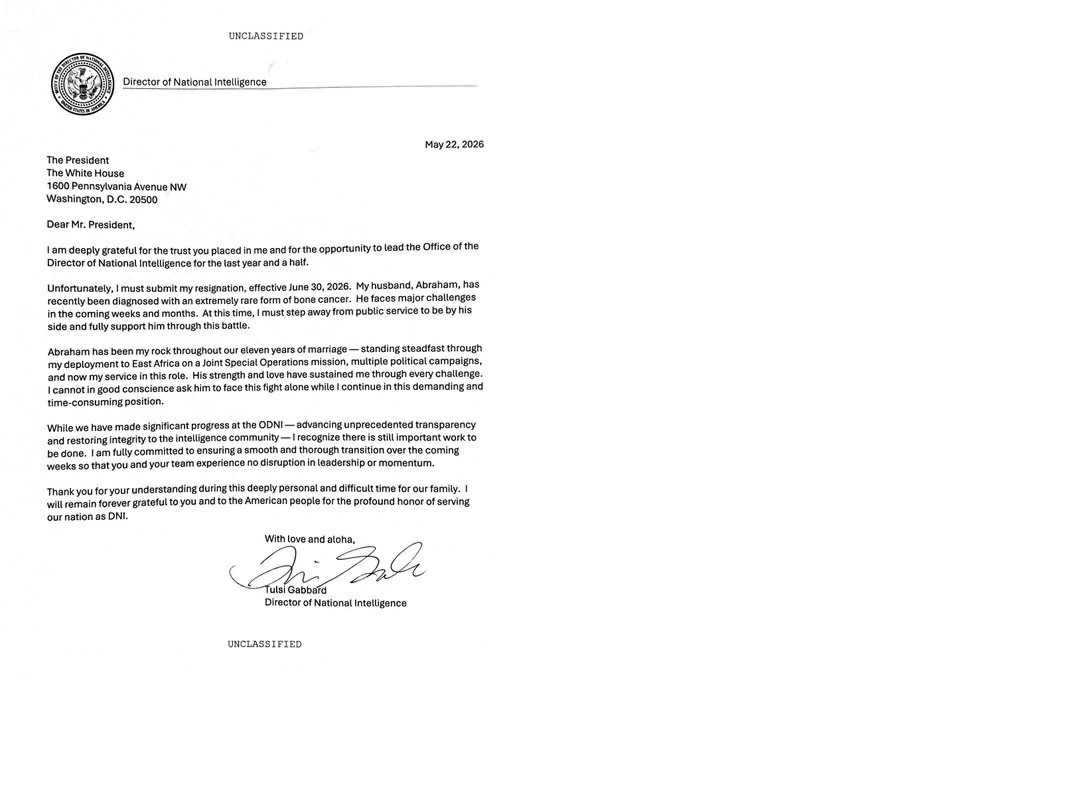
أعلنت مديرة الاستخبارات الوطنية الأمريكية تولسي جابارد، الاستقالة من منصبها لدعم زوجها خلال معركته مع «نوع نادر من سرطان العظام».
وقالت في خطاب الاستقالة: للأسف، يتعين عليّ تقديم استقالتي، اعتباراً من 30 يونيو 2026، مؤكدة «تم تشخيص زوجي أبراهام بإصابته بنوع نادر للغاية من سرطان العظام».
فيما عبر الرئيس الأمريكي دونالد ترمب عن أسفه بشأن استقالة جابارد، لافتاً إلى أنها «قدمت عملاً رائعاً ومذهلاً».
وأضاف عبر منصته أن «أبراهام زوج جابارد شخص رائع، وهي ترغب في البقاء إلى جانبه ومساعدته على استعادة صحته، بينما يخوضان معاً معركة صعبة حالياً.. وليس لدي أدنى شك في أنه سيصبح قريباً أفضل من أي وقت مضى». ولفت إلى أن نائب جابارد، آرون لوكاس، سيتولى المهمة، لافتاً إلى أنه «شخصية تحظى باحترام كبير».
وأفادت شبكة FOX NEWS بأن جابارد أبلغت ترمب بقرارها خلال اجتماع في المكتب البيضاوي، أمس الجمعة، ويتوقع أن يكون آخر يوم لها في مكتب مدير الاستخبارات الوطنية 30 يونيو القادم
وذكرت أنها حصلت على خطاب الاستقالة الرسمي، الذي قالت فيه جابارد: «أنا ممتنة للغاية للثقة التي منحتموني إياها، ولإتاحة الفرصة لي لقيادة مكتب مدير الاستخبارات الوطنية خلال العام والنصف الماضيين».
وكانت جابارد أطلقت جهوداً لإعادة تشكيل مجتمع الاستخبارات، شملت تقليص حجم الوكالة، وتوفير أكثر من 700 مليون دولار سنوياً لدافعي الضرائب، وتفكيك برامج التنوع والمساواة والشمول داخل مجتمع الاستخبارات، إلى جانب إجراءات أخرى، وفق الشبكة.
وبحلول هذا الشهر، رفعت جابارد السرية عن أكثر من نصف مليون صفحة من السجلات الحكومية، من بينها وثائق تتعلق بالتحقيق في ملف ترمب وروسيا، واغتيالي جون كينيدي وروبرت كينيدي، وغيرها.
وأكدت أن زوجها سيواجه تحديات كبيرة خلال الأسابيع والأشهر القادمة، مضيفة: «في هذا الوقت، يجب أن أتنحى عن الخدمة العامة لأكون إلى جانبه، وأدعمه بشكل كامل خلال هذه المعركة».
واعتبرت جابارد أنها حققت تقدماً كبيراً في مكتب مدير الاستخبارات الوطنية، من خلال تعزيز مستوى غير مسبوق من الشفافية، واستعادة النزاهة داخل مجتمع الاستخبارات، لكنها أقرت بأنه «لا يزال هناك عمل مهم ينبغي إنجازه».
U.S. National Intelligence Director Tulsi Gabbard announced her resignation from her position to support her husband during his battle with a “rare type of bone cancer.”
In her resignation letter, she stated: “Unfortunately, I must submit my resignation, effective June 30, 2026,” confirming that “my husband Abraham has been diagnosed with a very rare type of bone cancer.”
Meanwhile, U.S. President Donald Trump expressed his regret regarding Gabbard’s resignation, noting that she “has done a wonderful and amazing job.”
He added on his platform that “Abraham, Gabbard’s husband, is a great person, and she wants to stay by his side and help him regain his health, as they face a difficult battle together right now… and I have no doubt that he will soon be better than ever.” He pointed out that Gabbard’s deputy, Aaron Lucas, will take over the role, noting that he is “a highly respected individual.”
FOX NEWS reported that Gabbard informed Trump of her decision during a meeting in the Oval Office yesterday, Friday, and her last day in the National Intelligence Director’s office is expected to be June 30.
She mentioned that she received the official resignation letter, in which Gabbard stated: “I am extremely grateful for the trust you have placed in me and for the opportunity to lead the Office of the Director of National Intelligence over the past year and a half.”
Gabbard had launched efforts to reshape the intelligence community, which included downsizing the agency, saving taxpayers more than $700 million annually, dismantling diversity, equity, and inclusion programs within the intelligence community, among other measures, according to the network.
By this month, Gabbard had declassified over half a million pages of government records, including documents related to the investigation into Trump and Russia, the assassinations of John Kennedy and Robert Kennedy, and others.
She confirmed that her husband will face significant challenges in the coming weeks and months, adding: “At this time, I must step away from public service to be by his side and fully support him during this battle.”
Gabbard considered that she has made significant progress in the Office of the Director of National Intelligence by enhancing an unprecedented level of transparency and restoring integrity within the intelligence community, but she acknowledged that “there is still important work to be done.”