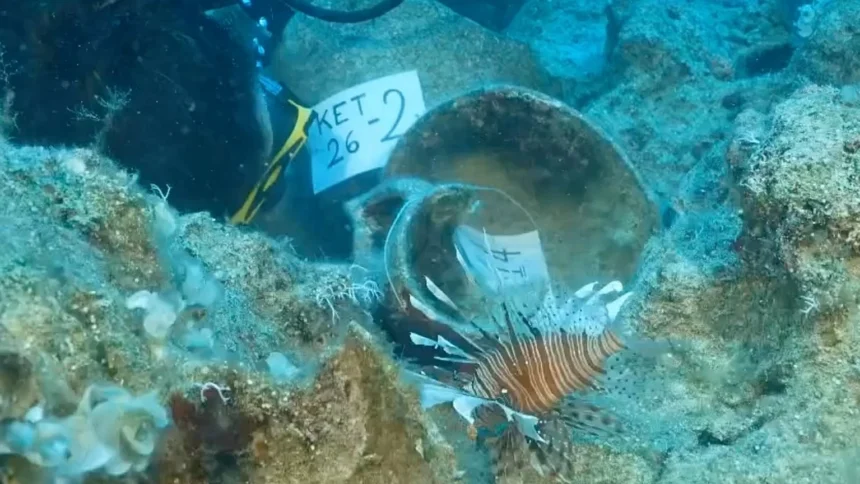
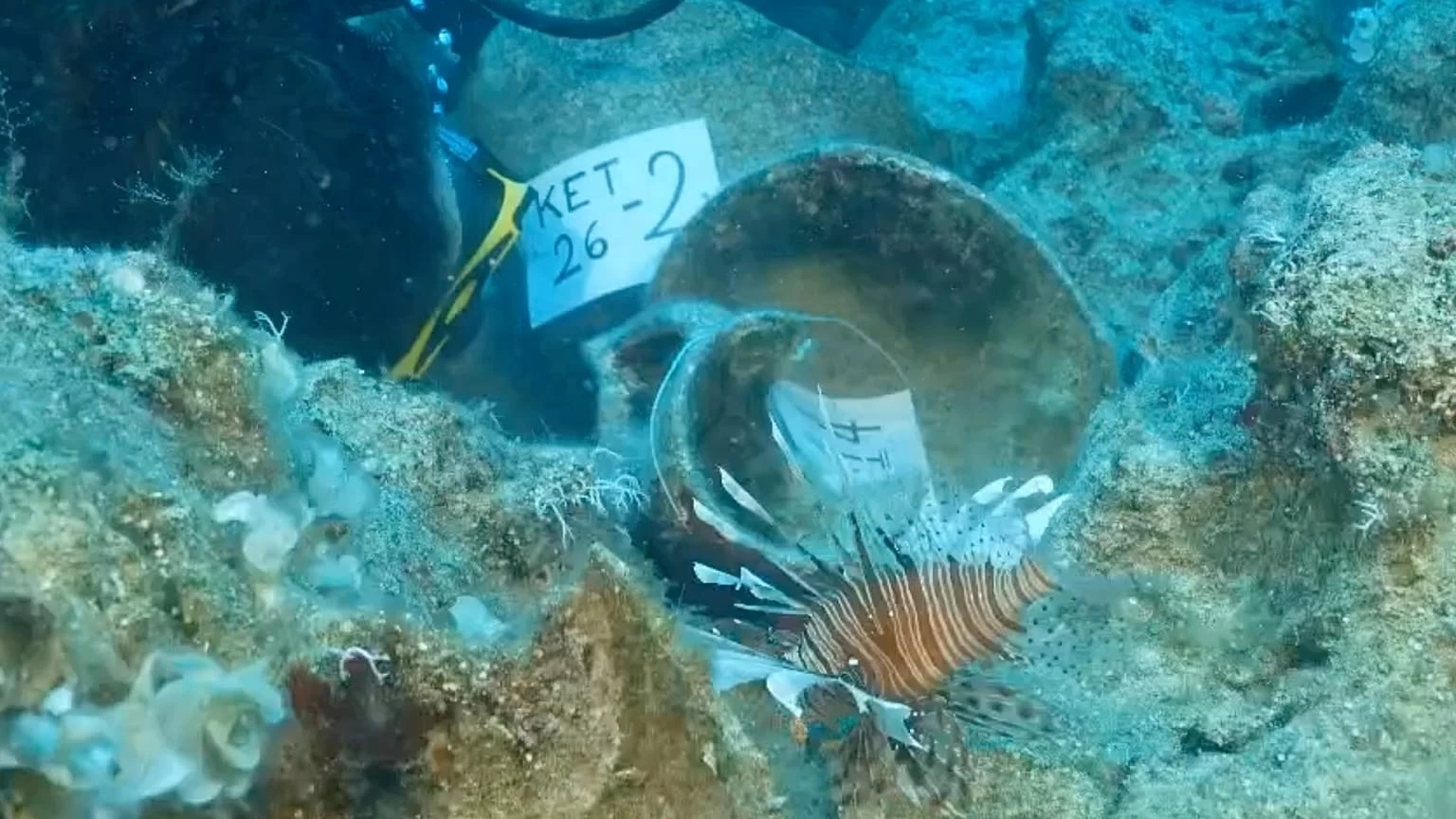
كشف علماء آثار عن حطام سفينة قبالة جزيرة كيكوفا في ولاية أنطاليا جنوبي تركيا، يرجع تاريخها إلى العصر البرونزي المبكر، بين عامي 2600 و2400 قبل الميلاد، ما يجعلها أقدم حطام سفينة معروف حتى الآن، وفقاً للنتائج المعلنة. ويعود تاريخها إلى فترة بناء الهرم الأكبر في الجيزة بمصر، كما أنها أقدم من حطام سفينة دوكوس المكتشفة في بحر إيجة، والذي يرجع إلى نحو عام 2200 قبل الميلاد.
وأظهرت الدراسات التي أجراها فريق من جامعة أكدنيز، برئاسة خبير الآثار البحرية هاكان أونيز، أن السفينة كانت مركباً تجارياً صغيراً يُعتقد أنه غرق أثناء رحلته من الشرق إلى الغرب.
ورغم تحلل الهيكل الخشبي بفعل مرور آلاف السنين، تمكن الباحثون من تحديد عمر الحطام استناداً إلى مجموعة من القطع الفخارية، بينها أوانٍ مزدوجة المقابض تُعرف باسم «الأمفورا»، إلى جانب مراسٍ حجرية عُثر عليها على عمق نحو 30 متراً تحت سطح البحر.
ووفقاً لصحيفة «الإندبندنت»، تحمل الأواني الفخارية المكتشفة نقوشاً وزخارف هندسية، وتشير خصائصها إلى استخدامها في نقل منتجات زراعية، مثل زيت الزيتون والنبيذ. كما تتشابه تصاميمها مع نماذج فخارية عُثر عليها في بلاد الشام وتعود إلى العصر البرونزي.
وتكشف المراسي الحجرية، التي تضم نماذج ذات ثقب واحد وأخرى بثلاثة ثقوب، عن أساليب الرسو التي كانت مستخدمة لدى حضارات البحر المتوسط في تلك الفترة، بما فيها الحضارات المينوية والأناضولية والشامية.
ويتيح هذا الاكتشاف فرصة لفهم أوسع لحركة الملاحة والتبادل التجاري في البحر المتوسط قبل أكثر من 4500 عام، كما يعيد ترتيب المكتشفات المعروفة لحطام السفن القديمة، متقدماً على حطام دوكوس من حيث القِدم، وفقاً للتأريخ المعلن.
Archaeologists have uncovered the wreck of a ship off the coast of Kekova Island in Antalya, southern Turkey, dating back to the early Bronze Age, between 2600 and 2400 BC, making it the oldest known shipwreck to date, according to the announced findings. It dates back to the period of the construction of the Great Pyramid in Giza, Egypt, and is older than the wreck of the Dokos discovered in the Aegean Sea, which dates to around 2200 BC.
Studies conducted by a team from Akdeniz University, led by maritime archaeology expert Hakan Unes, showed that the ship was a small trading vessel believed to have sunk during its journey from east to west.
Despite the wooden structure having deteriorated over thousands of years, researchers were able to determine the age of the wreck based on a collection of pottery, including double-handled jars known as “amphorae,” along with stone anchors found at a depth of about 30 meters below the sea surface.
According to the “Independent” newspaper, the discovered pottery bears engravings and geometric decorations, and its characteristics suggest it was used for transporting agricultural products, such as olive oil and wine. Its designs are similar to pottery models found in the Levant that date back to the Bronze Age.
The stone anchors, which include models with one hole and others with three holes, reveal the anchoring methods used by Mediterranean civilizations during that period, including Minoan, Anatolian, and Levantine cultures.
This discovery provides an opportunity for a broader understanding of maritime navigation and trade exchange in the Mediterranean over 4500 years ago, and it reorders the known discoveries of ancient shipwrecks, surpassing the Dokos wreck in terms of age, according to the announced dating.