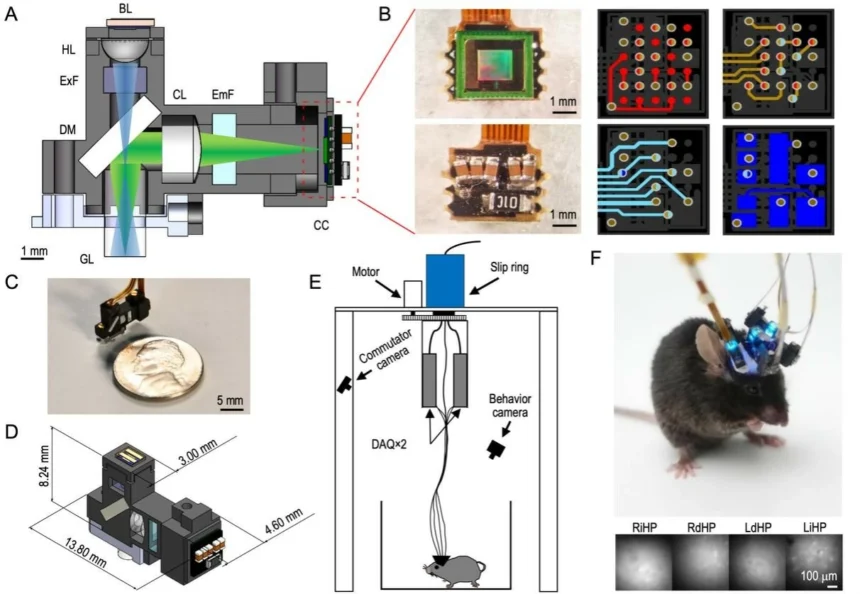
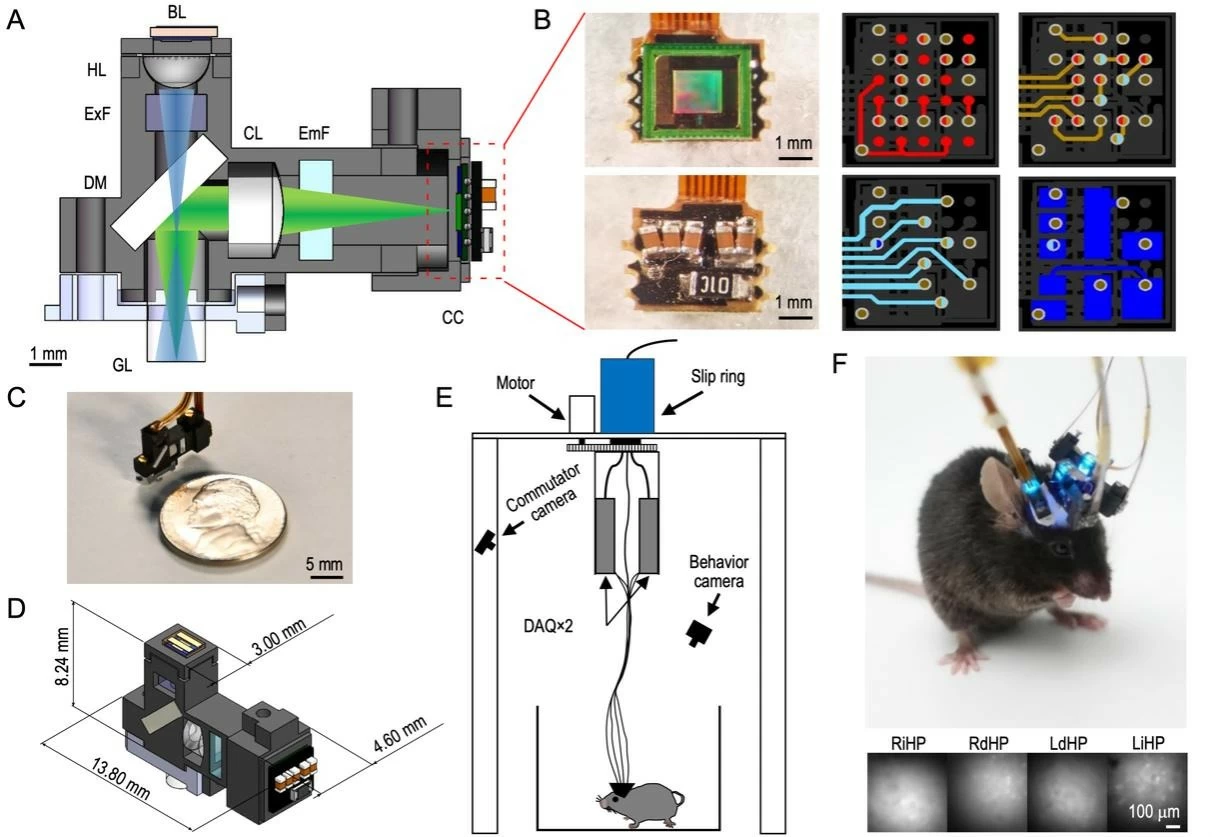
طور باحثون صينيون مجهراً لاسلكياً فائق الصغر لا يتجاوز وزنه غراماً واحداً، يُثبت على رأس الفأر لرصد نشاط آلاف الخلايا العصبية أثناء تحركه بحرية، من دون الحاجة إلى تثبيت رأسه أو توصيله بأسلاك.
وأطلق الباحثون على الجهاز اسم «Airscope»، وطوره فريق من جامعة تسينغهوا بالتعاون مع المستشفى العام لجيش التحرير الشعبي الصيني، ونشرت نتائج البحث في مجلة «Nature» العلمية.
أكثر من 8500 خلية عصبية
ويستطيع المجهر تصوير مساحة يبلغ قطرها 6 مليمترات بدقة تصل إلى مستوى الخلية الواحدة، مع تسجيل نشاط أكثر من 8500 خلية عصبية لدى الفأر الواحد، أي ما يصل إلى نحو 25 ضعف قدرة المجاهر اللاسلكية المماثلة.
ويعمل الجهاز لاسلكياً، ويتيح للباحثين مشاهدة النشاط العصبي أثناء تحرك الحيوان بصورة طبيعية، بدلاً من الطرق التقليدية التي تتطلب تثبيت الحيوان أو استخدام أسلاك تحد من حركته.
يتسلق ويتحرك بحرية
واختبر الفريق المجهر على فئران أثناء مجموعة من الأنشطة، من بينها تسلق الحبال والمرور داخل الأنابيب واستكشاف المتاهات والتفاعل مع فئران أخرى، مع استمرار تسجيل نشاط الدماغ خلال الحركة.
كما استخدم الباحثون عدة أجهزة في الوقت نفسه لمراقبة النشاط العصبي لدى مجموعة من الفئران أثناء تفاعلها الاجتماعي، وتمكنوا في إحدى التجارب من تسجيل أكثر من 21 ألف خلية عصبية لدى خمسة فئران في وقت متزامن.
نافذة على الدماغ أثناء السلوك الطبيعي
ويقول الباحثون إن التقنية قد تساعد العلماء على فهم كيفية تنسيق مناطق مختلفة من الدماغ للحركة والاستكشاف والتفاعل الاجتماعي واتخاذ القرارات، في ظروف أقرب إلى السلوك الطبيعي للحيوان.
كما يمكن أن توفر أداة جديدة لأبحاث الأمراض العصبية وواجهات الدماغ والحاسوب، مع إمكانية مراقبة النشاط العصبي على نطاق واسع من دون تقييد حركة الحيوان.
Chinese researchers have developed a wireless ultra-miniature microscope that weighs no more than one gram, which can be attached to the head of a mouse to monitor the activity of thousands of neurons while it moves freely, without the need to restrain its head or connect it with wires.
The researchers named the device “Airscope,” and it was developed by a team from Tsinghua University in collaboration with the General Hospital of the People’s Liberation Army of China. The research results were published in the scientific journal “Nature.”
More than 8,500 neurons
The microscope can image an area with a diameter of 6 millimeters with a resolution down to the level of a single cell, recording the activity of more than 8,500 neurons in a single mouse, which is about 25 times the capacity of similar wireless microscopes.
The device operates wirelessly, allowing researchers to observe neural activity while the animal moves naturally, instead of using traditional methods that require restraining the animal or using wires that limit its movement.
Climbing and moving freely
The team tested the microscope on mice during a range of activities, including climbing ropes, passing through tubes, exploring mazes, and interacting with other mice, while continuously recording brain activity during movement.
The researchers also used multiple devices simultaneously to monitor neural activity in a group of mice during their social interactions, and in one experiment, they managed to record more than 21,000 neurons from five mice at the same time.
A window into the brain during natural behavior
The researchers say that the technology could help scientists understand how different regions of the brain coordinate for movement, exploration, social interaction, and decision-making, in conditions closer to the animal’s natural behavior.
It could also provide a new tool for research into neurological diseases and brain-computer interfaces, with the potential to monitor neural activity on a large scale without restricting the animal’s movement.