


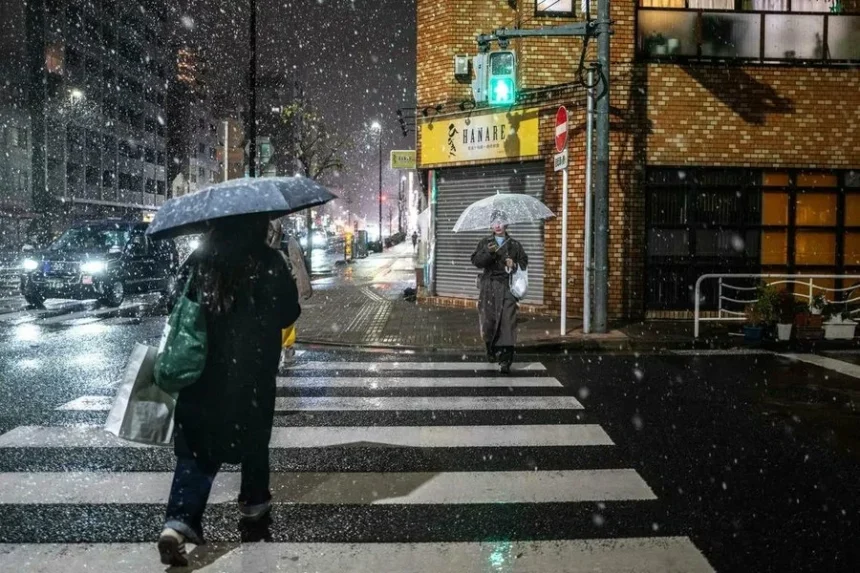
ضربت عاصفة استوائية عنيفة تحمل اسم «جانجمي» سواحل جنوب اليابان أمس (الثلاثاء)، متسببة في إصابة 15 شخصاً على الأقل، ودفع السلطات إلى مطالبة أكثر من 800 ألف مواطن بإخلاء منازلهم.
وتُعد هذه العاصفة أول إعصار يضرب الأرخبيل الياباني في موسم 2026، حيث أعلنت السلطات أنها خُفضت تصنيفها من إعصار إلى عاصفة استوائية، لكنها لا تزال تحمل رياحاً شديدة تصل سرعتها إلى 90 كم/ساعة، مع أمطار غزيرة تثير مخاوف من فيضانات وانزلاقات أتربة.
وقال الناطق الرسمي باسم الحكومة اليابانية مينورو كيهارا إن معظم الإصابات وقعت في محافظة أوكيناوا جنوب البلاد، ناتجة عن سقوط الأشخاص بسبب الرياح العاتية وتطاير الأجسام، وأظهرت لقطات مصورة رياحاً قوية اقتلعت شجرة يبلغ ارتفاعها 10 أمتار.
وتسببت العاصفة في انقطاع الكهرباء عن عشرات الآلاف من المنازل في محافظتي كاغوشيما وأوكيناوا، ودعت السلطات سكان مدينتي ميازاكي وكاجوشيما (جنوب جزيرة كيوشو) إلى الإخلاء الفوري، حيث يبلغ عددهم أكثر من 800 ألف نسمة.
وتتجه العاصفة حالياً نحو الشمال الشرقي، ومن المتوقع أن تصل مناطق قريبة من العاصمة طوكيو اليوم (الأربعاء)، ما دفع السلطات إلى تحذير المواطنين من اضطرابات كبيرة في حركة النقل العام، وأعلنت بعض المدارس في طوكيو إغلاق أبوابها احترازياً.
كما ألغت شركتا الطيران اليابانيتان الكبريان «أول نيبون إيرويز» و«جابان إيرلاينز» نحو 600 رحلة جوية خلال الفترة من الإثنين إلى الأربعاء.
يُعد موسم الأعاصير في اليابان (من يونيو إلى أكتوبر) من أكثر المواسم خطورة، حيث تتعرض البلاد سنوياً لعدة أعاصير استوائية قوية، وتتميز اليابان بكفاءة عالية في أنظمة الإنذار المبكر والاستعداد للكوارث، لكن العواصف غالباً ما تسبب أضراراً اقتصادية كبيرة وتعطلاً في وسائل النقل.
وتأتي عاصفة «جانجمي» في وقت تشهد اليابان استعدادات مكثفة لموسم الأمطار الغزيرة والأعاصير، خصوصاً مع تزايد حدة التغيرات المناخية التي تجعل هذه العواصف أكثر عنفاً وتكراراً في السنوات الأخيرة.
A powerful tropical storm named “Gangmei” struck the southern coasts of Japan yesterday (Tuesday), causing at least 15 injuries and prompting authorities to urge more than 800,000 citizens to evacuate their homes.
This storm is the first typhoon to hit the Japanese archipelago in the 2026 season, with authorities announcing that it has been downgraded from a typhoon to a tropical storm, but it still carries strong winds reaching speeds of 90 km/h, along with heavy rains raising concerns about flooding and landslides.
The official spokesperson for the Japanese government, Minor Kihara, stated that most of the injuries occurred in Okinawa Prefecture in the south of the country, resulting from people falling due to the fierce winds and flying debris. Footage showed strong winds uprooting a 10-meter tall tree.
The storm caused power outages for tens of thousands of homes in Kagoshima and Okinawa Prefectures, and authorities urged residents of the cities of Miyazaki and Kagoshima (in southern Kyushu Island) to evacuate immediately, as their number exceeds 800,000.
The storm is currently moving northeast and is expected to reach areas near the capital, Tokyo, today (Wednesday), prompting authorities to warn citizens of significant disruptions to public transportation, and some schools in Tokyo announced precautionary closures.
Additionally, Japan’s two major airlines, All Nippon Airways and Japan Airlines, canceled about 600 flights from Monday to Wednesday.
The typhoon season in Japan (from June to October) is one of the most dangerous times of the year, as the country is subjected to several powerful tropical storms annually. Japan is known for its high efficiency in early warning systems and disaster preparedness, but storms often cause significant economic damage and disruptions in transportation.
The “Gangmei” storm comes at a time when Japan is undergoing intensive preparations for the heavy rain and typhoon season, especially with the increasing severity of climate changes that make these storms more violent and frequent in recent years.