


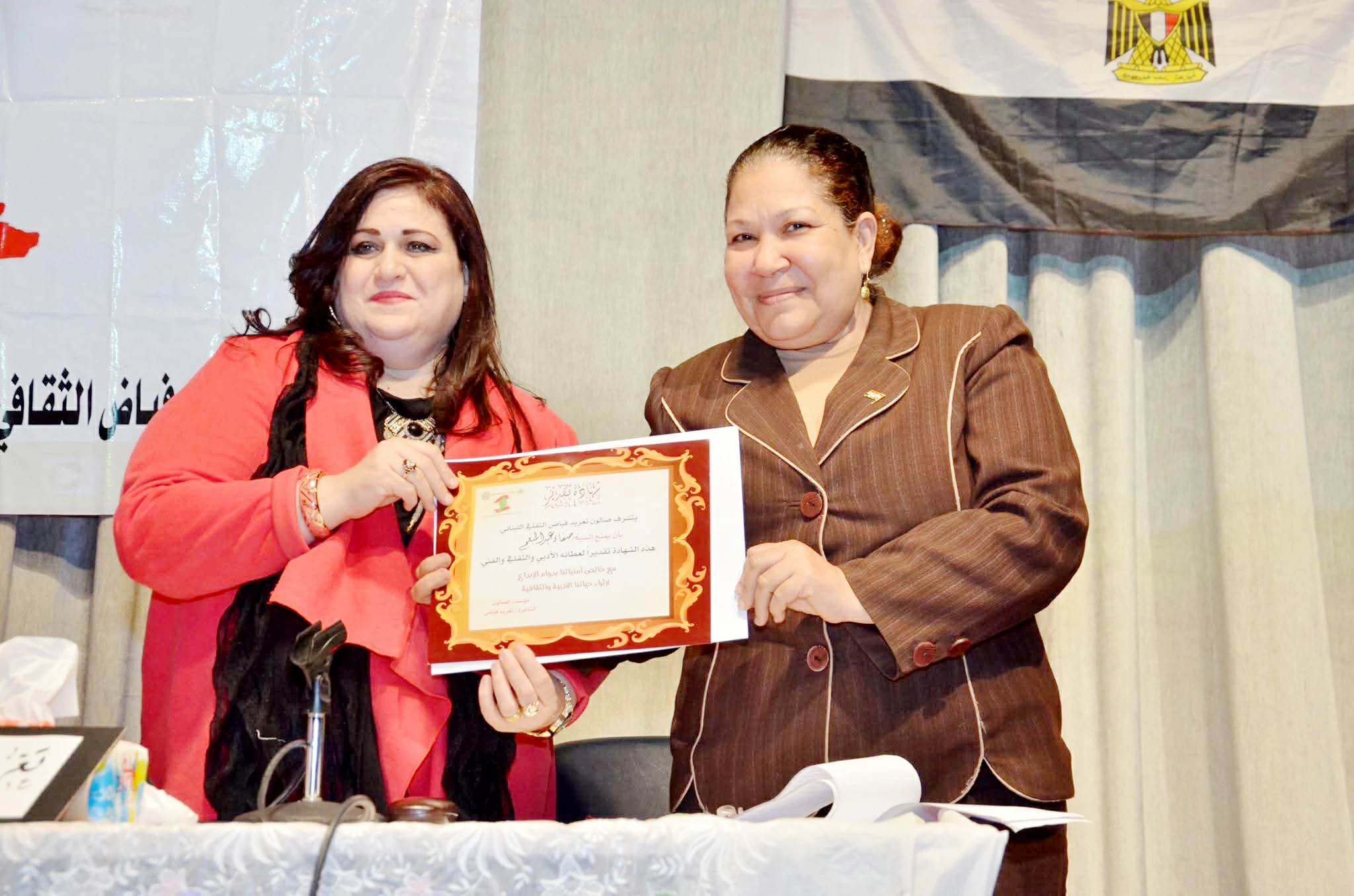
للكاتبة صفاء عبدالمنعم من اسمها كبير نصيب، فالصفاء بكل دلالاته الحقيقية والمجازية، يتمثّل في شخصيّة تعيش الثقافة وتعايشها دون ازدواجية، ولا مناورات، صدقها في مؤلفاتها، وفي وظيفتها، هو ذات صدقها في حياتها، وتعاملها، وعطائها المعهود، وفي هذه المساحة نتعرّف على فضاء الكاتبة والكتابة، ونصغي لشيءٍ من بوح الروح والوعي والإبداع، فإلى نصّ الحوار..
• هل رسمتْ طفولتك مسار حياتك؟
•• أنا أصدّق هذه المقولة تماماً، لأنه لولا حكي جدتي لنا «حدوتة قبل النوم» وهي قصص شعبية، ما أصبح عندي هذا الزخم من الحكي والخيال وحب الكتابة.
كنا ونحن أطفال صغار لا ننام، ولا يغمض لنا جفن قبل سماع حدوتة ست الحسن والجمال، والشاطر حسن وغيرهما، فكانت جدتي تحكي لنا بطريقة مدهشة، وتقلّد صوت المطر والرياح، وهذا يحفز الخيال لصناعة الأماكن والشخصيات، فنحن لم نرَ البحر ولا الجبال ولكن صنعنا صورة ذهنية جميلة.
• ما أثر المكان على شخصية الإنسان؟
•• المكان هو الهوية الأولى لمعنى الوطن، بمعنى كل طفل يعرف أنه ابن قرية أو مدينة قبل أن يعرف اسم المحافظة أو الدولة، فهو ينتمي روحاً وجسداً إلى مكان مولده (بيت الطفولة الأول)، ومهما سافر يظل الحنين إلى هذا المكان داخل قلبه وذاكرته بصورة ملحة، وربما يذهب إليه كي يستعيد هذا الطفل الذي كان بداخله.
• بماذا انعكس عليك العيش في مدينة القاهرة؟
•• القاهرة مدينة صاخبة، ومتعددة الطبقات التاريخية والمعرفية، منذ أن بنى عمرو بن العاص مدينة الفسطاط، ثم جاءت مدينة القطائع، ثم القاهرة الفاطمية، ثم القاهرة الخيداوية، ثم التوسع الرأسي والأفقي وإنشاء المدن الجديدة. وعندما تسير على كورنيش النيل وتتذكر الموانئ القديمة مثل الساحل وبولاق وغيرهما تكتشف جمالاً خارقاً وطاغياً، وعندما تذهب إلى منطقة الأزهر والسيدة زينب تعلو وتسمو روحياً بشكل روحاني، وربما إلى المنازل الأثرية فترى فتاة جميلة خلف المشربية فتتذكر حميدة في رواية زقاق المدق لنجيب محفوظ، أو تسمع صوت الثوار في ثورة 1919 ويتردد في أذنيك «يسقط يسقط الاستعمار»، وترى «فهمي» مصاباً في رواية بين القصرين. فالقاهرة أعطتني صلابة وزخماً معرفياً وثقافياً، وأصبحت شخصية عملية، أحب السعي والعمل الجاد.
• ممن استقيت مياه الوعي الأولى؟
•• من بيتنا، كنت أعيش وسط أسرة ممتدة لها جذور فلاحين، كل إجازة نذهب إلى القرية حيث الغيطان والساقية والنيل والخضرة والحكايات عن الجنّيات فوق المصطبة، والسهراية مع الذرة المشوي والبطاطا أمام الدار، وتنوع الخضرة والمحاصيل الزراعية والشجر داخل الأرض.
• لماذا آثرت التخصص في دراسة الأدب والتربية؟
•• ربما يكون الحظ أو القدر هو الذي دفعني لذلك، لكنني كنت أحب التدريس، خصوصاً في المرحلة الابتدائية، حيث تربية النشء. وكنا ندرس حكايات ايسوب وكليلة ودمنة في كتاب المطالعة. وهذا نتيجة مهمة لحب الحكايات.
• هل أضافت صفاء المثقفة الكثير إلى صفاء المربية؟
•• نعم. فكنت مدرسة واعية تعرف قيمة العلم والثقافة ثم مديرة مدرسة مختلفة لا تخضع للبيروقراطية الوظيفية، ولكنني أعمل بشكل ليبرالي متحضر مع الزملاء ومع التلاميذ، وأضفت الكثير وحللت المشكلات بشكل مختلف ومغاير. وتجاوزت عقبات كثيرة، خصوصاً أيام ثورة 2011، وكان ذلك ظرفاً تاريخياً، حتى أثناء فترة كورونا 2019 أيضاً.
• لماذا اخترت تدريس اللغة العربية؟
• (تدريس اللغة العربية) هو جزء من الثقافة بل هو الثقافة نفسها هناك منهج للطالب يشرح بطريقة حديثة ومتطورة عن الواقع.
• بمن تأثرتِ من أدباء مصر الكبار؟
•• لكل أدباء مصر دور وأثر، مثلاً ندوة المساء، وورشة الزيتون، وندوات اتيليه القاهرة، ونادي القصة، وغيرها من الأماكن الثقافية، التي قابلت فيها الكثير والكثير من الأدباء الكبار في أوائل الثمانينيات وإلى الآن. وكنت أحرص على حضور الندوات والمؤتمرات الثقافية بشكل كبير.
• ما الذي وجّهك لكتابة القصّة؟
•• الذي وجهني لكتابة القصة، «صدفة» كان الجو ذات صباح مليء بالغبار والأتربة، وكنت ذاهبة إلى العمل ولا أستطيع رؤية الطريق، فكتبت قصة يوم عاصف في عام 1982م، وعندما قرأتها أمام بعض الأصدقاء أعجبوا بها جداً، وصدرت بعد ذلك ضمن مجموعة «حكايات الليل عام 1984م»، ومنذ هذا اليوم وأنا أكتب القصة القصيرة، وتأثرت بشدة بكل من تشيكوف ويوسف إدريس.
• كيف كانت البدايات؟
•• ربما تكون بداية الكتابة بسيطة لكن الموهبة والقراءة المنظمة فتحت آفاقاً مهمة بالنسبة لي، لقد قرأت القصة والشعر والرواية وعلم النفس والفلسفة والنظريات الأدبية والفنية، والتحقت بأكاديمية الفنون بالهرم قسم نقد فني عام 2005م، فالدراسة الأكاديمية تنظم المعلومات وتفتح الأفق. في عام 1982م أصدرت مجموعة قصصية صغيرة، ثم مجموعة قصصية «تلك القاهرة تغريني بسيقانها العارية» عام 1990م، طباعة جامعية «ماستر»، وكان من الصعب إصدار مجموعة أو كتاب، ولم تكن انتشرت دور النشر الخاصة مثل الآن. ورغم هذه الطباعة المتواضعة، إلا أنه تمت مناقشتها في العديد من المحافل الأدبية والندوات وفي برنامج مع الأدباء الشبان بالإذاعة.
• من ساند تجربتك الكتابية؟
• بعض الأصدقاء، وكذلك زوجي الراحل الشاعر الكبير مجدي الجابري. في البداية كتبت القصة القصيرة وأصدرت أربع مجموعات، ثم كتبت الرواية عام 2001م، وكانت بالعامية المصرية، ثم الكتابة للأطفال وكان أولادي هم السبب المباشر، إذ كنت أحكي لهم حكاية قبل النوم مثلما كانت تفعل جدتي، ولكن هذه الحكايات كنت أقوم بتأليفها بشكل مباشر، ومن هنا جاءت الكتابة للأطفال، ثم قمت بعمل ورش حكي للأطفال، وورش لتدريب التلاميذ الموهوبين بالمدارس.
• كيف ترين المشهد الأدبي السعودي؟
•• أصبح الآن هناك الكثير والكثير من الأدباء والكتاب المهمين، في البداية قرأت للكاتب الكبير عبدالرحمن منيف، ثم قرأت بعد ذلك لكثير من الأدباء، خصوصاً الشباب، ونلتقي كثيراً في معرض القاهرة الدولي للكتاب، وأتمنى أن ألتقي بهم على أرض المملكة، إذ أصبحت تقام ندوات أدبية في مناطق متعددة وأصبحت هناك أيضاً جوائز أدبية ونهضة حقيقية.
• ما انطباعك عن مواقع التواصل، وهل تتفاعلين معها؟
•• فتحت المواقع باب التواصل مع كافة الأدباء في دول كثيرة ومدن عدة، وأصبح تبادل الآراء وإقامة الندوات عبر الزووم شيئاً مهماً جداً، فمد جسر التواصل بين الأدباء في البلاد المختلفة. ويمكن أن تكتب نصاً الآن وتنشره بعد دقائق ويُقرأ بسرعة وسهولة.
• هل الكتابة الشبابية مغرية بالقراءة؟
•• فيها روح المغامرة والقفز السريع، ربما يكون بسبب التطور المذهل، ولكن هناك البعض، وهم قلة، لا يقرأون بشكل كبير ولا يعترف بعضهم بالآباء التاريخيين في الكتابة، وأحياناً هناك استسهال واستعلاء لا مبرر له.
• ماذا يضيف ارتباط كاتبة بشاعر؟
•• مجدي الجابري كان شاعراً مجدداً في قصيدة نثر العامية ومثقفاً واعياً وقارئاً نهماً، والثقافة الحقيقية تفتح الأفق للمنافسة والحوار وتبادل الآراء، ولو اختلفنا في وجهات النظر يظل الاحترام والحب المتبادل هو أساس العلاقة.
• ما أثر فوزك بجائزة الأم المثالية؟
•• جائزة الأم المثالية تتويج مهم للرحلة، وتاج على رأسي، تشعر أن هناك من يراك ويقدر جهدك في تربية أولادك بشكل واعٍ. تربية طفلتين صغيرتين ليس بالأمر اليسير في ظل الدخل القليل، ولكن حسن التدبير المنزلي يسهم في نجاح كبير، وحرصت كل الحرص على الثقافة والإبداع والقراءة أيضاً، فكانتا مشتركتين في نشاط مسرح الجامعة، وحصلت كل منهما على جوائز في العروض المسرحية، وعندي الدكتورة مي في مرحلة الماجستير في المسرح بكلية الآداب جامعة عين شمس. فمنذ الصغر تعودتا على مشاهدة السينما والمسرح وقراءة الأدب العربي والعالمي باللغتين العربية والإنجليزية والحمد لله.
For the writer Safaa Abdel-Moneim, her name carries a significant meaning, as “safaa” (purity) in all its true and metaphorical connotations is embodied in a personality that lives culture and coexists with it without duality or maneuvering. Her sincerity in her writings and in her job reflects the same sincerity in her life, her interactions, and her well-known generosity. In this space, we get to know the realm of the writer and writing, and we listen to a bit of the soul’s confession, awareness, and creativity. So, here is the text of the dialogue..
• Did your childhood shape the course of your life?
•• I completely believe in this saying, because if it weren’t for my grandmother telling us “a bedtime story,” which are folk tales, I wouldn’t have this wealth of storytelling, imagination, and love for writing.
As children, we couldn’t sleep, and our eyes wouldn’t close before hearing the story of the beautiful lady and the clever Hassan, among others. My grandmother would tell us in a captivating way, imitating the sound of rain and wind, which stimulated our imagination to create places and characters. We had never seen the sea or the mountains, but we created a beautiful mental image.
• What impact does place have on a person’s character?
•• Place is the first identity of the meaning of homeland, meaning every child knows they are from a village or city before they know the name of the governorate or country. They belong, body and soul, to the place of their birth (the first childhood home), and no matter how far they travel, the longing for this place remains in their heart and memory in an urgent way. Perhaps they return to it to reclaim the child that was within them.
• How has living in Cairo affected you?
•• Cairo is a bustling city with multiple historical and cultural layers. Since Amr ibn al-As built the city of Fustat, then came the city of Al-Qata’i, then Fatimid Cairo, then Khedive Cairo, followed by vertical and horizontal expansion and the establishment of new cities. When you walk along the Nile Corniche and remember the old ports like Al-Sahil and Bulaq, you discover an overwhelming and extraordinary beauty. When you go to the areas of Al-Azhar and Sayyida Zainab, your spirit rises spiritually, and perhaps when you visit the ancient houses, you see a beautiful girl behind the mashrabiya and remember Hamida in Naguib Mahfouz’s novel “Midaq Alley,” or you hear the voices of the revolutionaries in the 1919 revolution echoing in your ears with “Down with colonialism,” and you see “Fahmy” wounded in the novel “Between the Palace Walls.” Cairo has given me resilience and a wealth of knowledge and culture, and I have become a practical person who loves striving and hard work.
• From whom did you draw your initial awareness?
•• From my home. I lived in an extended family with peasant roots. Every vacation, we would go to the village where the fields, the waterwheel, the Nile, the greenery, and the stories about the jinn on the porch awaited us, and the late-night gatherings with roasted corn and potatoes in front of the house, and the variety of greenery and crops and trees within the land.
• Why did you choose to specialize in studying literature and education?
•• Perhaps luck or fate pushed me towards that, but I loved teaching, especially in the elementary stage, where the upbringing of youth takes place. We studied Aesop’s fables and Kalila and Dimna in the reading book. This is a significant outcome of my love for stories.
• Has the intellectual Safaa added much to the educator Safaa?
•• Yes. I was a conscious teacher who understood the value of knowledge and culture, then became a different school principal who did not succumb to bureaucratic constraints, but instead worked in a liberal and civilized manner with colleagues and students. I added a lot and solved problems in different and unique ways. I overcame many obstacles, especially during the 2011 revolution, which was a historical circumstance, and even during the Corona period in 2019.
• Why did you choose to teach Arabic?
• (Teaching Arabic) is part of culture; in fact, it is culture itself. There is a curriculum for students that explains in a modern and developed way about reality.
• Who have you been influenced by among Egypt’s great writers?
•• Every Egyptian writer has a role and an impact. For example, the evening symposium, the olive workshop, the Cairo Atelier seminars, the story club, and other cultural venues where I met many great writers from the early 1980s until now. I was keen to attend cultural seminars and conferences extensively.
• What guided you to write stories?
•• What guided me to write stories was a “coincidence.” One morning, the air was filled with dust and dirt, and I was going to work unable to see the road, so I wrote a story about a stormy day in 1982. When I read it in front of some friends, they liked it very much, and it was later published in the collection “Tales of the Night” in 1984. Since that day, I have been writing short stories, and I was greatly influenced by both Chekhov and Yusuf Idris.
• How were the beginnings?
•• Perhaps the beginning of writing was simple, but talent and organized reading opened important horizons for me. I read stories, poetry, novels, psychology, philosophy, and literary and artistic theories. I joined the Academy of Arts in Al-Haram, majoring in Art Criticism in 2005, as academic study organizes information and opens horizons. In 1982, I published a small collection of stories, then a collection titled “That Cairo Tempts Me with Its Bare Legs” in 1990, published by a university press. It was difficult to publish a collection or a book back then, and private publishing houses had not spread like they have now. Despite this modest publication, it was discussed in many literary forums and seminars and on a program with young writers on the radio.
• Who supported your writing experience?
• Some friends, as well as my late husband, the great poet Magdy Al-Jabri. Initially, I wrote short stories and published four collections, then I wrote a novel in 2001, which was in Egyptian colloquial, then I wrote for children, and my children were the direct reason for that, as I would tell them bedtime stories just like my grandmother did, but these stories I would create directly. From there, I began writing for children, and I also conducted storytelling workshops for children and workshops to train talented students in schools.
• How do you see the Saudi literary scene?
•• Now there are many important writers and authors. Initially, I read the great writer Abdul Rahman Munif, and then I read many writers, especially the youth. We often meet at the Cairo International Book Fair, and I hope to meet them on Saudi soil, as literary seminars are now held in various regions, and there are also literary awards and a real renaissance.
• What is your impression of social media, and do you interact with it?
•• Social media has opened the door for communication with all writers in many countries and cities, and exchanging opinions and holding seminars via Zoom has become very important, as it has built a bridge of communication between writers in different countries. You can write a text now and publish it within minutes, and it can be read quickly and easily.
• Is youth writing enticing for reading?
•• It has a spirit of adventure and quick leaps, perhaps due to the astonishing development, but there are some, though few, who do not read extensively and some do not acknowledge historical literary predecessors, and sometimes there is an unjustified ease and arrogance.
• What does it add to a writer to be connected to a poet?
•• Magdy Al-Jabri was an innovative poet in colloquial prose and a conscious intellectual and an avid reader. True culture opens the horizon for competition, dialogue, and exchange of opinions. Even if we disagree in viewpoints, mutual respect and love remain the foundation of the relationship.
• What is the impact of winning the Ideal Mother Award on you?
•• The Ideal Mother Award is an important crowning of the journey and a crown on my head. It makes you feel that someone sees you and appreciates your efforts in raising your children consciously. Raising two small girls is not an easy task in light of a low income, but good household management contributes to great success. I was very keen on culture, creativity, and reading as well. They both participated in university theater activities and each won awards in theatrical performances, and my daughter Mai is pursuing her master’s degree in theater at the Faculty of Arts, Ain Shams University. Since childhood, they have been accustomed to watching cinema and theater and reading Arabic and world literature in both Arabic and English, thank God.